Lou Basenese is a veteran market strategist and the founder of The Big Skinny. He joins Phil Rosen on Full Signal to discuss the SpaceX IPO, Tesla, small-cap biotech stocks, and under the radar stock picks.
Eric Wallerstein is the chief macro strategist for Clocktower Group, and was previously an advisor to Stephen Miran at the Federal Reserve Board as well as at the White House Council of Economic Advisors. He joins Phil Rosen on Full Signal to discuss how to trade against the current macro backdrop, betting on US exceptionalism and fading Europe, and being right early on the the Iran conflict. – Eric Wallerstein @ericwallerstein, Phil Rosen @philrosenn
Anthropic’s Mythos model is so capable that the company restricted access to 12 partners and a $100 million compute budget rather than releasing it publicly. It has already identified 20 zero-day vulnerabilities in decades-old software. Now the question over DeFi: if Mythos turns its attention to smart contracts, what survives? The Balancer V2 hack rattled assumptions about immutability as a security guarantee. Kain Warwick, Taylor Monahan, and Austin Griffith of the Ethereum Foundation work through what autonomous AI hacking means for protocols built to be unhackable, why skill files are the sleeper development in the agent stack, how a degen farming bot locked funds in an Aerodrome gauge through a single wrong NFT transfer, and what Anthropic’s 89% uptime tells you about the infrastructure running the most powerful AI on earth.
A Bitcoin developer just proposed the unthinkable: freeze every wallet that does not upgrade for quantum resistance, including Satoshi’s. Kain Warwick and Taylor Monahan are here to reckon with BIP-361, the quantum threat to early Bitcoin addresses, and what it means that this proposal exists at all. They also work through who actually wrote Bitcoin — Hal Finney, Adam Back, and Dave Kleiman — and a trail that runs through the Epstein files. Plus: Justin Sun’s frozen World Liberty Financial tokens expose why token holders have no legal rights, EtherFi’s exit from Scroll turns into a live platform risk case study, and Circle’s decision not to freeze known stolen USDC raises the question of what stablecoin issuers owe to the ecosystem.
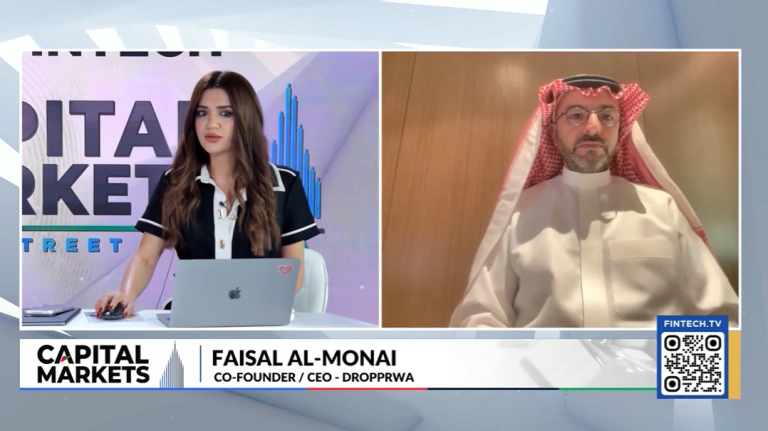
Faisal Al-Monai, the co-founder and CEO of droppRWA, joins Raghda Ibraheem to explore tokenization, which involves creating digital representations of physical assets, enabling them to be divided, traded, and programmed for various transactions.
Faisal shares insights into his experience building Saudi Arabia’s national payment system and how the principles of digitizing money are now being applied to a broader range of assets, including real estate, energy, and minerals. A significant milestone was highlighted: the world’s first sovereign native tokenized property deed transfer, which reduced transaction times from days to mere seconds.
They discuss the implications of tokenized property deeds for international investors, emphasizing that ownership is now recognized digitally, regardless of the investor’s location. Faisal also mentions that droppRWA has over $12 billion in tokenization mandates, with real estate being the primary focus, followed by energy and metals.
Additionally, they touch on the partnership with EDF to tokenize Saudi energy assets, which opens up investment opportunities in a previously closed market. Faisal provides an update on the development of stablecoins in Saudi Arabia, indicating that regulations are being drafted to facilitate their use in real estate transactions by 2026.
Looking ahead, Faisal predicts that by 2030, Saudi Arabia will have a sovereign-grade tokenized financial system that could serve as a model for G20 countries. He expresses confidence that this transformation will occur regardless of global readiness, as regulatory frameworks are being established to ensure secure and dispute-free ownership.
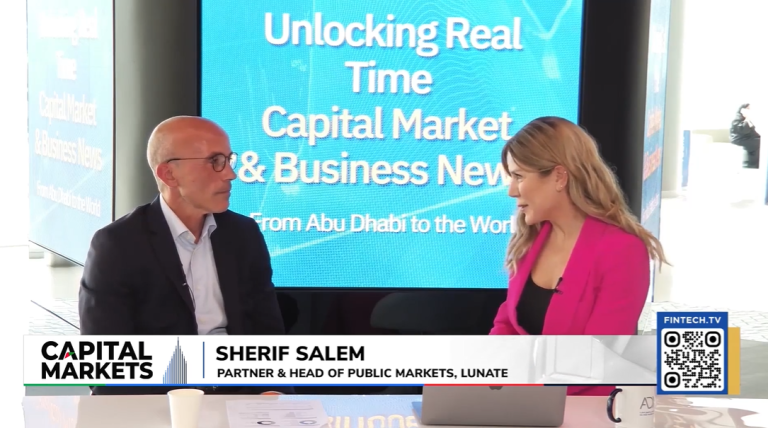
Sherif Salem, Partner & Head of Public Markets at Lunate, joins Rachel Pether to discuss the impressive growth of Lunate’s ETF business in the GCC region. They kick off the conversation by discussing the evolution of ETFs since Lunate’s first listing in July 2020, highlighting how investor demand has significantly increased, particularly among retail investors.
Discover Lunate’s diverse offerings, including Sharia-compliant ETFs and thematic ETFs focused on sectors like AI and quantum technology. He emphasizes the growing interest from both institutional and retail investors, noting that Lunate is a leader in the Sharia ETF space, with plans to expand their offerings further.
They also delve into the upcoming GCCDIV ETF, which is unique in its focus on dividend-yielding stocks across major GCC markets. Sharif explains the benefits of investing during the subscription period, allowing investors to enter at the issue price and potentially benefit from the ETF’s yield.
Finally, they explore Lunate’s international ambitions, particularly their recent listings on European exchanges, and the positive reception they have received.
Bryony Naylor, VP Europe for Money20/20, joins Tina Loncaric, the Global Director of Public Relations at Money20/20 to discuss the key takeaways from Money20/20 Europe, including the significant presence of AI and stablecoins, as well as the rising concerns around fraud in the financial sector.
Bryony highlights the impressive lineup of speakers, including Arjun Sethi from Kraken and discuss the importance of the recent announcement from the European Payments Initiative regarding European sovereignty. They also celebrate the 10th anniversary of Money20/20, with Bryony sharing insights into the event’s success, emphasizing the value of creating a collaborative ecosystem for all participants in the financial services space.
One of the standout moments was the bustling startup hub, where new companies showcased their innovative solutions. Bryony expressed her pride in the achievements of these startups, particularly Peter Griffin from Aviel Intelligence, who won the startup competition.
Looking ahead, they discuss the exciting prospects for next year, including the continued presence in Amsterdam until at least 2030 and the potential for closer collaboration with the Dutch government.
Paul Stoddard, the CEO of Fourthline, joins Anastasia Kinsky at Money20/20 Europe in Amsterdam to delve into the topic of digital identity, particularly in the context of KYC (Know Your Customer) and AML (Anti-Money Laundering) compliance.
Paul highlights the ongoing challenges in the financial services industry, where regulatory complexities and manual processes leave vulnerabilities that fraudsters exploit. He discusses the upcoming AMLR regulations in Europe, which aim to standardize identity verification and compliance, presenting an opportunity for financial institutions to enhance their processes and improve customer experiences.
They also explore the importance of collaboration among regulators and industry players to address these challenges effectively. Paul emphasizes that trust is paramount in the relationship between financial service providers and their customers, as they handle sensitive personal information.
Additionally, they touch on how Fourthline leverages AI to enhance identity verification and security. Paul explains the dual approach of using AI both in their customer offerings and internally to improve efficiency. He shares insights into their proprietary technology and the importance of treating personal data securely.
Finally, they discuss the buzz at Money20/20, including trends like digital assets and stablecoins, while reiterating the central role of digital identity in these discussions.
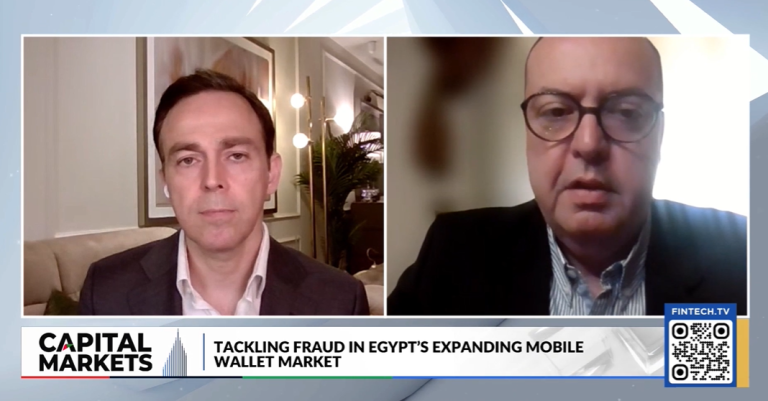
Ahmed Abdelmoghny, Chairman of Transcap Advisory, joins Bassel Sabri to delve into the rapidly expanding digital payments landscape in Egypt, focusing on mobile wallets. Ahmed highlights the impressive growth of mobile wallet transactions, which are projected to reach around 4 trillion Egyptian pounds by the end of 2025, with registered wallets increasing to 60 million.
However, this growth raises critical concerns about consumer protection and fraud prevention. They discuss a recent criminal network arrest linked to fraud targeting InstaPay, Egypt’s instant payment app, and the subsequent mandate from the Central Bank of Egypt for banks to establish dedicated anti-fraud departments.
Ahmed emphasizes that while the infrastructure for digital payments is solid, the fraud mitigation efforts are lagging. He identifies social engineering as a primary tool used by fraudsters, stressing the need for increased public awareness and transparency regarding fraud statistics. They also touch on the accountability issue, where financial losses often fall on consumers rather than the banks or wallet providers.
Good Morning, progress made on agentic payments, insider trading in prediction markets, and AI-crypto convergence. But first, a little on tokenized deposits.
Your Fintech Business News and Policy Watch are below
The Right Tool for the Right Transaction
Last week, major U.S. banks announced a partnership with The Clearing House to launch a tokenized deposit network. Multinational treasury operations and cross-border B2B payments are the leading use cases. The core proposition is programmable money layered onto existing payment infrastructure, cash that moves alongside business logic, embedded directly into procurement, ERP, and treasury systems, rather than handled as a separate process.
The other proposition, of course, is the competition posed by stablecoins.
The critical distinction from stablecoins is that tokenized deposits remain inside the banking system, allowing banks to continue lending against them while maintaining existing regulatory treatment. A stablecoin issuer holds reserves but does not lend. A bank issues deposits, lends against them, and provides the credit infrastructure the broader economy depends on. Tokenized deposits preserve that function; stablecoins do not.
The institutional lineup building in this direction is significant. JPMorgan’s Kinexys platform has been processing tokenized deposit transactions since 2023. Citi’s tokenized deposit infrastructure is in active development. The Clearing House plans to launch in first half 2027.
HSBC and Standard Chartered have both moved tokenized deposit pilots into production in Asian markets. Visa, meanwhile, is explicitly building capabilities for both, treating tokenized deposits and stablecoins as complementary instruments for different parts of the payments stack rather than mutually exclusive alternatives.
The BIS reached the same conclusion in Project Agorá: the optimal architecture combines central bank reserves with tokenized commercial bank deposits, using programmability as the value-add rather than replacing the two-tier banking system that underpins monetary stability.
The stablecoin boom under a permissive regulatory regime has accelerated the timeline, but the underlying ambition is broader: a digitalized financial system in which the right instrument is always available for the right transaction, regardless of who issued it.
Fintech Business News
Mastercard launches Agent Pay for Machines
Mastercard launched Agent Pay for Machines (AP4M), an open protocol enabling AI agents to send and receive payments autonomously, including sub-cent micropayments, with agent credentials and spending permissions stored on Polygon, Solana, and Base blockchains, giving downstream parties a publicly auditable trust layer rather than a centralized attestation.
Over 30 launch partners include Stripe, Coinbase, Adyen, Cloudflare, Ripple, and Ant International. Mastercard calls it a “five-year bet on machine-to-machine commerce” framing it as a distinct payment category from anything that exists today.
Visa launches Agent Scoring, tokenized deposits, and an OpenAI partnership
At Visa Payments Forum 2026 in San Francisco, Visa announced Agent Score, an Agentic Directory of verified agents and merchants, a Large Transaction Model for fraud detection, expanded stablecoin settlement pilots, a tokenized deposits layer for banks, and a strategic partnership with OpenAI to embed Visa’s payment infrastructure directly into agentic commerce experiences.
Stablecoin settlement has hit a $7B annualized run rate. Chief Product Officer Jack Forestell: “AI is transforming the front end of commerce. Stablecoins are reshaping the back end.”
Anthropic releases Fable 5, a Mythos-class AI, available to the public for the first time
Anthropic launched Claude Fable 5 on June 9, the first Mythos-class model made broadly available, with guardrails blocking high-risk responses in cybersecurity and biology, alongside a simultaneous release of Claude Mythos 5, the ungated sibling reserved for vetted cyber defenders.
Fable 5 tops every major public leaderboard including Artificial Analysis. Pricing is $10/$50 per million input/output tokens, double Opus 4.8. The model will move from flat-rate subscriptions to usage billing on June 23. On SWE-Bench Pro: Fable 5 scores 68.4%, vs. GPT-5.5 at 58.6% and Gemini 3.1 Pro at 54.2%.
Kalshi mandates employer disclosure for all users, insider trading crackdown goes further
Kalshi updated its terms to require all users to disclose their employer as part of onboarding, allowing the platform to detect and flag conflicts of interest before trades are placed rather than investigating after the fact.
The move extends Kalshi’s Q1 enforcement action, in which three congressional candidates were suspended for betting on their own races, into a systematic screening layer. Kalshi is simultaneously seeking CFTC approval for its main exchange and facing civil suits in multiple jurisdictions over its prediction market operations.
Ripple launches an XRPL AI Starter Kit: x402 protocol, XRP, and RLUSD for agentic payments
Ripple launched the XRPL AI Starter Kit, a developer toolkit for building agentic payment applications on the XRP Ledger, supporting the x402 protocol, XRP, and RLUSD stablecoin for AI agent payments covering APIs, compute, and digital services.
The kit is designed to give developers a fast path to production-ready agentic payments on a network with sub-second finality and predictable costs. The launch makes Ripple an active infrastructure participant in the same agentic payments space Mastercard and Visa announced products in today.
Ethereum core developers published a discussion draft for ERC-7860, a privacy-preserving token standard that enables selective disclosure of transfer amounts and recipient addresses while maintaining public auditability of token supply, using zero-knowledge proofs to let users prove compliance without revealing transaction details.
The proposal is part of a broader push to make Ethereum programmable privacy a first-class feature rather than an application-layer add-on, directly addressing institutional concerns about transacting on a fully transparent public ledger.
Lava Network signs a tokenization deal for a 40,000-unit Caribbean real estate project
Lava Network signed an agreement to tokenize a planned 40,000-unit mixed-use real estate development in the Caribbean, structuring the project’s equity and revenue rights as onchain tokens to enable fractional investment and automated distribution.
The deal is one of the largest real-world asset tokenization agreements by unit count announced to date and reflects growing developer appetite for blockchain-native capital formation in emerging market real estate, where traditional institutional finance has historically been difficult to access.
Policy Watch
DOJ subpoenas JPMorgan, BofA, and Wells Fargo in debanking probe
The U.S. Attorney’s Office for the District of Columbia, led by Jeanine Pirro, has subpoenaed JPMorgan Chase, Bank of America, and Wells Fargo among other major lenders, demanding lists of customers whose accounts were closed and the banks’ explanations for each termination, as part of a criminal probe into whether the institutions engaged in politically motivated debanking.
Prosecutors are examining potential charges under the Financial Institutions Reform, Recovery, and Enforcement Act of 1989, the statute used to prosecute banks after the 2008 mortgage crisis. Legal observers note it is not yet clear which law the banks may have broken given their wide latitude over whom they serve.
The probe escalates Trump’s August 2025 executive order directing regulators to investigate unlawful debanking. JPMorgan and Bank of America both disclosed related investigations in prior regulatory filings.
CFTC proposes public-interest framework for prediction market contracts
The CFTC voted Wednesday to propose a formal rulemaking establishing a case-by-case framework for evaluating whether prediction market contracts are “contrary to the public interest”, the statutory standard under which the agency can deem a contract invalid, with the proposal specifying that contracts tied to sports, elections, contests, and financial outcomes would generally be treated as serving the public interest.
Chair Selig framed the proposal as a “durable, transparent framework” that lets the CFTC scrutinize specific contracts without blocking the sector’s growth, with a 45-day public comment window opening upon Federal Register publication; TD Cowen analyst Jaret Seiberg said he expects the rule to be finalized in early 2027.
FSB tells banks to treat AI agents like synthetic employees
The Financial Stability Board published a report Wednesday warning that agentic AI, already adopted by 52% of financial sector respondents in a Cambridge Centre for Alternative Finance survey, introduces risks that “can materialise at great speed,” including unauthorized actions, data breaches, and cascading disruptions across interconnected systems.
The FSB’s proposed non-binding “sound practices”, open for public comment until July 22, include requiring human approval for high-risk AI actions, setting clear boundaries on what agents can do, and adapting HR governance to treat AI agents as synthetic employees subject to oversight controls comparable to human staff.
Fintech Association sues Tennessee over remittance tax that rivals federal law
The Financial Technology Association filed suit in Davidson County Chancery Court Wednesday seeking to block Tennessee’s remittance tax, a $10 flat fee on transfers under $500 and an additional 2% on larger transactions, arguing it violates the Foreign Commerce Clause, which reserves authority over international commercial transactions to Congress, and the Import-Export Clause, which bars states from taxing cross-border trade without congressional consent.
PayPal and Remitly told the state their systems are not equipped to identify, calculate, and collect the tax as structured, while other critics note that a federal remittance tax is already included in the reconciliation bill, meaning Tennessee’s law would impose a second layer of charges on the same transactions.
280,000 UK crypto holders launch a campaign against banks that block transactions
Over 280,000 UK crypto holders signed a campaign calling on the FCA to mandate that banks provide clear, written reasons for blocking crypto transactions and to establish an independent appeals process, following a surge in complaints about unexplained account restrictions at major high street banks.
The campaign coincides with the FCA’s proposal to allow mutual funds 10% exposure to crypto ETNs, creating a pointed contrast between the regulator opening institutional access while consumers face arbitrary retail restrictions.