[stock-market-ticker symbols=" ^NYA;CRYPTO:BTC;CRYPTO:ETH;CRYPTO:USDT;CRYPTO:USDC;CRYPTO:BNB;CRYPTO:ADA;CRYPTO:XRP;CRYPTO:SOL;CRYPTO:DOGE " stockExchange="NYSENASDAQ" width="100%" transparentbackground=1 palette="financial-light"]

Home Blog Page 3

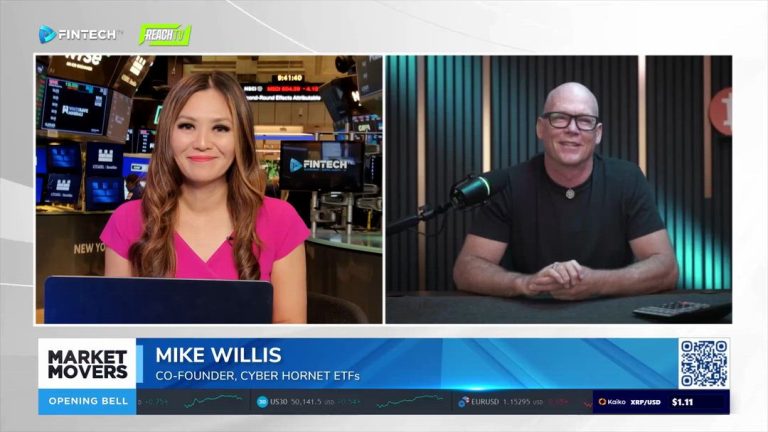
Cyber Hornet’s Mike Willis on Navigating Market Volatility with a 75/25 Stocks-and-Crypto Strategy

Mike Willis, co-founder of Cyber Hornet ETFs, joins Remy Blaire to delve into the current state of the U.S. stock market and the ongoing volatility in the crypto space. They discuss how major stock averages have opened higher, but there’s been noticeable weakness in both the A.I. trade and cryptocurrencies. Notably, figures like Michael Saylor and Tom Lee have pointed out that the A.I. buildout has diverted significant capital away from digital assets, leading to billions in outflows from spot Bitcoin funds since mid-May.

Mike shares insights on his 75-25 hybrid investment model, which allocates 75% to the S&P 500 and 25% to crypto. He explains that this model helps investors manage risk during downturns, as many tend to panic and sell during significant drops. Mike emphasizes the importance of maintaining a long-term perspective on crypto, especially during these challenging times.

They also touch on the upcoming SpaceX IPO and its potential impact on market liquidity, particularly how it may draw investors away from crypto. Mike highlights the shift in investor behavior, noting that many are now treating Bitcoin like a tech stock, chasing returns rather than adhering to its core principles.

Finally, they discuss the recent actions of Michael Saylor regarding his Bitcoin holdings and the broader implications of whale activity in the market. Mike underscores the importance of being aware of these dynamics as they play a crucial role in the current market landscape.
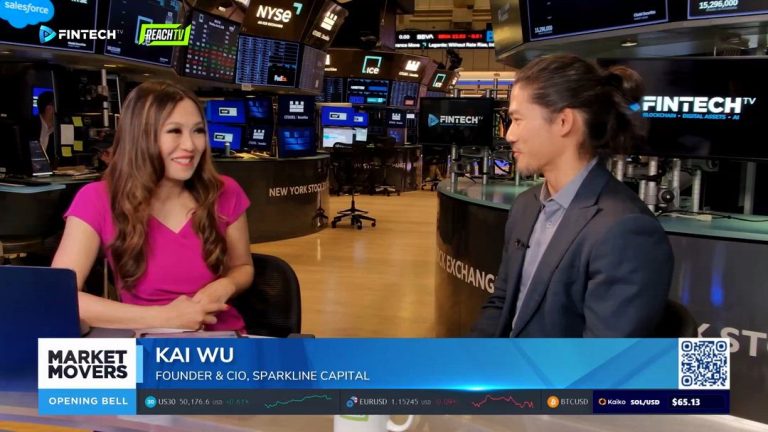
Beyond the Hype: Kai Wu on AI Profitability, Price Wars, and the Future of Software Stocks

Kai Wu, Founder and Chief Investment Officer of Sparkline Capital, joins Remy Blaire to dive into the current state of AI stocks and the broader software sector, which is facing significant challenges. Following a disappointing forecast from Broadcom and Oracle’s recent earnings report, concerns are mounting about the profitability of AI investments.

Kai highlights the dichotomy between semiconductor companies thriving in the AI infrastructure space and legacy software firms that are struggling to adapt. He emphasizes the risks of applying traditional value metrics in a rapidly changing technological landscape, warning that many seemingly cheap stocks could be value traps.

They discuss the concept of “SaaSpocalypse” and the importance of identifying companies with strong competitive moats beyond just their software capabilities. Kai points out that successful companies in times of disruption, like Walmart and the New York Times, managed to pivot and leverage their unique intangible assets.

As they look ahead to the upcoming SpaceX IPO, Kai shares his cautious approach to day-one trading and discusses the potential impact of mega-IPOs on market liquidity. They also touch on the business models of AI companies like Anthropic and OpenAI, raising concerns about their long-term sustainability amid price wars and competition from emerging players.

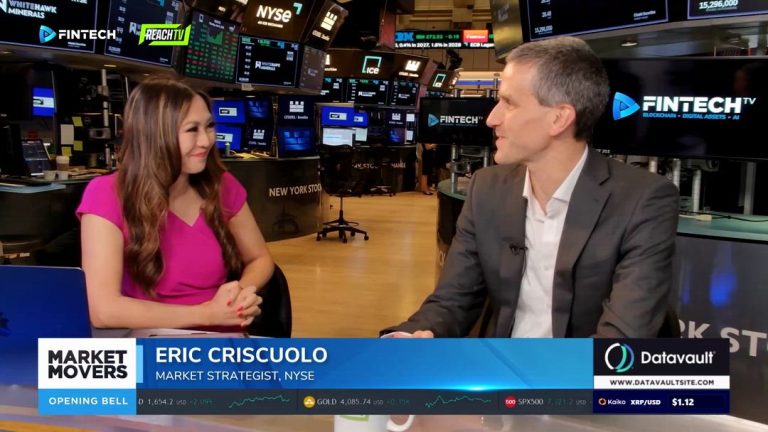
SpaceX IPO Buzz Builds Amid Tech Sell-Off and Shifting Market Dynamics

Eric Criscuolo, a market strategist at the New York Stock Exchange, joins Remy Blaire to discuss the current state of the U.S. stock market, which opened higher, and the tight range in oil trading.

They focus on the recent inflation data, including the Consumer Price Index (CPI) and Producer Price Index (PPI), which indicate that inflation remains elevated but stable. The Federal Reserve is keen on reducing inflation closer to their target of 2%, which is reflected in the high treasury yields and the potential for future rate hikes.

They also touch on the European Central Bank’s recent rate increase and its connection to geopolitical factors, particularly the situation in the Middle East. A significant topic of conversation was the upcoming SpaceX IPO, with Eric sharing insights on the recent sell-off in tech stocks and the rotation into other sectors like healthcare and consumer staples.

They explore whether this broadening of the market rally is a positive sign, as it could indicate a healthier market dynamic beyond just tech. However, they acknowledge the uncertainty surrounding the market’s response to the IPO and the potential for a sell-off.

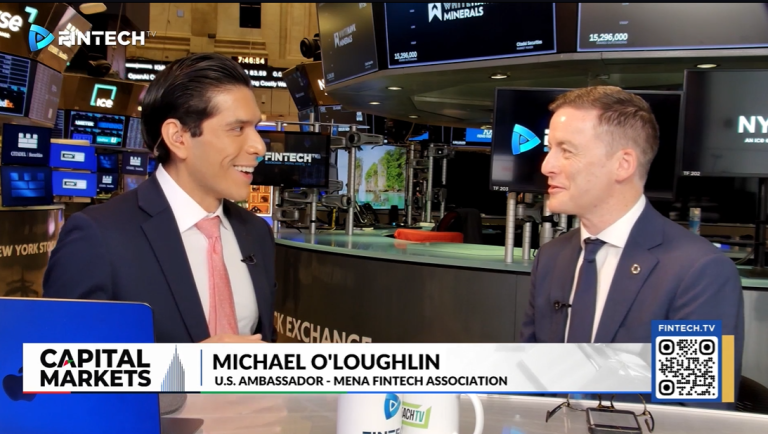
Bridging North America and MENA: How Fintech Firms Can Unlock Growth Across Borders

Michael O’Loughlin, U.S. Ambassador for the MENA Fintech Association and Managing Partner at Argonautic Global, joins Johny Fernandez to discuss the evolving Fintech landscape in the MENA region. They discuss the significant growth and investment opportunities emerging in countries like Saudi Arabia, UAE and Egypt, highlighting the increasing foreign direct investment in the region.

Michael emphasizes the importance of bridging the gap between North American companies and MENA founders, noting the challenges both sides face in navigating regulations and market dynamics. He shares his personal experiences of adapting to the cultural nuances of the region, stressing the need for on-the-ground presence to foster meaningful connections.

They also explore the role of AI in financial services, the shift from tools to systems, and the growing interest in tokenization of real-world assets. Michael points out that collaboration between regulators, innovators, and investors is crucial for fostering innovation while maintaining regulatory standards.

Finally, Michael reflects on the evolution of the MENA Fintech Association over the past decade, highlighting its growth from humble beginnings to a significant player in the Fintech ecosystem. He encourages businesses considering entry into the MENA market to focus on localizing their products and engaging with the community, as building relationships is key to success in the region.

Uneasy Money: Illia Polosukhin on Why Onchain Commerce Needs Confidentiality

Before co-founding NEAR Protocol, Illia Polosukhin was on the eight-person Google Brain team that wrote the transformer paper — the architecture behind every large language model running today. He never mentioned it. When Kain Warwick found out two weeks ago, via a crypto AI chatbot, his reaction was: you have to be kidding me. That backstory sets the tone for a conversation that moves from how transformers actually came together, to why confidentiality is what unlocks on-chain commerce for real businesses, and what NEAR is doing to keep criminals off its network without becoming a surveillance layer. The hosts also get into the Ethereum Foundation’s identity crisis, why Illia thinks decentralization is a tool and not a goal, and what the economy looks like when AI handles execution and blockchain handles coordination.

How ‘Booth Babes’ at Crypto Conferences Could Lead to Big Hacks Like Drift’s

The Drift hack looked like a typical smart contract exploit until the postmortem revealed something far more elaborate: a six-month DPRK intelligence operation involving in-person social engineering at crypto conferences, fully constructed professional identities, and a $1 million deposit to build trust. Then, after $232 million in USDC was stolen, Circle declined to freeze the funds while attackers bridged them across chains for six hours during business hours. Michael Lewellen from Turnkey and Amanda Wick from VerifyVASP tackle what the Drift compromise teaches about operational security in crypto, why Circle’s decision raises hard questions about stablecoin issuer responsibility, and whether the legal framework is forcing companies to choose between compliance and doing what’s right.

Can Hyperliquid Come Onshore Without Killing What Makes It Special?

CME Group and Intercontinental Exchange have asked the CFTC to regulate Hyperliquid, the offshore perpetuals exchange that has rapidly become one of the largest derivatives venues in the world. The incumbents argue that price discovery is migrating to unregulated territory. Hyperliquid argues that its onchain transparency makes it less susceptible to manipulation, not more. Walt Lukken, President and CEO of the Futures Industry Association, and Chris Perkins, CEO of 250 Digital Asset Management, sit down with Laura Shin to work through the options: come onshore and get the licenses, stay offshore and keep growing, or further decentralize until there is no entity left to regulate. The answer may reshape how global derivatives markets are built for the next decade.

Why Arthur Hayes Thinks the AI Bubble Bursting Could Spark a Crypto Bull Market

Maelstrom CIO Arthur Hayes called the Tehran toll booth scenario in writing — and now it’s playing out. Sovereign nations are waking up to the fact that dollar assets don’t buy oil when the strait is closed. On this episode, Hayes joins Laura Shin to explain why the structural unwinding of petrodollar recycling forces the Fed to print, why an AI deflationary bust could rival 2008 in severity before central banks step in, and why that path ends with Bitcoin substantially higher. He also breaks down his current highest-conviction positions: Hyperliquid, Zcash, and NEAR, and explains why he’s deploying into what he calls maximum disillusionment in private crypto equity.

Pump.fun’s $370M Burn Was a Mistake, Says Luca Netz: Uneasy Money

Pump.fun had a choice with $370 million worth of its own tokens. It burned them. On this week’s Uneasy Money, Luca Netz argues that was the worst option on the table. He lays out the “people’s champ” math that, in his view, could have turned Pump.fun into a $5 billion-a-year business if Alon Cohen had launched the biggest airdrop crypto has ever seen—and bought the tokens back at the bottom. Kain Warwick and Taylor Monahan also dig into the 137,000 ETH community effort to plug the KelpDAO hole, why Tay thinks Aave—not LayerZero or KelpDAO—is the key player in DeFi’s latest blowup, and Luca’s blunt new take on whether DeFi yield is even worth the risk right now. Plus: Meta paying creators in USDC, the ghost of Libra, and OpenAI’s leaked AI-native phone.

These sectors look CHEAP during the AI Boom! | Sonali Basak

Sonali Basak is the chief investment strategist at iCapital. She joined Phil Rosen on Full Signal to discuss the leading indicators in private markets for stocks, the AI infrastructure buildout, red flags for investors, and the historic IPO boom led by SpaceX. –

Sonali Basak (@sonalibasak) and Phil Rosen (@philrosenn)