
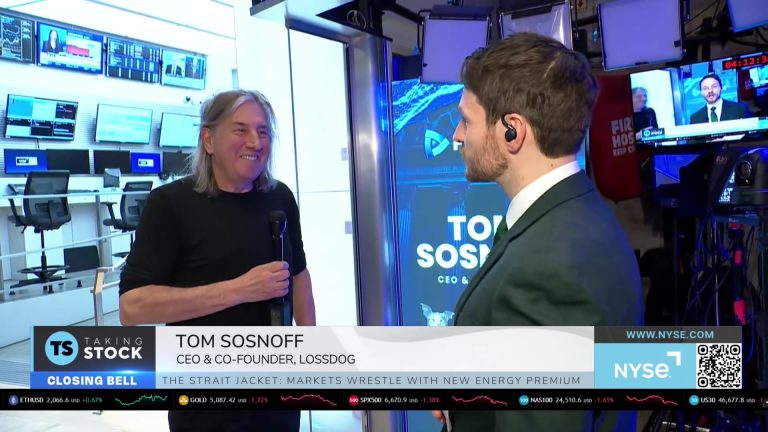
Tom Sosnoff, CEO and co-founder of Lost Dog, joins us from the trading floor of the New York Stock Exchange to share insights on his latest venture. Building on his experience with platforms like Thinkorswim and Tastytrade, Tom explains how Lost Dog helps investors optimize both their career value and portfolio value using agentic AI. The platform provides a quantitative look at your investments, helping improve cost bases, identify outlier risks, and make smarter decisions. Tom also dives into the role of AI in retail investing, emphasizing that while it can make investors smarter, it’s not a crystal ball for predicting market moves. He shares his perspective on wealth preservation amid stagflation chatter and highlights the opportunities that volatility and market noise can create. Finally, Tom leaves viewers with two timeless lessons from his 44-year trading career: “You don’t really know anything” and “stay small.”
Is Crypto Replacing Traditional Exchanges? Inside the Rise of 24/7 On-Chain Markets
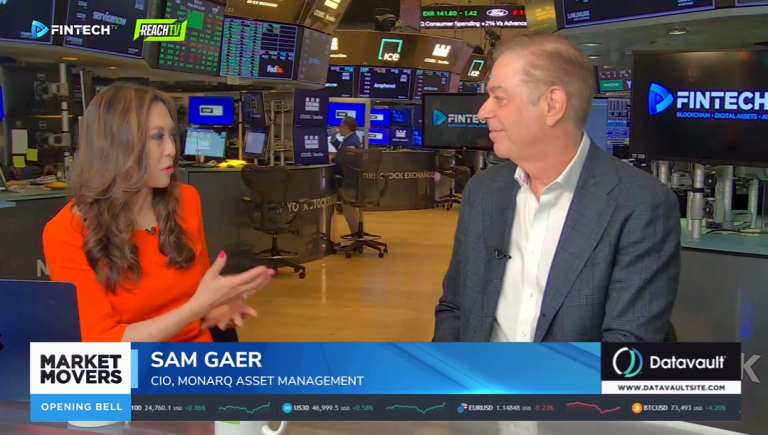
Bitcoin has surged above $73,000, breaking out of its recent trading range—and a massive structural shift may be unfolding beneath the surface of global markets. While traditional exchanges shut down over the weekend, risk never stops trading. Instead, 24/7 crypto platforms are stepping in to handle real-time price discovery and risk transfer.
Sam Gaer, CIO at Monarq Asset Management, joins Remy Blaire to explain why the latest market activity could signal a paradigm shift in financial markets, similar to the transition from open trading floors to electronic exchanges. As geopolitical tensions in the Middle East enter day 14, key assets like crude oil, gold, and silver are increasingly being priced on decentralized platforms—even when traditional markets are closed.
We also delve into why crypto markets trade 24/7 while traditional markets shut dow, the rise of on-chain infrastructure and decentralized exchanges (DEXs), the rapid growth of real-world asset (RWA) tokenization, why institutions and banks are quietly building blockchain and distributed ledger projects, what retail investors should know about market pessimism, FUD, and long-term opportunity, how potential regulation like the Clarity Act could impact the crypto industry and whether quantum computing actually poses a real threat to Bitcoin and crypto.
Oil Surge and Middle East Tensions Shake Markets — What Comes Next?
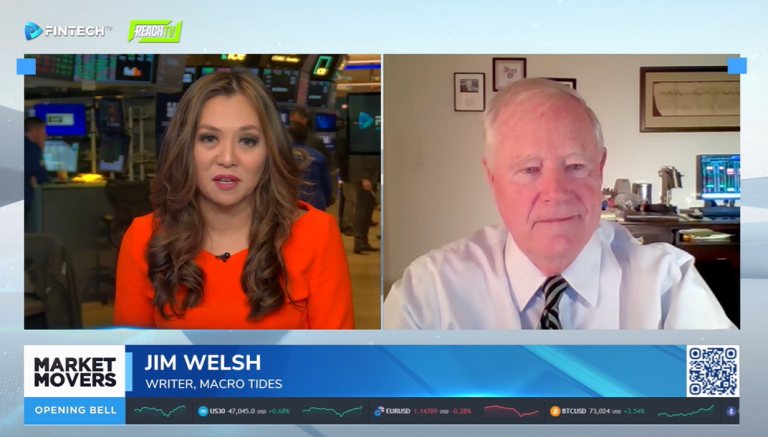
Markets are opening higher after a turbulent stretch that pushed U.S. stocks to their lowest levels of the year. While today’s bounce offers some relief, investors remain on edge as geopolitical tensions, rising oil prices, and uncertainty around artificial intelligence continue to drive volatility.
Jim Welsh, a writer at Macro Tides, joins Remy Blaire to share his insights on the current market environment and what investors should watch next.
Over the past two weeks, the biggest story impacting markets has been the escalating conflict involving Iran and the disruption of traffic through the Strait of Hormuz, sending oil prices sharply higher and raising concerns about inflation and global growth. In this conversation, we break down: why the S&P 500 may still face downside risk from a technical perspective, how rising oil prices could impact inflation and market volatility, why the Federal Reserve may remain on hold despite economic uncertainty, whether fears of stagflation are being overstated, why AI stocks could face additional downside over the next 6–12 months and growing concerns in the private credit market and what it means for financial stocks
We also discuss the broader economic backdrop, including steady GDP growth, strong fiscal spending, and how AI investment — expected to reach hundreds of billions of dollars — could impact the U.S. economy this year.
Finally, Jim explains why market breadth indicators like the advance-decline line suggest the current pullback could eventually lead to a short-term bottom before the next major move. However, with midterm election year volatility historically driving deeper corrections, investors should expect continued turbulence in the months ahead.
Wall Street Struggles Amid Geopolitics: A Long-Term Investor’s Perspective
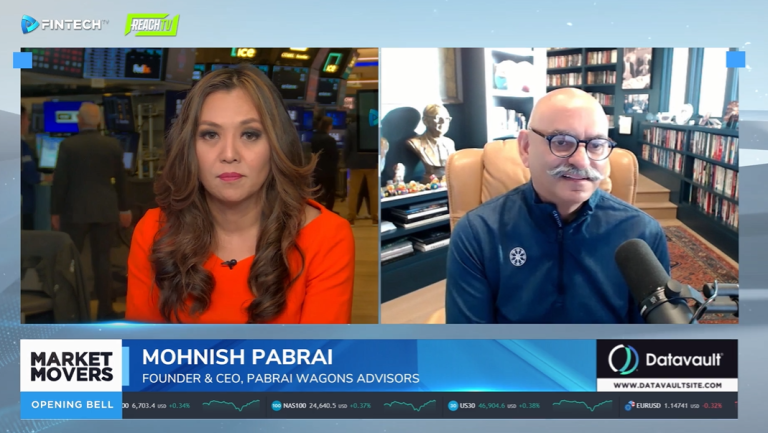
Wall Street is preparing for a higher open, but the broader market is coming off a difficult stretch. All three major U.S. indexes closed at new lows for the year on Thursday, as geopolitical tensions and macroeconomic uncertainty continue to weigh on investor sentiment. Mohnish Pabrai, the founder and CEO of Pabrai Wagons Advisors, joins Remy Blaire to share a long-term perspective on today’s market volatility and where investors may still find value.
Historically, midterm election years can be challenging for markets, and recent developments surrounding the Iran conflict have added additional pressure on U.S. equities during the first two weeks of the month.
We have a conversation on why recent market volatility may actually create opportunities for long-term investors, whether international markets could outperform the U.S. again this year, why the perceived “AI threat” to many software companies may be overstated, undervalued software businesses trading at attractive valuations and opportunities in the metallurgical coal sector due to supply-demand imbalances
We also discuss specific areas the firm is focusing on right now, including companies like Constellation Software and Alpha Metallurgical Resources, as well as how share buybacks and strong fundamentals can create long-term value for investors.
Finally, the conversation closes with an important reminder for investors: most of the market’s long-term gains historically come from a very small percentage of stocks, making it critical to identify strong compounders and hold them over time.
Markets Near All-Time Highs, But Financial Stocks Are Falling Fast: Insights from Todd Sohn
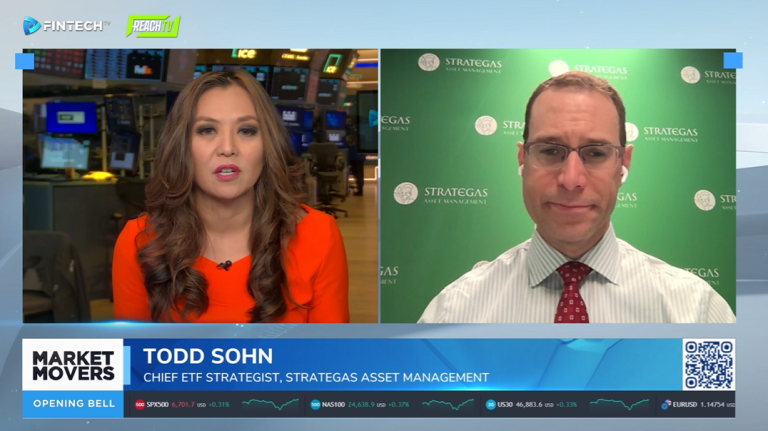
Todd Sohn, Chief ETF Strategist at Strategas Asset Management, joins Remy Blaire to break down what investors should be watching closely over the coming days. We’re taking a deep dive into the financial sector as warning signals begin to surface beneath the market’s relatively calm exterior.
Despite the S&P 500 sitting just a few percentage points below its all-time highs, financial stocks have quietly become the weakest-performing sector of the week, falling more than 11%. At the same time, trading volumes in financial ETFs are surging — a trend that has historically appeared during major macroeconomic events.
We discuss accelerating outflows from financial ETFs, rising put option activity signaling growing investor caution, large-cap banks masking broader weakness within the sector and private credit stress and redemption restrictions at some firms
While mega-cap banks have so far helped stabilize the financial sector, weakness is emerging across regional banks, insurance companies, and private asset managers. Investors are also beginning to see early signs of stress in credit markets, including widening corporate spreads and growing outflows from bank loan ETFs.
Todd explains why this moment could represent a “fight or flight” point for financials — and what it might mean for the broader market.
We also explore practical strategies for investors navigating this environment, including diversification beyond mega-cap growth stocks, exposure to real assets like energy, materials, and metals, defensive portfolio positioning during periods of volatility and alternative strategies such as low-volatility and managed futures
Finally, we discuss the growing concerns around private credit markets and whether the recent cracks could signal broader financial stress ahead.
U.S. PCE Inflation Eased to 2.8% in January, Core Reading Holds at 3.1%

Price pressures moderated slightly on a headline basis but remain above the Federal Reserve’s 2% target
U.S. inflation as measured by the personal consumption expenditures price index edged lower to 2.8% on an annual basis in January 2026, down from 2.9% in December, according to data published Friday by the Bureau of Economic Analysis. On a monthly basis, the PCE price index rose 0.3%, a slight deceleration from the 0.4% increase recorded in December.
The core PCE price index, which excludes food and energy and is closely watched by the Federal Reserve as it conducts monetary policy, rose 0.4% from the prior month and 3.1% from a year earlier, unchanged from the prior month’s annual reading and in line with economist forecasts compiled by Dow Jones.
The next Federal Open Market Committee meeting, in which interest rate cuts will be discussed, will be held on March 18. Economists have pushed back their expectations for a rate cut from March to June, expecting two quarter-point reductions by year end.
The next PCE release, covering February 2026 data, is scheduled for April 9.
View the full report here: https://www.bea.gov/news/2026/personal-income-and-outlays-january-2026
Tether Courts U.S. Market With $500 Billion Valuation Target and New Dollar Token

Bloomberg reports the stablecoin giant is pushing hard into American finance, backed by Trump allies and Treasury holdings, while scrutiny over transparency intensifies
Tether Holdings, the company behind the world’s most widely used stablecoin, is mounting an aggressive push into the U.S. market, launching a new domestic token, lobbying Washington, and courting investors at a reported valuation of $500 billion, according to a Bloomberg report published this week.
The firm posted more than $10 billion in profit last year, a figure that CEO Paolo Ardoino says funds a rapidly expanding global portfolio of more than 140 investments. Tether holds approximately $193 billion in reserves, of which 63% is allocated to U.S. Treasuries, making it, by its own account, the 17th largest holder of American government debt globally.
The push is a change in direction for Tether, and comes with powerful allies. Commerce Secretary Howard Lutnick, whose family firm holds a stake in Tether, has been a key supporter. Yet scrutiny is growing. Democratic Senator Jack Reed has proposed legislation requiring audits of foreign dollar-backed stablecoins. Transparency has long been a concern, with critics pointing to the lack of information on Tether’s full exposure. Tether has told investors that it plans to publish a full audit by the end of 2026, and Ardoino acknowledged the company is in talks with Big Four auditors, telling Bloomberg: “I will not make a commitment, but it’s super high priority.”
SEC Advisory Panel Backs Tokenized Securities, With Guardrails Attached
The agency’s Investor Advisory Committee voted to recommend a regulated path forward for blockchain-based stock trading, as Chairman Atkins signals a formal exemption is imminent
The U.S. Securities and Exchange Commission’s Investor Advisory Committee has voted to recommend the agency move forward on a regulatory framework for tokenized securities, offering cautious but meaningful institutional endorsement for one of the more consequential shifts under consideration in American capital markets.
The committee voted to support narrow exemptions for blockchain-based equity trading, on the condition that any such activity comes with mandatory disclosures, routine outside supervision, and a requirement that trading of tokenized equity securities ensures all investors receive the best terms for their orders. The committee’s membership includes veterans from major trading firms, institutional investors and academics.
The core appeal of tokenization lies in its ability to ease the settlement process. Traditional stock trading routes transactions through brokers, transfer agents and centralized settlement databases, a chain that can take a day or more to complete. By placing a stock on-chain, the delivery of the tokenized security and the payment can happen as a single transaction, with ownership records embedded directly into a single blockchain, according to the committee’s recommendation document.
SEC Chairman Paul Atkins, speaking at the meeting, welcomed the committee’s recognition that tokenization can enhance settlement efficiency, reduce settlement risk, and eliminate unnecessary intermediaries.
Atkins signaled that formal action is close. “I expect the Commission to soon consider an innovation exemption to facilitate limited trading of certain tokenized securities with an eye toward developing a long-term regulatory framework,” he told attendees, adding that the agency’s Crypto Task Force has hosted several roundtables, met with hundreds of market participants, and solicited broad public feedback over the past thirteen months. The exemption, he noted, would be limited in both time and scope.
The committee was careful to flag the risks alongside the opportunity. “The most significant risk associated with the tokenization of equity securities is that these reforms or grants of exemptive relief could introduce new risks that investors do not understand and impose higher costs that outweigh the benefits of tokenization,” according to the approved recommendation document.
The vote follows a sequence of regulatory moves that have steadily narrowed the uncertainty around tokenized assets. In January, SEC staff issued a joint statement affirming that tokenized securities remain subject to federal securities law regardless of whether ownership is recorded on-chain or off-chain. In early March, the Commission filed a broader crypto asset taxonomy framework with the White House Office of Information and Regulatory Affairs, initiating interagency review for the first time at the Commission level.
A CBDC Ban Hitched a Ride on a Housing Bill. Now It Faces an Uncertain Road Ahead.
The U.S. Senate passed an 89-10 vote to block the Fed from issuing a digital dollar, but the provision’s survival depends on a House chamber with different priorities
The U.S. Senate has voted to ban the Federal Reserve from issuing a central bank digital currency (CBDC), but the measure arrived in an unusual vehicle: a sweeping bipartisan housing bill that has little else to do with digital finance, and that now faces significant headwinds in the House of Representatives.
The 21st Century ROAD to Housing Act passed the Senate by an overwhelming 89-10 margin, with the CBDC prohibition tucked into a standalone section near the end of the 303-page bill. The provision, which occupies just two pages of legislation, bars the Fed from issuing or creating a central bank digital currency, or any digital asset substantially similar to one, directly or indirectly through a financial institution or other intermediary, with a sunset clause running through December 31, 2030. A carve-out preserves permissionless, private dollar-denominated currencies that fully protect the privacy of users.
The housing bill’s primary focus is entirely separate. The legislation aims to lessen government regulations on housing and provide incentives for state and local governments to ease land-use regulations, while also controversially banning large investors from purchasing single-family homes, a provision demanded by President Trump but opposed by many free-market conservatives.
The CBDC language was reportedly added at the urging of House conservatives, who had pressed leadership to secure a ban as part of earlier compromises on crypto-related measures. The White House issued a statement supporting the bill and explicitly backing the CBDC restriction, an unusual alignment given that Democrats, who helped carry the Senate vote, have generally resisted efforts to pre-emptively limit the Fed’s ability to study or develop a digital dollar.
Industry groups based in the U.S. praised the vote. Cody Carbone, CEO of the Digital Chamber, said financial privacy is a cornerstone of American freedom and that any decision to authorize a CBDC must remain with Congress and the American people. Blockchain Association CEO Summer Mersinger argued that a government-issued CBDC would threaten core American values including financial privacy, civil liberties, and limits on state power.
The path forward is far from clear. House Republicans have skirmished with their Senate counterparts for weeks over key provisions, including the ban on large institutional investors in single-family homes. Rep. French Hill, chair of the House Financial Services Committee, said it is critical to get the details right and address concerns raised by House members with the Senate bill. Some conservative Republicans in the House are also unhappy that the CBDC provision is temporary rather than permanent. President Trump, meanwhile, has threatened to veto all legislation until Congress passes the SAVE Act, a voter-ID reform bill, adding another layer of uncertainty to the timeline.
The Senate vote places the U.S. sharply at odds with the directions taken in the European Union and UK, where authorities are actively developing, rather than restricting, CBDCs. The European Central Bank is pressing ahead on both retail and wholesale fronts. Assuming EU co-legislators adopt the enabling regulation during 2026, a pilot exercise and initial transactions could begin as early as mid-2027, with a potential first issuance of the digital euro targeted for 2029, according to the ECB.
In the UK, the Bank of England and HM Treasury are still working through a multi-year design phase, with a decision on whether to proceed expected later in 2026 and the earliest possible issuance of a digital pound placed in the second half of the decade. Unlike the EU, the UK has yet to lay out a specific legal framework for a digital pound, reflecting a more cautious posture, though one that stops well short of an outright ban.
The Bank for International Settlements has long positioned itself as a cautious but broadly supportive voice on CBDCs, describing them as a potential “sea change” for the monetary system. Its annual survey found that by late 2024, 43% of central banks had stepped up wholesale CBDC work in direct response to the rise of private digital currencies and stablecoins.
Tokenized Crude Oil Startup LITRO Eyes 2027 Launch With Pilot Testing Set for This Spring

The project aims to bring the $6 trillion oil market on-chain, backed by a former Petronas trading executive and built on Ethereum’s Arbitrum network
A new blockchain project called LITRO is preparing to take one of the world’s most economically significant commodities on-chain, with pilot testing due to begin as early as next month and a full commercial launch penciled in for January 2027.
The project is being developed by the International Digital Exchange, known as INDEX, and is led by Baron Lamarre, a former trading executive at Malaysian state oil giant Petronas. The testnet and product demo are scheduled to roll out between March and May 2026, ahead of an official launch in January 2027, Lamarre told CoinDesk in an interview.
The core mechanic is straightforward in concept, if ambitious in execution. Each LITRO token represents one litre of verified physical crude oil, with the token’s value indexed to major global benchmarks including Brent and West Texas Intermediate. Rather than creating another speculative digital asset, Lamarre says the project is designed to remain strictly tethered to real-world supply.
Oil producers wishing to participate pledge their certified reserves to the INDEX platform, which are then verified by independent auditors for quantity, authenticity, and legal ownership before any tokens are minted. “Only audited and verified reserves can be tokenized,” Lamarre told CoinDesk, adding that the physical oil remains at the producer’s facility while legal title is assigned to the INDEX system. The project is currently being built on Arbitrum, an Ethereum scaling solution, and is designed to be compatible with any EVM-compatible blockchain.
The proposition for traders centers on liquidity and accessibility. Token holders can redeem LITRO for cash or, eventually, for physical crude oil delivery, via a smart logistics routing system that matches oil grades, arranges vessel and terminal logistics, issues electronic bills of lading and coordinates delivery using IoT sensors, vessel tracking and AI-driven optimization.
The timing reflects broader momentum in the real-world asset (RWA) tokenization market. The RWA market reportedly stands at over $25 billion today, but is predominantly driven by tokenized financial instruments such as government bonds, leaving physical commodities largely untouched. LITRO’s proponents argue the oil market is a natural candidate for disruption given its scale and the inefficiencies that persist within it.
The project is still at an early stage, and its January 2027 target remains contingent on the outcome of its pilot program. Whether institutions and oil producers will embrace a blockchain-based settlement layer for physical crude, particularly given the sector’s deep entrenchment in legacy infrastructure, remains the central question the coming months of testing will need to answer.