[stock-market-ticker symbols=" ^NYA;CRYPTO:BTC;CRYPTO:ETH;CRYPTO:USDT;CRYPTO:USDC;CRYPTO:BNB;CRYPTO:ADA;CRYPTO:XRP;CRYPTO:SOL;CRYPTO:DOGE " stockExchange="NYSENASDAQ" width="100%" transparentbackground=1 palette="financial-light"]

Home Blog Page 64

From AI Layoffs to Oil Disruptions: The Economic Risks Investors Can’t Ignore

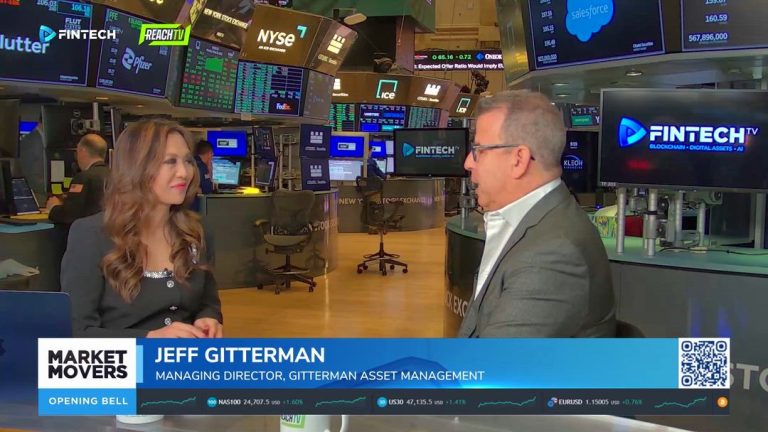
Global tensions, rising inflation risks and uncertainty around Federal Reserve policy are shaping the investment landscape. Jeff Gitterman, Managing Director at Gitterman Asset Management, joins Remy Blaire to share his insights on how the ongoing Middle East conflict and higher oil prices could impact markets and investor portfolios.

Jeff discusses the growing risk of stagflation—a challenging economic scenario marked by high inflation and rising unemployment. With potential disruptions to oil and fertilizer supplies through the Strait of Hormuz and AI-driven layoffs affecting the labor market, investors may face increased volatility in the months ahead.

The conversation also explores why the Federal Reserve may keep interest rates higher for longer, how rising mortgage rates and Treasury yields are influencing the economy, and why investors should stay cautious rather than reacting emotionally to short-term market swings.

Jeff also shares practical advice on risk tolerance and portfolio strategy, reminding investors that markets can behave like a roller coaster—and that having the right strategy and guidance can help prevent costly emotional decisions during market downturns.

U.S. Stocks Open Higher as Investors Weigh Oil Shock, Tariff Risks and Fed Outlook

U.S. markets are kicking off the final two trading weeks of Q1 on a strong note, with the Dow Jones Industrial Average, Nasdaq Composite and S&P 500 all opening higher. But beneath the early optimism, investors are watching several major risks that could shape market direction in the weeks ahead.

Ongoing conflict in the Middle East and surging global oil prices continue to weigh on sentiment, while new tariff investigations targeting imports from Canada, Mexico and China add fresh trade uncertainty. At the same time, pressure is building in the software sector, private credit markets, and major bank stocks.

To break it all down, Brian Jacobsen, Chief Economist at Annex Wealth Management, joins Remy Blaire to discuss what investors should expect as the quarter comes to a close.

We discuss whether markets can repeat last year’s rebound despite geopolitical uncertainty, how rising oil prices and supply shocks could impact Q1 earnings season, why the Federal Reserve is likely to stay cautious rather than react aggressively to inflation spikes, how Chair Jerome Powell may emphasize vigilance without overreacting, the long-term economic impact of AI and which industries may face short-term disruption, why private credit fears may be overblown despite market anxiety and the sharp sell-off in financial stocks and what it signals for investors.

We also dive into global currency and bond markets, including how rate differentials between the U.S. and the European Central Bank could eventually weaken the dollar after its recent geopolitical-driven strength.

Finally, we examine rising gas prices as the national average hovers near $3.71 per gallon — and what drivers can expect as the summer travel season approaches.

Global Central Banks Face Crucial Rate Decisions Amid Rising Geopolitical and Inflation Pressures

This week marks a pivotal moment for global monetary policy, with major rate decisions coming from the Federal Reserve, European Central Bank, Bank of Japan and the Bank of England.

While the FOMC is widely expected to hold rates steady, policymakers are facing a complicated backdrop: a cooling labor market, rising energy prices, and escalating geopolitical tensions. Adding to the uncertainty is unprecedented political drama, including legal challenges involving Fed Chair Jerome Powell.

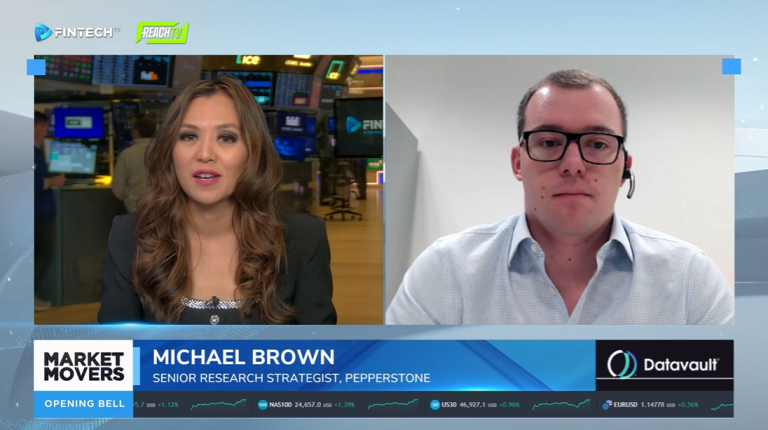
Michael Brown, Senior Research Strategist at Pepperstone, joins Remy Blaire to discuss why markets are reacting cautiously despite elevated oil prices, whether central banks are likely to “wait and see” rather than make aggressive moves, how energy-driven inflation complicates the outlook, the risks surrounding the Fed’s dot plot projections, why markets may be overpricing rate hikes in the U.K. & the Eurozone and how monetary policy expectations could shift heading into 2026.

We discuss how with headline inflation expected to rise due to energy shocks—but uncertainty around how long those pressures will last—central banks may prioritize flexibility over firm forward guidance.

Finally, we also examine how Chair Powell may handle political pressure while reinforcing the Fed’s independence, and whether policymakers like Bank of England Governor Andrew Bailey and European Central Bank President Christine Lagarde will push back against hawkish market expectations.

Bitcoin Drops 3.5% as Middle East Escalation Halts Rally in Its Tracks

0

A promising crypto rally ran into a wall on Monday after fresh headlines from the Middle East abruptly reversed bitcoin’s climb to a near one-month high.

Bitcoin surged to nearly $74,000 earlier in the session before reversing sharply to $71,200 Monday morning, as news of the UAE’s Fujairah port was hit and is suspending oil loads. The Wall Street Journal has also reported the Pentagon is deploying a Marine expeditionary unit of roughly 2,500 troops to the region, including forces attached to the USS Tripoli. President Trump has also warned that Nato faces a ‘very bad’ future if allies fail to help secure the strait of Hormuz. 

U.S. equities surrendered early gains, with the S&P 500 and Nasdaq turning to losses of 0.4% to 0.5%, while oil climbed more than $5 per barrel from its session lows.

Paul Howard, director at trading firm Wincent, noted that optimism over geopolitical developments, including Russian sanction relief, had been a driver of the earlier price action, but cautioned that such headlines tend to have a short half-life.

Crypto-linked equities held onto gains, with bitcoin miner Marathon Digital jumping 10% and Galaxy Digital, Bitmine and Cipher Mining each climbing between 5% and 7%. The divergence between spot crypto prices and mining stocks suggested markets viewed the pullback as a temporary reaction rather than a fundamental shift in sentiment. 

Bitcoin Hits 20 Million Coins Mined, but Could the Industry That Got It There Be Moving On?

0

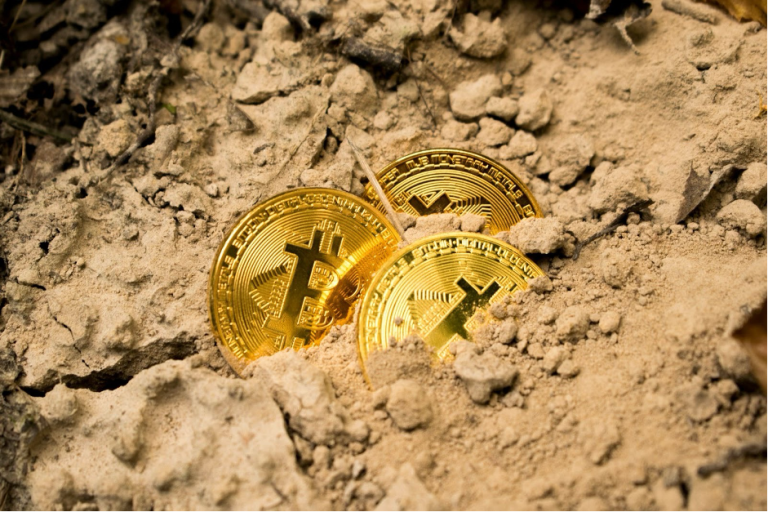
The bitcoin network crossed a historic threshold this week when the 20 millionth coin was mined, leaving just 1 million btc remaining to be issued as block rewards. The event, 16 years in the making, has prompted some assessment across the mining industry about what comes next, and for many operators, the answer increasingly has nothing to do with bitcoin.

The significance of the milestone lies in what it reveals about bitcoin’s core design. Satoshi Nakamoto, the pseudonymous creator of the network, capped total supply at 21 million coins and built in a mechanism, the halving, that cuts miner rewards in half approximately every four years. 

The remaining 1 million coins, according to Wolfie Zhao, head of research at TheEnergyMag, could take roughly another 115 years to fully unlock. That timetable frames the mining industry’s dilemma in stark terms: sustaining operations for more than a century on progressively smaller rewards is not a business model many companies can support.

John Todaro, managing director and senior research analyst at Needham & Company, expects the shakeout to accelerate well before then. He told Decrypt that he anticipates a large portion of publicly traded bitcoin miners will sell down nearly all of their bitcoin holdings before year-end 2026, funding a pivot toward AI and high-performance computing workloads. By 2027 and 2028, he expects many to exit bitcoin mining altogether. 

The economics are hard to argue with: “Stubbornly low hash price combined with the upcoming 2028 halving presents a concerning environment for bitcoin mining operations,” he said. “Many operators are at or near breakeven costs today, while NOI margins in HPC are north of 80%.” Every publicly traded miner his firm covers has already allocated some share of its computing capacity to AI infrastructure.

The pivot is already well underway at some of the industry’s most prominent names. Bitdeer, the Singapore-based miner led by Bitmain co-founder Jihan Wu, is converting facilities into AI data centers while simultaneously developing its own next-generation mining chips. Ross Gan, Bitdeer’s chief communications officer, framed vertical integration as the defining competitive advantage going forward. “The miners that endure will be the ones that control more of the stack themselves,” he told Decrypt. HIVE Digital Technologies, which began investing in HPC infrastructure earlier than most of its peers, echoed a similar philosophy. Executive Chairman Frank Holmes argued that the miners best positioned for the future will be those who can source low-cost, stranded energy and convert it into durable computing infrastructure, whether for bitcoin or something else entirely.

Not everyone sees the transition as a retreat. Holmes characterized the upcoming halving not as an endpoint but as a filter. “Block rewards will decrease, but that does not mean the industry will disappear. It means the bar rises,” he told Decrypt.

For bitcoin’s price, the implications of a shrinking miner cohort may be more limited than they appear. Todaro pointed out that miners have already lost much of their historical influence over the market. They currently hold roughly 0.5% of circulating supply, while Strategy, the world’s largest corporate holder of bitcoin, holds seven times more bitcoin than all miners combined. Selling pressure from miners liquidating holdings, while real, is likely to be modest relative to the broader holder base.

The 20 million-milestone is a reminder that bitcoin’s supply mechanics have always been the headline. The harder question, one the mining industry is now being forced to answer, is whether the businesses built around those mechanics can survive long enough to see the final coin issued.

Blockfills Files for Bankruptcy After $75 Million in Losses and Asset Freeze

0

Chicago-based institutional crypto trading firm BlockFills, founded in 2028, has filed for chapter 11 bankruptcy protection, the latest casualty of sustained pressure on digital asset lending businesses.

BlockFills’ operator, Reliz Ltd., along with three affiliated entities, filed voluntary restructuring petitions on March 15 in the U.S. Bankruptcy Court for the District of Delaware, according to court documents reviewed by CoinDesk. The filing shows assets of between $50 million and $100 million set against liabilities of $100 million to $500 million, a gap that underscores the scale of the firm’s financial deterioration.

The company said the decision followed consultations with investors, clients, and creditors. “After extensive discussions with investors, clients, creditors, and other stakeholders, BlockFills has determined that a voluntary chapter 11 filing is the most responsible path forward in order to preserve the value of the business and maximize recoveries for stakeholders,” the firm said in an official statement.

The collapse had been building for weeks. BlockFills halted customer withdrawals and deposits in February, citing deteriorating market and financial conditions. CoinDesk subsequently reported the firm had suffered approximately $75 million in losses and was seeking either a buyer or emergency funding. Co-founder and CEO Nicholas Hammer stepped down in late February, with Joseph Perry taking over as interim chief executive.

Legal troubles compounded the firm’s difficulties. Creditor Dominion Capital filed a lawsuit alleging that BlockFills had misappropriated customer cryptoassets, commingled client funds and concealed significant losses. A U.S. federal judge issued a temporary restraining order against the company in connection with that case.

The bankruptcy filing stands in stark contrast to the firm’s recent operational scale. BlockFills, reported processing more than $60 billion in trading volume in 2025, a 28% increase from the prior year, and served roughly 2,000 institutional clients, including hedge funds, asset managers, and mining companies. Its backers included Susquehanna Private Equity Investments, CME Ventures and Nexo Inc.

How FinTech Companies Make Money:GoCardless

0

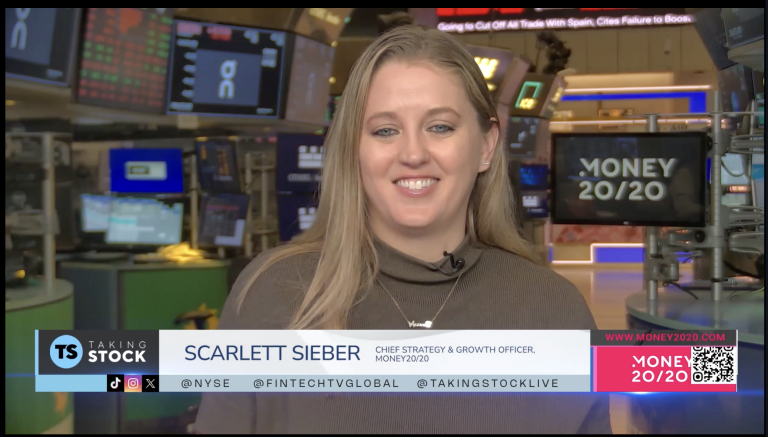
Scarlett Sieber with Money 2020, breaks down how FinTech companies actually make money. On this episode, Scarlett dives into GoCardless, the global bank-to-bank payment network quietly powering subscriptions, invoices, memberships, and all those recurring charges you meant to cancel but never did. By replacing the chaos of credit cards with direct debit, GoCardless ensures predictable cash flow for businesses and fewer headaches for customers. They generate revenue through transaction fees for direct debit and instant bank payments, success-based pricing, FX and cross-border margins, intelligent recovery tools, and enterprise implementations for global merchants. With tens of billions processed each year and deep integrations with platforms like Xero, Salesforce, Chargebee, and Zuora, GoCardless has planted itself firmly in the recurring revenue economy. Their moat? Global bank connectivity across 30+ countries, high collection reliability, and seamless integration into the software that powers subscriptions and invoices. In short, GoCardless monetizes predictability, every successful pull is a fee, and every prevented failure is value.

Dragonfly Capital on Crypto’s Future: Stablecoins, DeFi & AI at the NYSE

0

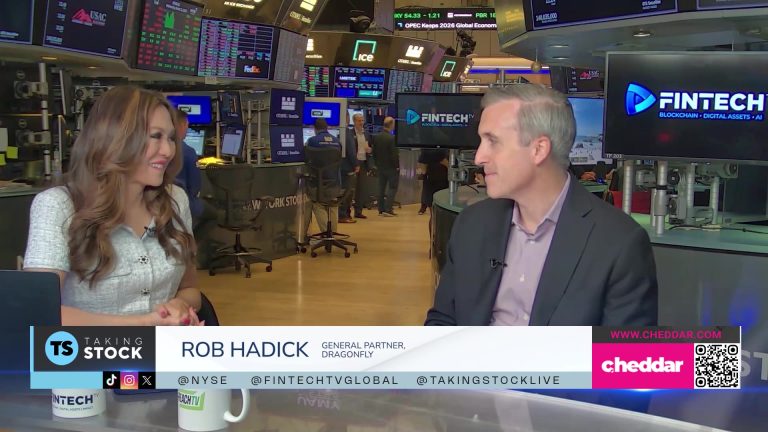
Bitcoin has rebounded from its 2026 lows, but the broader digital asset market continues to navigate a complex macro environment shaped by liquidity expectations and shifting investor sentiment. Joining from the New York Stock Exchange, Rob Hadick, General Partner at global crypto investment firm Dragonfly Capital, shares insights on the evolving landscape of digital assets and the firm’s focus after closing a $650 million fourth fund. Paddock explains that while volatility and deleveraging have shaped recent market conditions, the industry is undergoing a major transformation moving away from early Web3 experimentation and toward greater institutional participation and real-world financial integration. As venture investors looking years ahead, Dragonfly is concentrating on areas already showing real traction, including stablecoins, decentralized finance, and emerging blockchain-based financial infrastructure.

During the conversation, Hadick highlights the rapid growth of stablecoin payments and settlement, pointing to Dragonfly portfolio company Rain, which is helping power stablecoin settlement directly with Visa, a business that has scaled from virtually nothing to billions of dollars in annualized volume within a year. He also discusses the continued expansion of decentralized finance platforms like Hyperliquid, which now processes billions in daily trading volume across crypto and real-world asset derivatives. The discussion also explores the growing intersection between blockchain and artificial intelligence, including decentralized AI infrastructure, new models for coordinating AI inference, and experimental payment standards such as x402 from Coinbase. While still in the early stages, Hadick believes the convergence of AI, stablecoins, tokenization, and decentralized finance could help build the next generation of global financial rails.

Markets Near Record Highs Despite Oil Shock & Private Credit Fears

0

Phil Rosen, co-founder of Opening Bell Daily and host of Full Signal, joins us to break down the latest market action and what’s really driving investor sentiment. Despite ongoing volatility, rising oil prices, geopolitical tensions, and persistent inflation concerns, the S&P 500 remains just a few percentage points away from record highs highlighting the resilience of the current bull market. Rosen explains how markets have managed to absorb a series of shocks, including the recent surge in crude oil prices, with West Texas Intermediate nearing $98 a barrel and Brent Crude trading above $100. Historically, similar oil shocks have often been followed by strong equity performance over the following year, suggesting that while short-term volatility may continue, long-term bullish momentum could remain intact.

Rosen also discusses growing concerns around the private credit sector, as major firms such as Apollo Global Management, Blue Owl Capital, and KKR & Co. have experienced significant declines over the past month. With financials emerging as the worst-performing sector in the S&P 500 this year, investors are watching closely for potential cracks in the private credit market and broader financial system. Still, Rosen notes that markets often climb a “wall of worry,” and even with fears surrounding geopolitics, rising energy costs, and election uncertainty, the broader bull market has yet to break down making this one of the most fascinating environments for investors in recent years.

Inside the Bitcoin Infrastructure Powering the Future of Finance

0

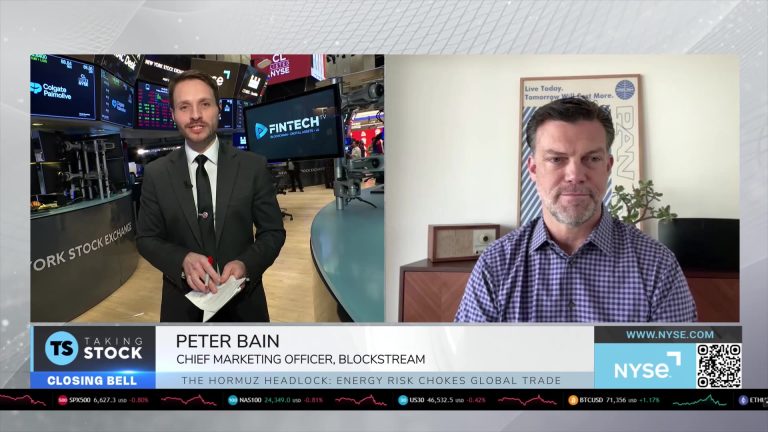
Peter Bain, Chief Marketing Officer at Blockstream, joins us on Taking Stock to discuss the company’s role in the broader Bitcoin ecosystem and the future of digital asset infrastructure. Bain explains how Blockstream focuses on strengthening and expanding the Bitcoin network through technologies that enhance scalability, security, and accessibility for both institutions and individual users. The company has been instrumental in developing major innovations such as the Liquid Network, the first Bitcoin-based sidechain, along with institutional-grade custody solutions, tokenization tools, smart contracting capabilities, and settlement infrastructure designed for the financial industry. As Bitcoin continues to evolve beyond a speculative asset, Bain highlights how infrastructure providers like Blockstream are helping bridge traditional finance and decentralized technology.

During the conversation, Bain also shares his outlook on Bitcoin’s recent price action, noting that while short-term volatility remains part of the asset’s nature, long-term momentum continues to be driven by global adoption. He discusses the shifting balance between retail investors and institutional participation, emphasizing the importance of self-custody supported by tools like the Blockstream Jade Hardware Wallet while also acknowledging the growing interest from financial institutions exploring Bitcoin as infrastructure for custody, financial products, and settlement rails. Bain also addresses concerns around Quantum Computing and its potential implications for cryptography, explaining that while it remains an important long-term consideration, practical threats to current security standards are likely decades away. He concludes by highlighting ongoing research and innovations aimed at strengthening the resilience of blockchain networks as the industry continues to mature.