[stock-market-ticker symbols=" ^NYA;CRYPTO:BTC;CRYPTO:ETH;CRYPTO:USDT;CRYPTO:USDC;CRYPTO:BNB;CRYPTO:ADA;CRYPTO:XRP;CRYPTO:SOL;CRYPTO:DOGE " stockExchange="NYSENASDAQ" width="100%" transparentbackground=1 palette="financial-light"]

Home Blog Page 66

Palantir and Nvidia Unveil Joint Sovereign AI Architecture for Enterprise and Government Deployments

0

The partnership delivers a turnkey AI datacenter stack, from hardware procurement to application deployment, targeting customers with strict data sovereignty requirements

Palantir Technologies and Nvidia have announced a joint reference architecture designed to give enterprises and governments a fully integrated, on-premise AI operating system, combining Nvidia’s latest accelerated computing hardware with Palantir’s software suite in a single deployable stack.

The product, called the Palantir AI OS Reference Architecture (AIOS-RA) is built on Nvidia’s Enterprise Reference Architectures and tested to run Palantir’s full software lineup, including AIP, Foundry, Apollo, Rubix and AIP Hub. The architecture is purpose-built to run on Nvidia Blackwell Ultra systems, equipped with eight Blackwell Ultra GPUs and Spectrum-X Ethernet networking for AI training and inference workloads.

The partnership targets a specific and growing segment of the enterprise AI market, namely customers who cannot route sensitive data through public cloud infrastructure. The sovereign AI architecture is particularly critical for customers with existing GPU infrastructure, latency-sensitive workflows, data sovereignty requirements, and high geographic distribution, according to the announcement. 

The structure gives deploying organizations total control over their data, AI models, and applications, a requirement that has become increasingly prominent among defense agencies, financial institutions, and foreign governments wary of cloud-based AI services operated by U.S. hyperscalers.

Akshay Krishnaswamy, Palantir’s chief architect, framed the offering as a natural extension of the company’s work in sensitive government environments. He noted that every deployment Palantir has managed has had to operate under strict constraints, and that the Nvidia partnership allows customers to build on existing hardware investments while accessing a fully integrated, production-ready system.

Justin Boitano, Nvidia’s vice president of enterprise AI platforms, described the collaboration as a response to the growing complexity of AI infrastructure, arguing that latency-sensitive and data-sovereign deployments require a full-stack approach built from silicon to software.

The announcement came during Palantir’s AIPCon 9 event in Miami, where the company also unveiled a separate multi-year partnership expansion with GE Aerospace focused on military aircraft readiness, and a new collaboration with Ondas and World View to develop a multi-domain intelligence platform. The clustering of announcements signals an accelerating push by Palantir to deepen its footprint across defense, aerospace, and critical infrastructure at a moment when AI spending in those sectors is growing rapidly.


BlackRock’s Staked Ether ETF Posts Solid Debut With $15.5 Million in First-Day Volume

0

The launch marks a new chapter for crypto ETFs, blending spot exposure with on-chain yield

BlackRock’s iShares Staked Ethereum Trust debuted Thursday with $15.5 million in first-day trading volume, a result that analysts described as a strong opening for the world’s largest asset manager’s third crypto exchange-traded fund and its first to incorporate staking.

The fund, trading under the ticker ETHB on Nasdaq, launched with $106.7 million in net assets and saw more than 590,000 shares change hands during its debut session. Bloomberg Intelligence ETF analyst James Seyffart called the performance “very, very solid for a day 1 ETF launch.”

The product represents a meaningful structural evolution from the spot crypto ETFs that preceded it. Unlike traditional spot crypto ETFs, ETHB stakes between 70% and 95% of its ether holdings and distributes approximately 82% of staking rewards to investors through monthly payouts. The remainder is allocated jointly to BlackRock and Coinbase, which acts as custodian and helps coordinate staking operations alongside validator firms Figment, Galaxy Digital, and Bitwise-owned Attestant.

The fund charges a 0.25% sponsor fee, temporarily discounted to 0.12% on the first $2.5 billion in assets, a pricing structure designed to draw early capital and cement ETHB’s position ahead of potential competitors in the staking ETF space.

The debut trailed comparable products tied to Solana. The Bitwise Solana Staking ETF recorded $55.4 million on its October debut, while the REX-Osprey SOL + Staking ETF generated $33.7 million when it launched in July. Even so, analysts note that ether and solana attract meaningfully different investor bases, making a direct volume comparison of limited analytical value.

The launch arrives as ether attempts to consolidate around a key technical level. Ether was trading at roughly $2,110 at the time of the debut, up about 4% over the prior 24 hours, hovering near the psychologically important $2,000 mark after failing to sustain a move above $2,200 earlier in the month.

ETHB adds to BlackRock’s growing crypto ETF lineup, which already includes the iShares Bitcoin Trust (IBIT) and the iShares Ethereum Trust (ETHA), funds that have attracted over $62.8 billion and $11.9 billion in cumulative inflows respectively since launching in 2024.

If staking ETFs gain broader traction, the structure could open the door to similar yield-generating products tied to other proof-of-stake networks, potentially reshaping how institutional investors think about crypto as an asset class.

Bitcoin Holds Above $71,000 as Crypto Shrugs Off Equity Weakness

0

Majors post modest gains Friday as the broader market stays resilient despite turbulence in global stocks

Bitcoin climbed to $71,329 in early trading Friday, extending a quiet stretch of consolidation even as global equities wobbled under the weight of rising oil prices and renewed geopolitical stress.

The world’s largest cryptocurrency by market cap rose roughly 2.6% over the prior 24 hours, hovering near the upper bound of a monthlong trading range that analysts say has kept the market in a holding pattern since late January. With $70,000 serving as key support and $73,000 as a closely watched resistance level, bitcoin has yet to mount a decisive breakout in either direction.

The broader crypto market, valued at approximately $2.4 trillion, has tracked bitcoin’s muted trajectory. Ether, solana, cardano and BNB all posted modest advances, while xrp outperformed the group, surging 3% as prices broke above $1.39, a move that CoinDesk analytics data showed was accompanied by a volume spike of more than 300%.

What makes Friday’s trend notable is the decoupling from equities. Stock markets have struggled this week, pressured by elevated energy costs and geopolitical uncertainty, yet crypto has largely absorbed that turbulence without meaningful selling.

Analysts attribute bitcoin’s overall steadiness to a structural shift rather than speculative momentum. Institutions are increasingly exploring bitcoin-native financial infrastructure, including what the industry has begun calling bitcoin DeFi, a trend that may be creating more durable demand below current price levels. Even so, analysts caution that a sustained rally will likely require a fresh influx of capital to push through near-term resistance.

For now, bitcoin and its peers appear content to consolidate. With the Federal Reserve’s March 17-18 meeting on the horizon and oil markets in flux, traders are watching macro developments closely for any catalyst that could finally break the market out of its range.

Behind the Scenes with Madison Chock & Evan Bates: Music, Medals & Stars on Ice

0

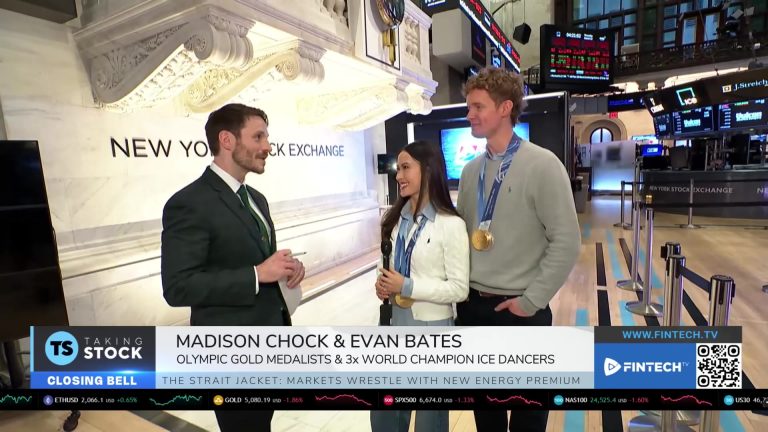
Olympic gold medalists Madison Chock and Evan Bates join us live from the floor of the New York Stock Exchange after their incredible victory at the 2026 Winter Olympics in Milan. The champion ice dancing duo reflects on their whirlwind experience since the Games, what it meant to represent Team USA on the world’s biggest stage, and the pride they feel after delivering their best performance when it mattered most. From the intensity of Olympic competition to the excitement of ringing the Closing Bell at the NYSE, Chock and Bates share how surreal the past few weeks have been and how grateful they are for the overwhelming support from fans around the world.

During the conversation, the pair also reveal the creative process behind choosing the music for their routines highlighting artists like Bee Gees, Donna Summer, and Lenny Kravitz and discuss the dedication required to perfect their performances. Looking ahead, they preview the upcoming Stars on Ice tour, which will bring together some of the world’s best figure skaters for 29 shows across the United States starting in April. Fans will get the chance to see Olympic-level routines up close, including the same program the duo performed in Milan. Chock and Bates close by thanking supporters for their encouragement and inviting fans both longtime followers and new viewers inspired by the Olympics to experience the excitement of live figure skating on the Stars on Ice tour. 

Bitcoin Rebounds as Crypto Shifts Toward Wall Street & Tokenized Assets

0

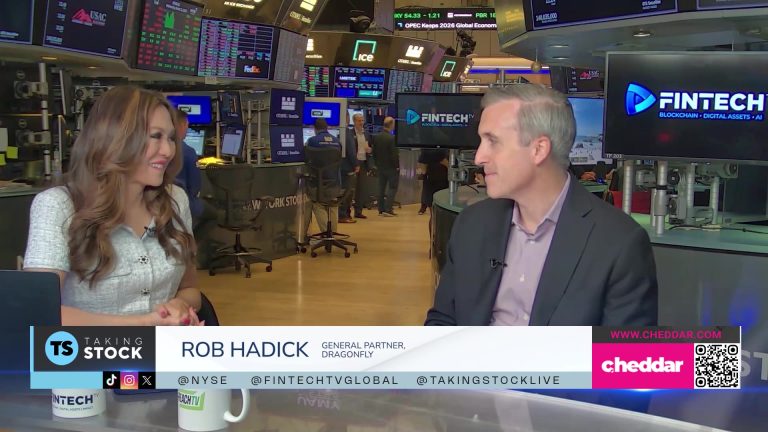
Joining from the New York Stock Exchange, Rob Hadick, General Partner at Dragonfly Capital, discusses the firm’s newly closed $650 million fourth fund and shares insights on the evolving crypto landscape. The conversation explores the growing influence of prediction markets like Polymarket, which are seeing record participation and becoming a new source of market-driven insights across politics, economics, and global events. Hadick also highlights the rapid expansion of tokenized assets on-chain, with billions of dollars already represented digitally as major financial institutions explore 24/7 trading infrastructure and blockchain-based financial systems.

As regulatory debates continue in Washington, including the proposed CLARITY Act, the future of digital assets may hinge on clearer rules around token ownership, governance, and economic rights. According to Hadick, institutional adoption and regulatory clarity could unlock the next phase of growth for crypto markets, particularly for altcoins and blockchain-based applications that depend on stronger legal frameworks to connect tokens with the value of the protocols they represent. 

Why Rising Oil Prices Are Shaking Global Markets Right Now

0

Market strategist Eric Criscuolo joins the conversation from the floor of the New York Stock Exchange to break down a volatile trading session that saw stocks close near their session lows. With the S&P 500 slipping below its closely watched 100-day moving average, investors are now questioning whether the long-standing “buy the dip” trend will continue. Criscuolo explains that while the overall pullback is still relatively modest, markets are showing signs of unease as macroeconomic pressures build. Rising oil prices and prolonged geopolitical tensions, particularly involving Iran, are weighing heavily on equities and fueling uncertainty across global markets.

The discussion also turns to the broader macro environment, including the surge in crude prices with West Texas Intermediate nearing the mid-$90 range and Brent Crude pushing above $100. Criscuolo highlights how energy inflation and disruptions near the Strait of Hormuz are creating ripple effects across currencies and global economies, strengthening the U.S. Dollar Index while putting pressure on other major currencies. At the same time, shifting expectations for Federal Reserve policy have dramatically changed, with markets now pricing in far fewer rate cuts than previously expected. As investors await the upcoming Personal Consumption Expenditures Price Index report widely considered the Fed’s preferred gauge of inflation, Criscuolo explains how tomorrow’s data could shape the central bank’s next move and influence markets heading into the next rate decision. 

Oil Market Volatility and Geopolitical Threats: A Conversation with Rystad Energy’s Janiv Shah

Oil markets are surging amid escalating geopolitical tensions in the Middle East. WTI and Brent crude futures rallied sharply, with Brent briefly hitting the $100 mark. Global leaders are now scrambling to stabilize energy markets and keep oil flowing through critical shipping routes.

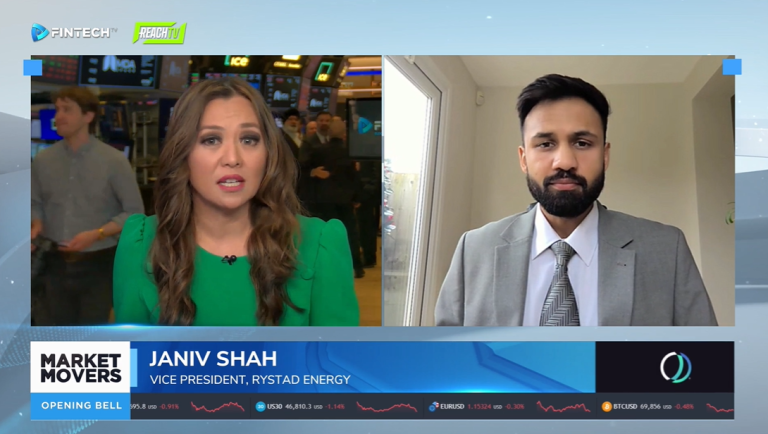
Janiv Shah, Vice President at Rystad Energy, joins Remy Blaire to break down the market reaction and the geopolitical risks driving oil prices higher. He explains why the Strait of Hormuz, a critical chokepoint responsible for roughly 20% of global petroleum consumption, remains the key factor determining whether oil prices continue to surge.

In response to rising risks in the Persian Gulf, President Trump announced a $20 billion plan through the U.S. Development Finance Corporation to provide political risk insurance for ships navigating the region. At the same time, the United States plans to release 172 million barrels from its Strategic Petroleum Reserve, with deliveries beginning next week and expected to continue for up to 120 days.

Meanwhile, the International Energy Agency (IEA) has unveiled the largest emergency oil release in its history, unlocking 400 million barrels in an attempt to stabilize prices and offset supply disruptions. The G7 is also maintaining pressure on Russia, with French President Emmanuel Macron confirming that the turmoil in the Middle East will not lead to the lifting of sanctions against Moscow.

With reports of refinery run cuts in Asia, declining global product inventories, and insurance companies pulling coverage for ships in the region, the energy market faces significant uncertainty in the months ahead.

Ransomware Could Cost $275 Billion by 2031—Experts Warn of Rising Cyber Threats

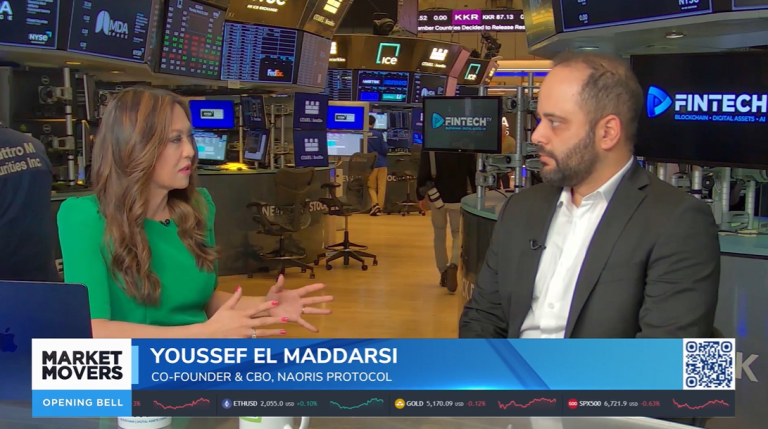
The White House has unveiled a new national cybersecurity strategy, signaling a major shift toward proactive cyber defense against nation-states, ransomware gangs, and global cybercriminal organizations. Cybersecurity expert Youssef El Maddarsi, co-Founder and CBO of Naoris Protocol, joins Remy Blaire breaks down what this new strategy means for businesses, governments and the future of digital security.

Ransomware attacks are projected to cost victims $275 billion by 2031, making cybersecurity one of the most critical issues in the digital age. The new strategy calls on federal agencies to aggressively target cyber threats such as phishing, malware, and ransomware, while also strengthening public-private partnerships, information sharing, and advanced security technologies.

In this conversation, Youssef explains why cybersecurity in 2026 is no longer just about building a defensive perimeter. Instead, resilience now requires continuous validation of systems, decentralized infrastructure, and preparation for the coming “post-quantum” era of cryptography.

We also explore the growing role of artificial intelligence in cybersecurity. AI can help detect threats faster, but it can also empower attackers through polymorphic cyber threats that evolve and adapt in real time. That means companies must rethink how they protect their infrastructure, identities, and networks.

Another key theme is the emerging role of blockchain and decentralization in cybersecurity. Rather than only validating financial transactions, blockchain technology could be used to verify the integrity of devices, software, data, and digital systems across their entire lifecycle.

As quantum computing advances, experts warn that traditional encryption may eventually become obsolete. Preparing for post-quantum cryptography could be essential to protecting the global digital economy.

Oil Surges 8% as Middle East Tensions Shake Markets—What It Means for Stocks, AI, and Crypto

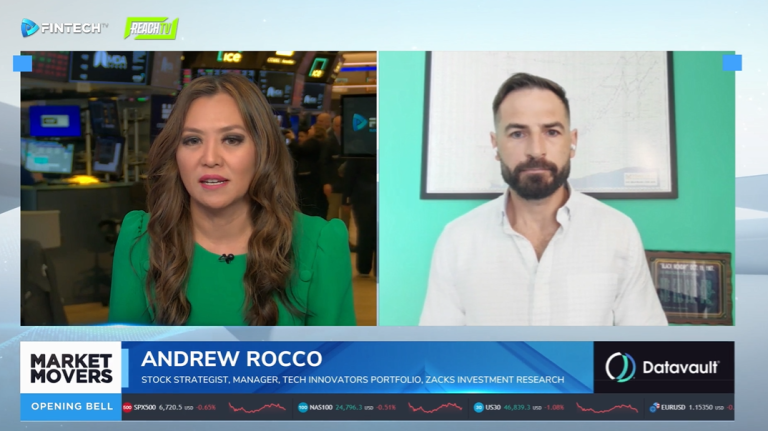
Andrew Rocco, a Stock Strategist, Manager, Tech Innovators Portfolio Manager at Zacks Investment Research, joins Remy Blaire to break down the implications of the latest geopolitical developments for the markets and where investors may be rotating capital. Global markets are reacting to major geopolitical shocks as tensions in the Middle East escalate.

Despite alarming headlines, Andrew emphasizes the importance of watching price action versus news, noting that markets remain surprisingly resilient and are still trading near key technical levels. If tensions ease, he believes the current bull market could continue.

We delve into the macro outlook, including growing concerns about stagflation. While some investors fear rising inflation due to geopolitical instability and tariffs, Andrew points to real-time data suggesting inflation may actually be much lower than many expect, with only modest pressure possible from higher energy prices.

The duo also discuss the AI infrastructure boom. Even with recent market anxiety around AI funding, hyperscalers are expected to spend up to $600 billion on AI infrastructure, fueling massive demand for energy, fiber optics, and data center technology. Instead of betting on specific AI applications, Andrew highlights the “picks and shovels” strategy, focusing on companies supporting the backbone of the AI revolution—from power generation to photonics and data infrastructure.

The conversation also covers crypto markets, where Bitcoin and related stocks have recently pulled back. Andrew explains why he still sees long-term opportunity in Bitcoin, growing stablecoin adoption, and companies like Coinbase and Circle as regulation around digital assets continues to evolve.

Finally, we discuss the regulatory outlook in the United States, including potential stablecoin legislation that could transform payment systems by enabling faster, cheaper, and 24/7 financial transactions.

From AI to Life Sciences: Ireland Positions Itself for the Future Economy

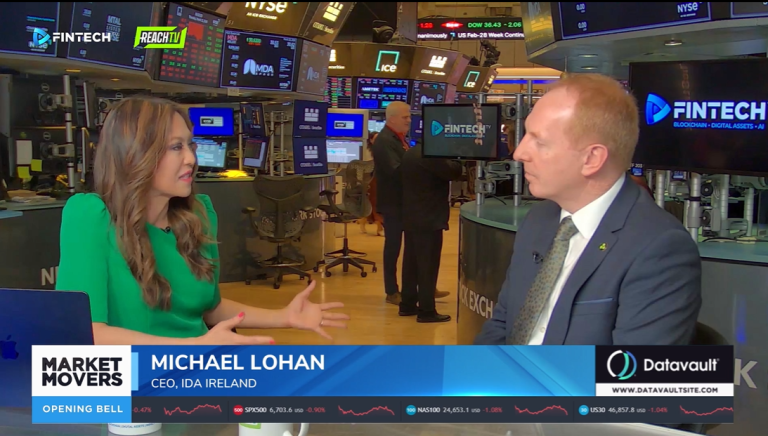
Michael Lohan, CEO of IDA Ireland, joins Remy Blaire to discuss how Ireland has managed to navigate global economic headwinds while continuing to attract record levels of foreign investment.

Ireland’s economy has seen impressive expansion, with strong growth driven by exports, pharmaceutical demand from the U.S. and major technology companies expanding their operations in Dublin. IDA Ireland reported a record 323 investment projects last year, highlighting the country’s long-standing strength as a hub for foreign direct investment.

In this conversation, Michael explains how Ireland is positioning itself for the future by focusing on key sectors like technology, fintech, life sciences, semiconductors, and artificial intelligence. Global leaders such as Google, Microsoft, and AI companies like OpenAI and Anthropic are continuing to invest and grow their presence in Ireland.

Another major focus is talent and workforce development. Ireland has been investing heavily in AI education, upskilling, and reskilling programs, with nearly 35,000 workers trained in new technologies last year to help businesses adapt to digital transformation and innovation.

We also discuss how Ireland plans to use its strong fiscal position to invest in major infrastructure projects, including power generation, transportation, and water systems—key components needed to support a growing population and expanding enterprise base.

Looking ahead to 2026 and beyond, Michael explains how Ireland aims to strengthen its role as a strategic bridge between the United States and Europe, especially as the country prepares to assume the EU presidency later this year.