[stock-market-ticker symbols=" ^NYA;CRYPTO:BTC;CRYPTO:ETH;CRYPTO:USDT;CRYPTO:USDC;CRYPTO:BNB;CRYPTO:ADA;CRYPTO:XRP;CRYPTO:SOL;CRYPTO:DOGE " stockExchange="NYSENASDAQ" width="100%" transparentbackground=1 palette="financial-light"]

Home Blog Page 62

Navigating Fed Day: Market Reactions Amid Geopolitical Tensions

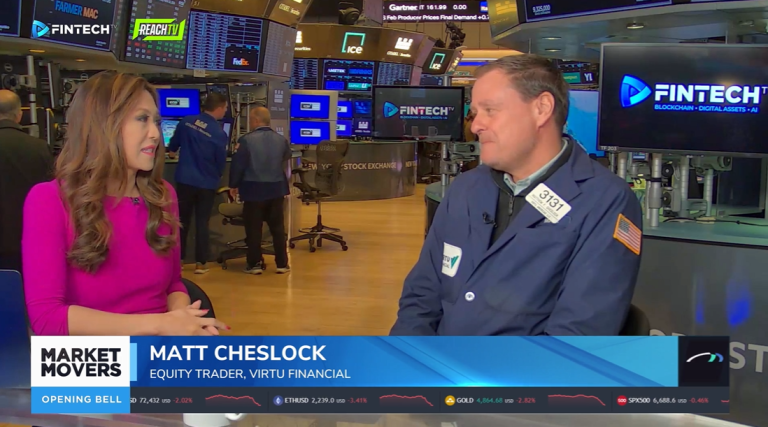
Matt Cheslock, an Equity Trader at Virtu Financial, joins Remy Blaire to delve into the complexities surrounding Fed Day and the implications of the escalating conflict in Iran on the U.S. economy. With inflation concerns rising, particularly highlighted by the PCE index, we discuss how the volatility in oil prices—exacerbated by tensions in the Strait of Hormuz—adds to the uncertainty for the Federal Reserve’s upcoming rate decision.

We explore the impact of rising oil prices on consumer behavior and retail spending, noting that higher gas prices could limit disposable income for many Americans. This situation is particularly concerning as we approach the driving season.

We also touch on the tech sector, specifically Nvidia’s recent announcements at their GTC event, and why the stock market hasn’t responded as positively as one might expect given the news. Matt emphasizes the need for clarity in the market, as investors seem hesitant to commit without seeing broader positive movements.

Looking ahead, we discuss the political landscape as we approach midterm elections, highlighting the ongoing partisan struggles that could affect economic stability.

SEC’s Five-Category Crypto Map, a Stablecoin Bill Closing In, and the UK’s Donation Crackdown: Today’s Policy Briefing

0

SEC and CFTC draw first-ever regulatory map across five crypto asset categories

Joint guidance issued Tuesday by Chairmen Paul Atkins and Michael Selig establishes a taxonomy covering digital commodities, digital collectibles, digital tools, stablecoins, and digital securities — with only the last category remaining subject to securities laws. The interpretation also clarifies that investment contract status is not permanent, addresses how activities such as staking, mining, airdrops, and asset wrapping are treated, and signals a formal rulemaking on an innovation exemption within weeks, marking the sharpest break yet from the enforcement-first posture of the previous administration.

Senate banking chair signals stablecoin yield compromise could land this week

Speaking at the DC Blockchain Summit in Washington, Scott told attendees he expects a draft proposal on the long-contested stablecoin yield issue to reach his desk imminently, with Senators Thom Tillis and Angela Alsobrooks having engaged the White House directly on the matter. Remaining sticking points include DeFi anti-money laundering rules championed by Senator Mark Warner, regulatory quorum requirements, and restrictions on the Trump family’s crypto ventures. Rep. Dusty Johnson warned lawmakers may have as few as six weeks before the legislative window closes ahead of the midterms.

CFTC grants phantom wallet a regulatory safe harbor to plug users into derivatives markets

Staff Letter No. 26-09 establishes that a self-custodial wallet can connect users to CFTC-regulated futures exchanges without triggering broker registration requirements, provided it never takes custody of funds, executes trades, or acts as a counterparty. Phantom CEO Brandon Millman said the outcome, the product of extended engagement with regulators throughout 2025, could serve as a replicable compliance model for other non-custodial wallet developers seeking to expand into regulated derivatives; CFTC Chair Selig called it long-overdue clarity for software providers.

UK National Security Committee presses government to halt crypto political donations over foreign interference risk

The Joint Committee on the National Security Strategy, chaired by MP Matt Western, has formally recommended a temporary moratorium on parties accepting crypto donations until the Electoral Commission produces binding statutory guidance, a step beyond the non-binding interim guidance the Commission had been considering. The committee’s accompanying recommendations include restricting donations to FCA-registered providers, banning mixer-linked funds, requiring conversion to sterling within 48 hours, and establishing a dedicated national police lead on political finance. Anti-corruption group Spotlight on Corruption warned that even a moratorium falls short without statutory enforcement powers.

Lazarus Breach, Mastercard’s Stablecoin Bet, and the Fight Over Prediction Markets: Today’s Fintech Briefing

0

North Korea’s Lazarus Group named in crypto gift card breach exposing 18,500 records

Bitrefill says the attack originated from a compromised employee laptop, with forensic analysis by Zeroshadow, SEAL Org, and RecoverisTeam linking the malware and on-chain infrastructure to the state-sponsored collective. The company said it will cover all financial losses from its own capital. North Korea-linked groups stole more than an estimated $2 billion in crypto last year.

World and Coinbase launch toolkit to put a verified human behind every AI payment

AgentKit, now in beta, pairs Sam Altman’s World ID biometric verification with Coinbase’s x402 stablecoin payment protocol, allowing AI agents to carry cryptographic proof of human authorization without exposing personal data. The companies are targeting a projected $3 trillion to $5 trillion agentic commerce market by 2030, drawing on World’s network of nearly 18 million verified users across more than 160 countries.

OpenSea scraps its March 30 SEA token deadline as NFT market cap halves since January

The platform will end its current Treasure rewards campaign and offer optional fee refunds to users who traded during reward waves three through six, while cutting token trading fees to zero for 60 days from March 31. Total NFT market cap has fallen from roughly $3.2 billion in mid-January to around $1.6 billion, with monthly platform volumes now below $500 million.

Mastercard’s stablecoin focus continues with $1.8 billion BVNK deal 

BVNK processes around $30 billion annually across more than 130 countries for enterprise clients including Worldpay, Deel, and Flywire, giving Mastercard direct ownership of blockchain-based rails it has until now only partnered around. William Blair analysts described the acquisition, which includes $300 million in contingent payments and is expected to close by year-end, as a validation of stablecoins in institutional commerce rather than consumer payments.

Arizona pursues criminal misdemeanor charges against Kalshi in first state-level action against a prediction market

The 20-count complaint alleges that Kalshi accepted unlicensed bets on state and federal elections, with potential penalties of $10,000 to $20,000 per count plus asset forfeiture. Kalshi is contesting the action, which comes just days after Kalshi sued the state of Arizona, seeking relief amid the potential of “irreparable harm from [Arizona’s] threats to enforce preempted state laws.”

Bitcoin Stalls Below $75,000 as Traders Brace for Powell’s Take on the Oil Shock

0

Bitcoin is treading water at around $74,000 this morning as traders hold their positions ahead of the Federal Reserve’s rate decision at 2:00 p.m. ET today. The token briefly touched $76,000 overnight before retreating, and has so far failed to hold above the $75,000 level despite Tuesday’s landmark joint SEC-CFTC guidance, which classified crypto assets into five categories and removed the majority from securities law. 

The critical variable is not the decision itself but Chair Jerome Powell’s tone regarding the Iran war’s inflationary impact. Signals that the oil shock will be treated as transitory could provide the catalyst the market has been waiting for. Bitcoin declined after seven of the eight FOMC meetings held in 2025, creating a persistent sell-the-news dynamic that traders will be acutely aware of heading into today’s announcement.

XRP is trading around $1.50, sitting just above a heavily trafficked options cluster at $1.40 on Deribit, where roughly $14.6 million in open interest (nearly 25% of all XRP options on the exchange) is concentrated ahead of a March 27 expiry. 

On the equity side, the FTSE 100 has opened modestly higher this morning, and U.S. futures are pointing to a positive open on Wall Street, with S&P 500 futures up 0.48% and Nasdaq 100 futures up 0.62% as of early morning. This may signal a decoupling from the price of oil, with brent crude trading above $100 a barrel again today with Hormuz flows still disrupted.

All eyes remain on Powell’s 14:30 ET press conference and signals of any shifts expected paths for cuts later this year. The Bank of England and European Central Bank will also meet on Thursday.

Privacy-Preserving AI, Data Ownership & Blockchain Whistleblowers

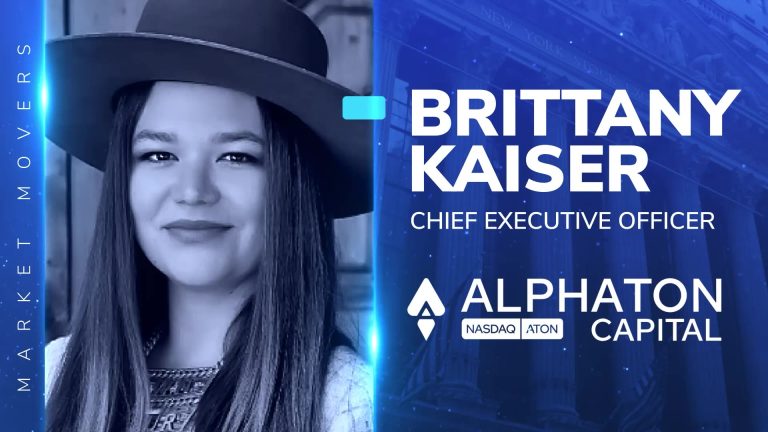
Brittany Kaiser, CEO of Alphaton Capital, whistleblower, and the subject of Netflix’s The Great Hack, joins to discuss the intersection of privacy, AI, and data sovereignty. Brittany, who has co-authored federal bills on data ownership and AI ethics, is now building a privacy-preserving AI infrastructure for Telegram’s 1+ billion users. In this conversation, she shares her journey from human rights law to technology, emphasizing the importance of protecting sensitive data while enabling innovation. Alphaton Capital focuses on privacy-preserving technologies, from enterprise AI infrastructure using Nvidia GPUs to decentralized applications on Telegram. Brittany explains how Cocoon AI, a privacy-first decentralized AI network, keeps all user data secure while enabling advanced AI functionality. She also highlights Vera Report, a blockchain-based platform that allows whistleblowers to report fraud, waste, and abuse safely and anonymously. With privacy, data ownership, and ethical AI at its core, Alphaton Capital is shaping the future of secure digital innovation, all while attracting institutional investors, hedge funds, and family offices excited about its enterprise-grade deployments and scalable infrastructure.

How Fintech Companies Make Money: Flutterwave

0

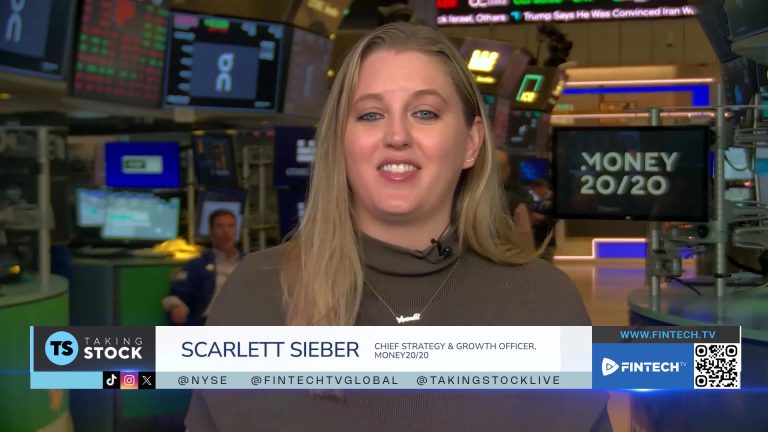
In this episode, Scarlett Sieber with Money 2020, breaks down how fintech companies actually make money. Scarlett spotlights Flutterwave, a payments platform transforming Africa’s digital economy by unifying dozens of payment systems across the continent. With mobile money, bank transfers, and cards all over the place, Flutterwave sits above the complexity to make payments seamless. Businesses can accept payments, make payouts, run online stores, and issue cards all through one platform. So how does Flutterwave monetize this? Through payment processing and merchant discount fees, FX and cross-border spreads, SaaS-style pricing on storefront and checkout tools, virtual card issuing fees, and enterprise APIs with volume-based pricing for global businesses expanding into African markets. Flutterwave has become one of the most recognized fintech brands across 30+ African markets, powering millions of consumers and tens of thousands of merchants, expanding into payouts, creator tools, commerce, and issuing. Its moat lies in deep local integrations, regulatory expertise, and a multi-product merchant stack built for a continent where infrastructure is far from standardized. In short, Flutterwave normalizes the chaos of payments, taking a slice of every transaction, and that’s how it makes money.

Markets & Fed Day: What Rising Rates & Oil Prices Mean for You

0

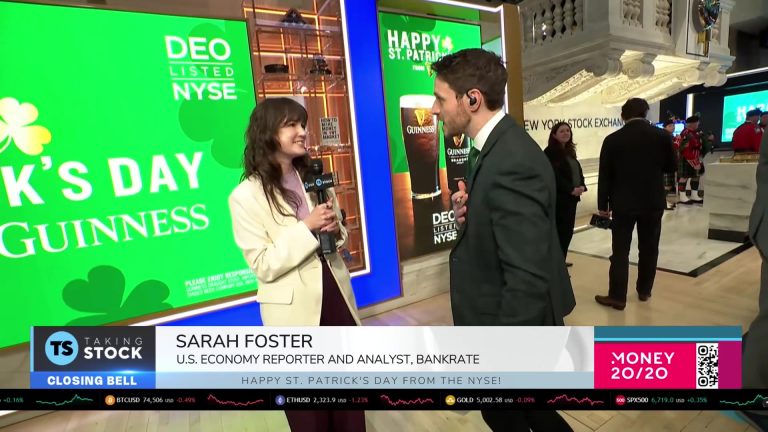
On this episode, Sarah Foster, U.S. economy reporter and analyst at Bankrate joins in, to break down the markets ahead of a key Federal Reserve policy meeting. Despite recent volatility, the markets are showing strength, but the big questions revolve around interest rates, inflation, and geopolitical risks, particularly the ongoing conflict in Iran. Sarah explains what to expect from Jerome Powell’s second-to-last press conference, the FOMC’s dot plot projections, and how these decisions could impact consumers and mortgage rates. Sarah also dives into oil price movements, explaining how rising West Texas and Brent crude prices affect both inflation and Americans at the pump. From market trends to real-world economic pressures, Sarah provides clear insights into what investors and everyday Americans should watch as Fed Day unfolds.

How Ireland Became a Global Hub for Tech, AI & Investment

0

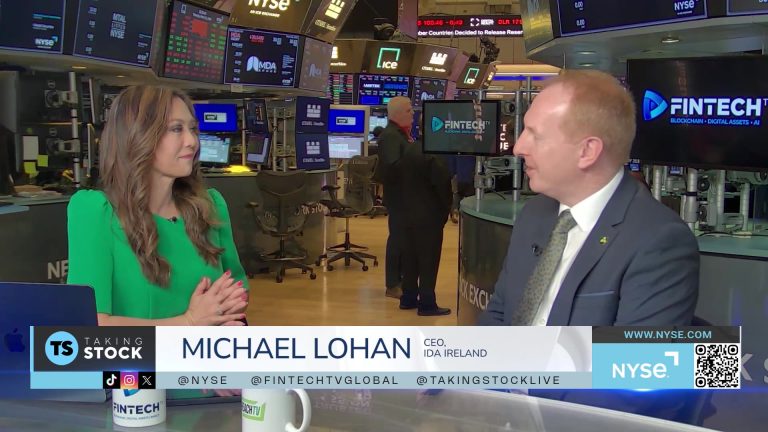
Michael Lohan, CEO of IDA Ireland, joins us live from the New York Stock Exchange to discuss Ireland’s strong economic momentum and resilience in the face of global headwinds. Despite a challenging year marked by shifting trade dynamics and tariffs, Ireland achieved a record level of foreign direct investment, with 323 investments, the highest in the agency’s nearly 80-year history. This growth highlights the strength and diversity of Ireland’s economy, particularly across key sectors such as financial services, fintech, technology, and life sciences, where companies are increasingly embedding innovation and R&D into their operations.

The conversation also explores how Ireland is positioning itself for the future by focusing on emerging technologies like AI while maintaining a strong emphasis on human capital. With major global players such as Google, Microsoft, and newer entrants like OpenAI establishing a growing presence, Ireland continues to attract top-tier talent and investment. Through a combination of forward-looking education strategies, workforce upskilling, and significant infrastructure investment, the country is building a sustainable foundation for long-term economic growth, innovation, and global competitiveness.

How MoneyGram is Using Blockchain & Stablecoins to Transform Global Payments

0

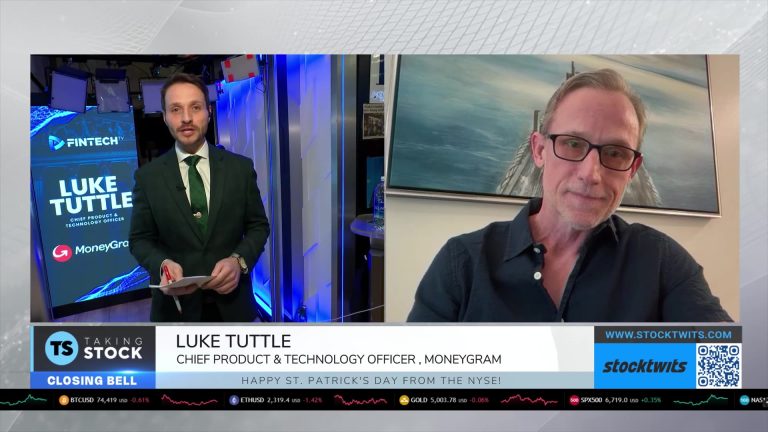
Luke Tuttle, Chief Product and Technology Officer at MoneyGram International, joins us to discuss how blockchain and stablecoins are reshaping the future of global payments. With a presence in over 200 countries and decades of experience moving money worldwide, MoneyGram is now leveraging blockchain technology to deliver faster, more efficient, and lower-cost transactions. Luke explains how the evolution of digital assets alongside regulatory developments like the GENIUS Act is pushing established financial players to rethink their infrastructure, embrace innovation, and even disrupt their own legacy systems to stay competitive.

The conversation also dives into the complexities of operating at a global scale, particularly when it comes to compliance, regulation, and customer trust. From anti-money laundering (AML) to counter-terrorism financing (CFT), MoneyGram works closely with regulators across dozens of markets to ensure secure and seamless transactions. Despite this complexity, the company remains deeply focused on delivering a simple, frictionless user experience making it easy for customers to send money to loved ones around the world. By combining its regulatory expertise with a strong product-led approach, MoneyGram is positioning itself at the forefront of the next wave of financial innovation powered by blockchain and stablecoins.

Building the American Bowl: Scott Phillips on the Challenges and Triumphs

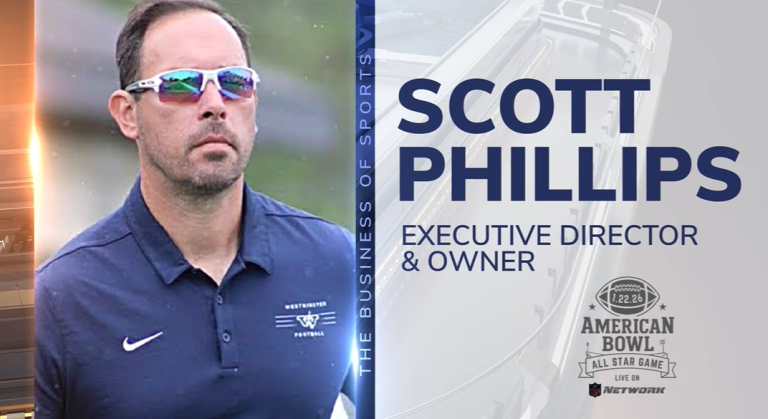
Scott Phillips, Executive Director and Owner of the American Bowl, joins Rick Horrow to discuss the American Bowl.

Scott shares his journey from playing football in high school and minor leagues to transitioning into the business world as a successful real estate agent. He eventually returns to his passion for football, taking on roles in scouting and coaching, including his work with the Hula Bowl. We explore the challenges he faced in establishing the American Bowl as a legitimate third All-Star game, including securing player commitments and navigating the complexities of working with agents.

One of the key takeaways from our discussion was Scott’s strategic approach to building the American Bowl, focusing on creating a reliable and professional experience for players and scouts alike. He emphasizes the importance of relationships within the NFL community and how those connections helped him attract talent to the game.

We also touch on the realities of running an All-Star game, including the financial challenges and the need for community support. Scott expresses his commitment to improving the event and ensuring that his team is compensated fairly for their hard work.

Finally, Scott shares his vision for the future of the American Bowl, aiming to solidify its place on the NFL calendar and continue fostering enthusiasm among players.