[stock-market-ticker symbols=" ^NYA;CRYPTO:BTC;CRYPTO:ETH;CRYPTO:USDT;CRYPTO:USDC;CRYPTO:BNB;CRYPTO:ADA;CRYPTO:XRP;CRYPTO:SOL;CRYPTO:DOGE " stockExchange="NYSENASDAQ" width="100%" transparentbackground=1 palette="financial-light"]

Home Blog Page 60

Oil Prices and Inflation: Understanding the Ripple Effects on the Economy

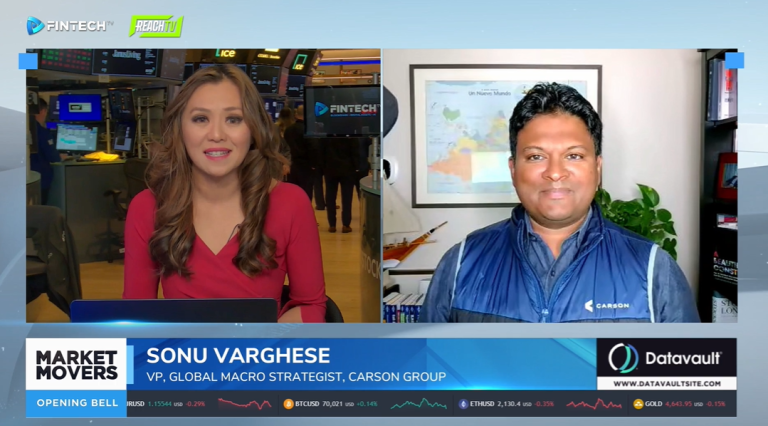
In this episode of Market Movers, we dive into the current state of the U.S. economy and the implications of rising oil prices on inflation and equity valuations. Sonu Varghese, VP, Global Macro Strategist at Carson Group, joins Remy Blaire to discuss the troubling signals in the bond market that are reminiscent of the 2008 financial crisis, despite the U.S. economy being less reliant on oil than it was 18 years ago.

Sonu highlights that while equity valuations are stretched, particularly in the technology sector, there are still attractive opportunities in other areas like industrials and energy. However, the ongoing conflict in the Middle East has complicated the market landscape, leading to confusion about the Federal Reserve’s outlook on interest rates. Sonu expresses concern over the Fed’s ability to manage inflation, especially with the recent surge in energy prices impacting core inflation.

We also explore the divergence among policymakers regarding interest rate hikes, with the Atlanta Fed assigning higher odds to a rate increase in the coming months. Sonu notes that the option markets indicate a growing probability of a rate hike, which could lead to increased market volatility.

Finally, we discuss the U.S. dollar’s position as we approach Q2. Sonu explains that the U.S. has a petroleum trade surplus, which should support the dollar, alongside the attractiveness of U.S. Treasury yields in a risk-off environment.

Bitcoin’s Resilience: Navigating Market Shifts and Regulatory Changes

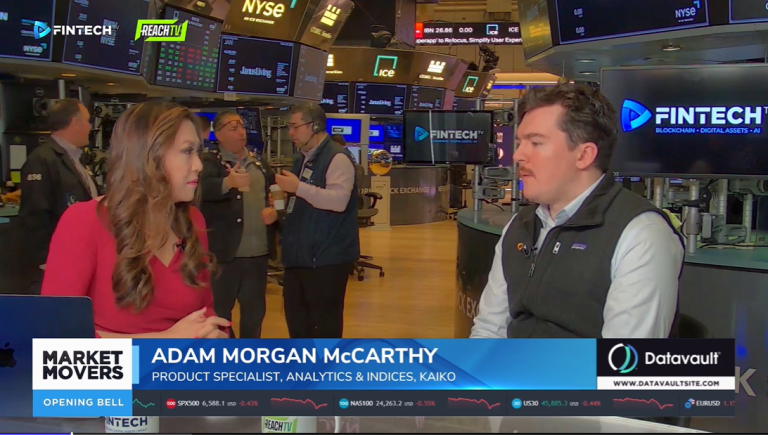
Adam Morgan McCarthy, Product Specialist, Analytics & Indices at Kaiko, joins Remy Blaire to delve into the current state of the cryptocurrency market, particularly focusing on Bitcoin, which is holding above $70,000. We discuss the significant structural and geographic shifts occurring in the crypto landscape, driven by the anticipated 2024 spot ETF approvals and a more pro-crypto SEC under Paul Atkins. U.S. exchanges have seen their spot market share nearly double, but we also highlight the importance of liquidity, noting that Bitcoin market depth on U.S. platforms has become more robust compared to offshore exchanges.

We explore the volume of trading in the U.S. versus overseas markets, emphasizing the shift from under-regulated offshore exchanges to more stable onshore platforms. Adam points out that while there has been a pullback in liquidity recently, the market depth on U.S. exchanges is still relatively strong compared to previous bear markets.

We also discuss the rise of perpetual contracts (perps) and how they are attracting attention away from traditional altcoins, with significant trading activity in equity and commodity perps. Adam notes that the excitement in the market is currently centered around equities and commodities, especially given the ongoing geopolitical tensions.

As we look ahead, we touch on the regulatory landscape in the U.S. and abroad, highlighting the collaborative efforts between the SEC and CFTC, and the implications of new regulations in Europe. Adam shares his insights on the potential challenges and opportunities that lie ahead, particularly regarding the Clarity Act and its impact on the crypto industry.

Bitcoin steadies above $70,000: the markets this morning

0

Bitcoin is holding above $70,000 this morning, extending its recovery from overnight lows under $68,900 after major economies announced joint efforts to boost oil supplies through the disrupted Strait of Hormuz, sending WTI crude nearly 2% lower to $93.80. This follows a bruising 48 hours in which the Federal Reserve held rates steady at 3.50–3.75%. 

In the wider crypto market, Ether, XRP, and solana lagged Friday’s bitcoin recovery, posting gains of less than 1%, with few of the top 100 crypto tokens making a gain. One notable exception to the risk-off mood: an unidentified whale trader spent $111.62 million in USDT to purchase 50,706 ETH at an average price of $2,201 across two wallets, their first on-chain activity after seven months of dormancy, according to on-chain analytics provider Lookonchain.

Bitcoin’s current price action is drawing comparisons to a November–January pattern that preceded a sharp drop from around $90,000 to nearly $60,000, with analysts warning that a weak, choppy counter-trend recovery within a broader downtrend could deepen the selloff if key support levels fail. 

Bonds and stocks are extending their decline while oil prices continue to rise. Conflict in the Middle East shows few signs of ending quickly, with Iran continuing to attack neighbours and Tehran continuing to be bombed. The S&P 500 also slipped below a key moving average as energy-driven inflation concerns continued to weigh on risk sentiment globally, keeping central banks in a cautious holding pattern and warning about inflationary risks. 

Tokenized funds, stablecoin prioritization, and the AI push: Your Fintech Briefing 

0

Bezos in talks to raise $100 billion to revamp manufacturers with AI

Amazon founder Jeff Bezos is in talks to raise $100 billion for a fund that would acquire manufacturing companies and infuse them with artificial intelligence, according to the Wall Street Journal. Investor documents describe the vehicle as a “manufacturing transformation vehicle,” targeting sectors including chipmaking, defense, and aerospace. The fund would draw on technology from Project Prometheus, a startup co-led by Bezos that focuses on applying AI to industrial manufacturing.

Morgan Stanley sets MSBT ticker and $1 million seed capital for Bitcoin ETF

Morgan Stanley has filed a second SEC amendment for its planned spot Bitcoin ETF, which will trade on NYSE Arca under the ticker MSBT with $1 million in seed capital at launch. The bank is positioned to become the first major U.S. lender to issue a spot Bitcoin ETF directly under its own name, with BNY Mellon handling administration and Coinbase serving as custodian.

Coinbase’s bitcoin yield fund goes on-chain with Apex’s tokenization push

Coinbase Asset Management has launched a tokenized share class of its Bitcoin Yield Fund on the Base network, in partnership with Apex Group. The fund targets an annual return of 4–8% denominated in Bitcoin and is currently available to non-U.S. institutional investors only.

OpenAI plans desktop superapp merging ChatGPT, Codex, and browser

OpenAI will combine its ChatGPT app, Codex coding platform, and AI-powered browser into a single desktop superapp, with Fidji Simo, its CEO of Applications, overseeing the transition alongside President Greg Brockman. The move is aimed primarily at enterprise and developer users, with the mobile ChatGPT app expected to remain unchanged.

Avalanche gains regional momentum through Animoca alliance

Animoca Brands has made a strategic investment in Ava Labs, the company behind the Avalanche blockchain, with the partnership targeting expansion across Asia and the Middle East. Focus areas include entertainment, real-world asset tokenization, and digital identity, with Animoca leveraging its recently obtained Dubai VARA licence and growing South Korean institutional relationships.

Crypto.com cuts 12% of staff in AI pivot

Crypto.com has laid off roughly 180 employees, around 12% of its workforce, as the Singapore-based exchange doubles down on AI-driven efficiency. CEO Kris Marszalek said the cuts targeted roles that “do not adapt in our new world,” warning that companies that fail to integrate AI immediately “will fail.” The move follows similar AI-linked workforce reductions at Block, Gemini, Algorand, and Messari in recent weeks.

Ripple survey shows banks, fintechs, and corporates all-in on digital assets, prioritizing stablecoins and custody

A Ripple survey of more than 1,000 finance leaders found broad consensus that digital asset adoption has moved from intent to execution, with stablecoins the standout priority — 74% of respondents said they can improve cash-flow efficiency. Custody ranked as the single most important capability for institutions evaluating tokenization, cited by 89% of respondents. A Coinbase and EY-Parthenon survey similarly found that 73% of institutional decision makers plan to increase digital asset allocations. 

Nvidia deepens grip on cloud AI with major AWS chip deal

Nvidia will deliver 1 million GPUs to Amazon Web Services by the end of 2027, in one of the most significant chip supply agreements in cloud computing history. The deal, announced at Nvidia’s GTC conference, also covers networking equipment and a new chip family designed for AI inference tasks. Financial terms were not disclosed.

Crypto in Crisis: How Geopolitics is Reshaping Bitcoin and Stablecoin Markets

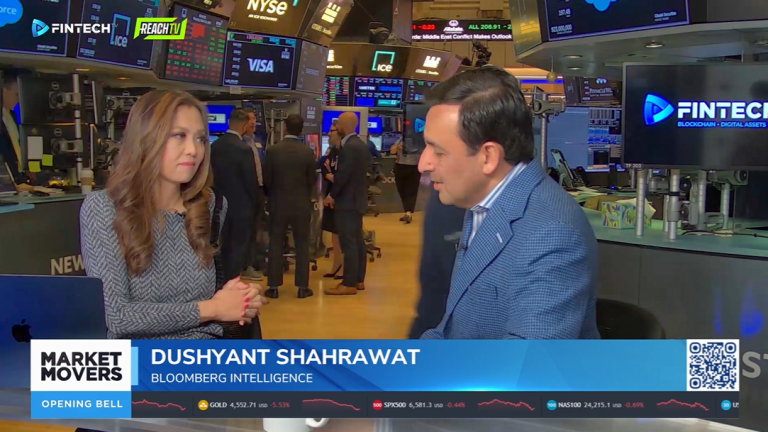
In this episode of Market Movers, we delve into the current state of the crypto markets amid the escalating crisis in the Middle East. Bitcoin is holding below the $70,000 mark, and our guest, Dushyant Shahrawat, Senior Analyst of Crypto Market Structure at Bloomberg Intelligence, joins Remy Blaire to discuss the dual narratives shaping the crypto landscape.

Dushyant explains that Bitcoin is no longer acting as a safe haven asset, as evidenced by its increased correlation with traditional equities. This shift is largely due to the growing institutional involvement in the crypto space, which has altered how Bitcoin responds to geopolitical stress. On the other hand, we explore the significant role of stablecoins in regions affected by conflict, such as Lebanon and Iran, where traditional financial systems have faltered. Stablecoins are being used as a functional currency, facilitating transactions and remittances in areas where local currencies are failing.

We also discuss the implications of recent comments from the Federal Reserve and how they intertwine with the macroeconomic environment, particularly in relation to crypto. Dushyant highlights the importance of decentralized finance, especially in times of crisis, where traditional markets may be closed, yet crypto markets remain active.

Furthermore, we touch on the regulatory landscape, particularly the recent announcements from the SEC, which aim to clarify the rules surrounding cryptocurrencies. This clarity is expected to bolster the use of stablecoins as a settlement currency.

Finally, we examine the role of the UAE, particularly Dubai, as a financial hub for crypto activity, noting both its positive contributions and the challenges it faces regarding sanctioned activities.

Gold as a Service: Bridging Physical Custody and Digital Innovation

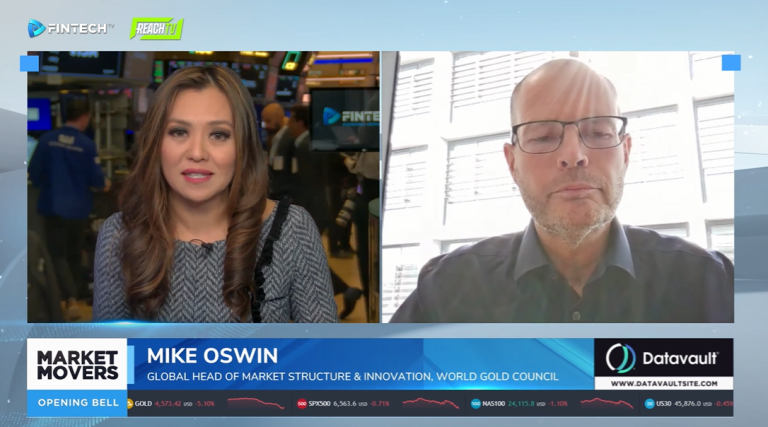
Mike Oswin, the Global Head of Market Structure and Innovation at the World Gold Council, joins Remy Blaire to discuss the newly introduced concept of “Gold as a Service,” which aims at creating a shared infrastructure that bridges the gap between physical gold custody and digital issuance.

Mike explains that this initiative is designed to streamline access to physical gold, addressing the cumbersome and costly processes currently faced by various digital gold products. By centralizing trust and simplifying the logistics of physical gold, Gold as a Service offers a plug-and-play solution for innovators in the digital space.

We also touch on the challenges of convincing traditional gold dealers and custodians to adopt this new infrastructure, highlighting the opportunities for both legacy players and new entrants in the market. Mike emphasizes the importance of trust in the physical gold layer, which has been a barrier for many existing tokenized products.

Finally, we explore the regulatory landscape and the technological hurdles that lie ahead for Gold as a Service. Mike shares that they are currently in the development phase, with plans to launch the first phase of the platform early next year and potential testing in 2026.

Crypto Under Pressure: Analyzing Bitcoin’s Safe Haven Status

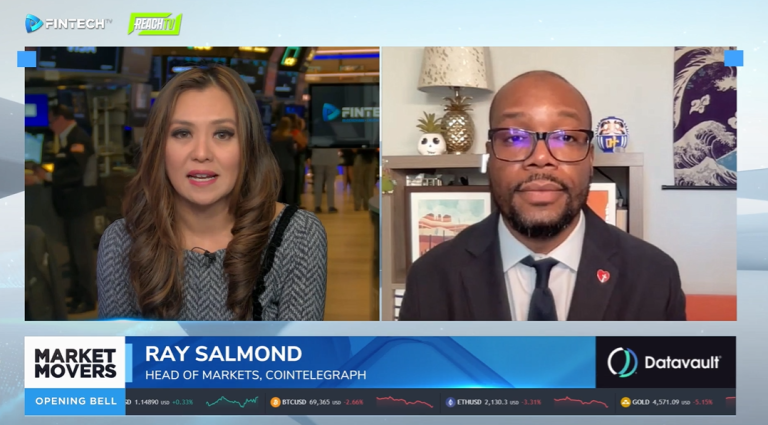
Ray Salmond, Head of Markets at Cointelegraph, joins Remy Blaire to discuss the recent volatility in the cryptocurrency market, particularly focusing on Bitcoin, which has seen a significant drop in value alongside a broader pullback in global markets. With Bitcoin falling below the $70,000 mark, we discuss the shifting sentiment from optimism to fear among investors, especially in light of recent geopolitical tensions in the Middle East and the Federal Reserve’s latest meeting.

Ray provides insights into the current price action of Bitcoin and its reputation as a safe haven asset. He highlights the return of institutional investors and the surge in Bitcoin treasuries, indicating a positive trend despite the recent price declines. He notes that institutional demand has surged, with significant inflows into ETFs and other investment products.

We also touch on the regulatory landscape, particularly the SEC’s recent announcements that clarify the status of many crypto tokens, which Ray believes will foster growth in the sector. However, he cautions that there is still a risk of Bitcoin dropping to $60,000 or below, with resistance levels around $75,000 to $80,000.

Central Banks and Oil Prices: The Impact on Global Currency Trends

In this episode of Market Movers, we examine the current economic landscape, focusing on the Federal Reserve’s recent decision to maintain interest rates amid ongoing geopolitical tensions in the Middle East. With energy prices surging, we examine how this is influencing investor behavior and the U.S. dollar’s exchange rate.

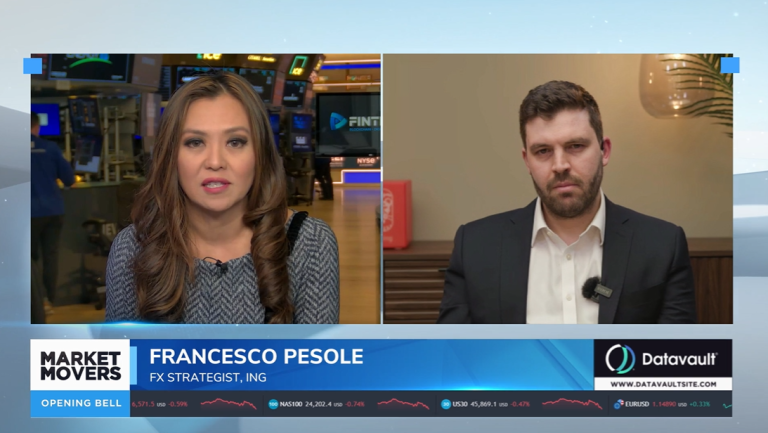
Francesco Pesole, an FX Strategist at ING, joins Remy Blaire to provide valuable insights into the foreign exchange market’s reaction to central bank policies and geopolitical events. We discuss the potential for a repeat of the 2022 dollar surge and the implications of the ongoing conflict for oil prices and currency valuations.

Francesco highlights that while the dollar has shown some strength, it may be nearing its peak, especially if the conflict persists. We also touch on the Japanese yen, which is facing its own challenges due to Japan’s reliance on energy imports, and the potential for FX intervention by Japanese authorities.

Additionally, we examine commodity currencies, particularly the Australian and Canadian dollars, and their correlation with energy prices and global equity markets. Francesco emphasizes the Australian dollar’s favorable position due to its strong domestic outlook and proactive central bank, contrasting it with the Canadian dollar, which faces risks from upcoming USMCA renegotiations.

Bitcoin slips below $71,000 as oil hits $110 and markets tumble

0

Bitcoin is trading at around $70,600 this morning, extending Wednesday’s 3.5% slide from $74,500 after the Fed left its benchmark rate unchanged at 3.50%–3.75%. Chair Jerome Powell acknowledged that rising oil prices have “for sure showed up” in the central bank’s inflation outlook, pushing its 2026 forecast to 2.7% from 2.4%. 

Blockchain data tracked by Lookonchain shows at least two long-term holders together sold more than 1,650 bitcoin worth over $117 million early Thursday, according to reports by CoinDesk. One veteran whale has offloaded 650 BTC and a separate early adopter dumped a full 1,000 BTC. 

The oil picture worsened overnight. Israel’s attack on Iran’s South Pars gasfield on Wednesday prompted Iran’s Revolutionary Guards to threaten strikes on oil and gas facilities across the region. European gas prices have risen 25%, having risen 30% previously. This is the highest level since the conflict began. Crude oil has climbed above $110 a barrel following Iranian strikes on regional energy infrastructure. The Nasdaq closed at its session low Wednesday, down 1.5%, while the Dow posted its lowest close of 2026.

European markets are feeling the weight this morning. The FTSE 100 was 1.9% lower in early trade, Germany’s DAX dipped 2%, and the CAC fell 1.5%, with S&P 500 and Nasdaq futures also pointing to a negative open on Wall Street. The Bank of England and ECB both meet today, and neither is expected to move.

Algorand layoffs, Nasdaq’s tokenization pilot, and the race to own AI payments: Today’s Fintech Briefing

0

Algorand foundation cuts a quarter of its workforce as crypto sector layoffs continue 

The non-profit, which stewards the layer-1 Algorand blockchain and has fewer than 200 employees according to LinkedIn, cited macroeconomic uncertainty and depressed crypto prices for the decision, with no disclosure of the exact headcount affected. The cuts follow similar reductions at OP Labs, Messari, Block, and Gemini. The news arrives just one day after Tuesday’s SEC-CFTC guidance classified ALGO as a digital commodity rather than a security — a regulatory milestone the foundation welcomed even as it announced the restructuring.

Visa enters the AI agent payment race with its first product from Visa Crypto Labs

Visa CLI, currently in closed beta and accessible via GitHub authentication, allows AI agents to initiate card payments directly from a terminal environment without managing API keys — positioning Visa’s existing card network as the settlement layer for autonomous, machine-driven commerce. The launch puts Visa on a collision course with Coinbase and Cloudflare, which are pursuing stablecoin-based solutions through the x402 protocol, as incumbents and crypto-native players converge on what is increasingly described as the agentic commerce infrastructure race.

SEC gives Nasdaq the green light to trade tokenized versions of Russell 1000 stocks and major ETFs

Wednesday’s approval clears Nasdaq to run a pilot in coordination with the Depository Trust Company under which eligible securities can trade in tokenized form on the same order book as traditional shares, with identical tickers, shareholder rights, and T+1 settlement, while surveillance runs across both formats using the same underlying data. The ruling is technology-agnostic and makes no endorsement of any specific blockchain protocol, but it arrives as Intercontinental Exchange separately develops its own tokenized securities platform. Nasdaq has already partnered with Kraken’s parent company Payward to build an equities gateway bridging regulated markets and DeFi networks.

Polymarket acquires DeFi infrastructure startup Brahma in third acquisition of 2026

Brahma, founded in 2021 and reporting more than $1 billion in processed transaction volume and $100 million in total value locked, will wind down all of its existing products within 30 days as its team integrates into Polymarket to focus on scaling blockchain execution and settlement infrastructure. The deal is aimed in part at improving liquidity for smaller, niche prediction markets where capital is thin, and comes as Polymarket, valued at a reported $20 billion, pulls further ahead of fiat-based rival Kalshi in its commitment to crypto-native rails.

Solifi’s new AI tool promises to cut document verification time by 70% for auto and equipment lenders

Solifi Document Intelligence applies agentic AI-driven checks and configurable verification logic to automate one of the most manual steps in the lending lifecycle, with an optional human-in-the-loop workflow for regulated environments. Chief Product Officer Karan Oberoi said the tool is designed to improve speed and scalability without sacrificing accuracy, transparency, or audit controls, areas of particular sensitivity for secured finance lenders operating under strict regulatory oversight.