[stock-market-ticker symbols=" ^NYA;CRYPTO:BTC;CRYPTO:ETH;CRYPTO:USDT;CRYPTO:USDC;CRYPTO:BNB;CRYPTO:ADA;CRYPTO:XRP;CRYPTO:SOL;CRYPTO:DOGE " stockExchange="NYSENASDAQ" width="100%" transparentbackground=1 palette="financial-light"]

Home Blog Page 58

Markets Rally on Iran Headlines, Oil Drops & Fed Outlook 

0

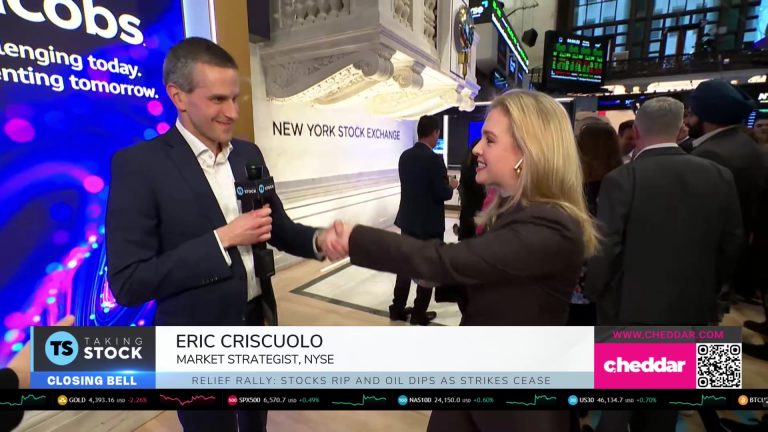
In today’s episode of Taking Stock, we’re joined by NYSE market strategist Eric Criscuolo to break down a big day in the markets and the surge of green across the board. The rally is largely being driven by headlines out of Iran, where investors are reacting to signs that geopolitical tensions in the Middle East could begin to deescalate. Markets are highly sensitive to conflict risk, so any indication of an “off-ramp” is being welcomed as a positive signal. At the same time, crude oil prices saw a sharp pullback falling more than 7.5% and dipping below $100 a barrel for the first time in weeks highlighting just how closely tied global markets are to energy. Since oil underpins so many aspects of the global economy, from transportation to manufacturing inputs like plastics, rising prices tend to fuel inflation concerns, while declining prices can ease pressure and support equities.

Historically, markets have shown a pattern of short-term volatility during geopolitical events, often followed by a relatively quick recovery. However, as tensions persist, investors are beginning to question whether this trend will hold. Adding to the uncertainty is the recent Federal Reserve meeting, where a more hawkish tone led to a repricing of interest rates globally, with central banks signaling a continued commitment to controlling inflation. Looking ahead, easing oil prices could help calm inflation fears, potentially bringing yields down and giving equities further room to rise. The conversation also turns to upcoming flash PMI data, an important, survey-based indicator that captures real-time sentiment from business leaders across manufacturing and services sectors. As a leading economic signal, PMI data provides valuable insight into whether economic conditions are improving or slowing, making it one of the most closely watched metrics by investors worldwide.
Tokenization of Real World Assets: The Role of T-Rex Ledger in Compliance and Distribution

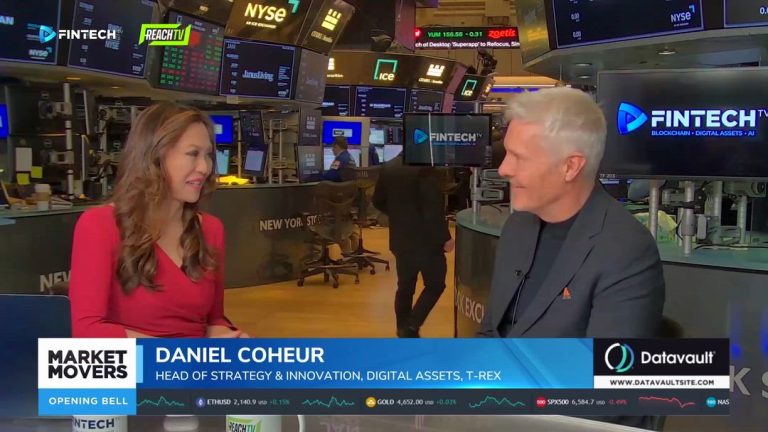
In this episode of Market Movers, we dive into the exciting developments in the tokenization of real-world assets, particularly focusing on Apex Group’s recent announcement to adopt the T-Rex ledger as its default multi-chain orchestration infrastructure. Daniel Coheur, the Global Head of Digital Assets and Fund Distribution at Apex Group, joins Remy Blaire to share insights on how the company is navigating the evolving landscape of digital assets.

Daniel highlights Apex’s significant position in the market, managing around $3.5 trillion in assets, and discusses their strategic acquisition of Tokeny, which aims to facilitate the compliant creation of financial instruments on public blockchains. We explore the T-Rex ledger, designed to provide a neutral coordination layer for tokenized asset ownership and compliance across multiple blockchains, addressing the current challenges of compliance fragmentation.

A key focus of the conversation was the innovative ERC3643 framework, which utilizes identity instead of wallets for KYC attestation, enhancing compliance and reducing the risks of suspicious transactions. Daniel emphasizes the transformative potential of blockchain technology in fund and asset servicing, predicting a shift from siloed operations to a unified infrastructure that enhances utility, operational efficiencies, and democratization of asset distribution.

Weather Whiplash: Understanding California’s Fire Risks Amid Climate Change

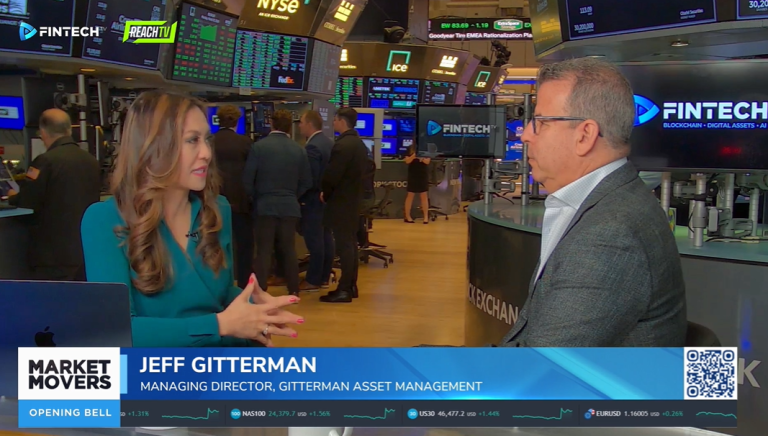
Jeff Gitterman, Managing Director at Gitterman Asset Management, joins Remy Blaire to help us understand the phenomenon of “weather whiplash.” We delve into the pressing issue of extreme weather patterns in Southern California and their connection to climate change. It’s been over a year since the devastating L.A. wildfires, and while the region is currently avoiding a record-breaking March heatwave without further fires, concerns are rising about a potential return to drought conditions.

Jeff explains how an extremely wet winter can lead to rapid growth of underbrush, which, when combined with a subsequent drought, creates a peak fire risk. He highlights the troubling situation unfolding in states like Nebraska, New Mexico, Arizona, and Colorado, where wildfires are already wreaking havoc.

We also discuss the role of El Niño in exacerbating these conditions and the importance of proactive measures, such as clearing underbrush, to mitigate fire risks. Jeff emphasizes that while droughts and wildfires are part of California’s natural cycle, the current scale of heat domes and extreme weather is unprecedented, leading to significant public safety concerns.

Finally, we touch on the impact of urban heat islands, particularly in cities like New York, where concrete and asphalt can raise temperatures by 20 to 30 degrees. Jeff urges for infrastructure changes, such as creating more green spaces and using reflective materials, to combat these rising temperatures.

The Ripple Effect of Oil Prices: From the Pump to Your Grocery Cart

Patrick De Haan, GasBuddy’s Head of Petroleum Analysis, joins Remy Blaire to provide insights on how high retail gas prices might peak this spring and when consumers might see some relief. With the national average for a gallon of regular gas hovering just below $4, we discuss the broader implications of the ongoing U.S. and Israeli conflict with Iran, which has triggered a significant global energy shock. This situation not only affects gas prices but could also impact everyday goods, from groceries to household products, due to the integral role of oil in various industries.

Patrick explains that while we could see gas prices surpass $4 soon, the situation in the Middle East will heavily influence future trends.

As we explore the ripple effects of rising oil prices, Patrick discusses how the commodity shock could soon affect the prices of everyday goods, particularly in the grocery sector. We also touch on the increasing consumer interest in electric vehicles (EVs) and hybrids, examining whether this shift could significantly reduce long-term gasoline consumption.

Finally, we discuss the performance of the energy sector within the S&P 500, considering whether investors should focus on upstream or downstream companies amidst the current volatility. Patrick emphasizes the unpredictable nature of the market, reminding us that while there may be short-term opportunities, the long-term outlook remains uncertain.

From Tech to Energy: Understanding the Shifts in Today’s Investment Landscape

Eddie Ghabour, co-founder and CEO of Key Advisors Wealth Management, joins Remy Blaire to dive into the current state of the markets as Wall Street rallies following President Trump’s temporary halt on attacks against Iranian energy infrastructure. Despite this positive news, we discuss the underlying issues, including a significant sector rotation away from tech, which has been the leader for the past three and a half years.

He notes that while we are seeing a pullback in oil prices, the overall sentiment remains cautious. Eddie emphasizes that the recent rally may not be sustainable, as inflation concerns are likely to hinder the Federal Reserve’s ability to cut rates.

We also explore the implications for central banks globally, particularly in light of the Fed’s recent hawkish tone. Eddie predicts stagflationary data in the coming months, which could pose challenges for risk assets.

The conversation shifts to the energy sector, which has seen a remarkable 30% increase this year. Eddie believes that while a pullback is overdue, the bullish trend in energy is likely to continue for the next three to six months.

We then discuss the tech sector, where the so-called MAG-7 stocks are down nearly 9% this year. Eddie suggests that the tech gold rush may be over for now, as the bar for earnings growth was set too high. He anticipates a better buying opportunity in tech later this year.

Finally, we touch on the materials sector, where Eddie advises caution due to the current economic climate. He remains bullish on energy but suggests that investors should be prepared for better buying opportunities across other sectors in the future.

Iran Conflict Fuels Global Uncertainty Despite Surge in U.S. Stock Futures

Patrick L. Young, Chairman and founder of Exchange Invest, joins Remy Blaire to dive into the rapidly evolving geopolitical landscape, focusing primarily on the tensions surrounding Iran and its impact on global markets. U.S. stock futures surged by around 2% following President Trump’s temporary halt on attacks against Iranian energy infrastructure. However, the situation remains precarious, with Iran launching ballistic missiles towards a U.S.-UK military base in the Indian Ocean and ongoing threats from Trump regarding Iran’s actions in the Strait of Hormuz.

Patrick emphasizes the current state of the Iranian regime, which he believes is nearing its end, and discusses the implications for the Strait of Hormuz and global oil supply. He argues that while the situation is tense, the global oil supply chain is not as critical as some may suggest, with Saudi Arabia already adapting its operations to bypass the Strait.

We also explore the situation in Cuba, where nationwide blackouts are occurring due to a cut-off in oil supply from the U.S. Patrick suggests that military action from the U.S. is unnecessary, as internal pressures in Cuba are likely to lead to significant change in the near future.

Finally, we touch on the postponed summit between Trump and China’s Xi Jinping, with Patrick noting that while the summit will eventually happen, the ongoing conflicts are causing delays in negotiations.

Gas Prices and Global Tensions: What It Means for the U.S. Economy Moving Forward

Luke Lloyd, CEO and founder of Lloyd Financial Group, joins Remy Blaire to delve into the current state of the U.S. stock market, particularly in light of recent geopolitical tensions involving Iran. U.S. stock futures are rallying as President Donald Trump announces a five-day postponement of military strikes on Iranian energy infrastructure, although Iran’s foreign ministry denies any ongoing talks. This situation has led to fluctuations in oil futures and elevated treasury yields, with the odds of a rate hike hovering around 20%.

Luke emphasizes that the current market conditions are likely to be short-term and suggests that oil prices may stabilize in the $80 to $70 range, which would alleviate inflationary pressures. Luke believes that the chances of a rate hike are minimal, viewing this as a potential bullish signal for the market.

We also discuss discounts across sectors, including banks, retailers, and big tech. Luke points out that many stocks are trading below historical price-to-earnings ratios, indicating potential buying opportunities. He highlights specific stocks, such as Prudential Financial and Intuit, as good additions to portfolios.

Shifting our focus to the bond market, Luke notes that rising treasury yields suggest some inflationary pressure, but he believes that the liquidity in the system, driven by government spending and corporate investments, remains strong. This liquidity is a bullish signal for the market, despite the ongoing uncertainty.

Finally, we touch on the impact of rising gasoline prices on consumers and the economy. Luke reassures listeners that while higher gas prices are a concern, the economy is less reliant on oil than it was in the 1970s. He remains optimistic about the potential for a long-term resolution in the Middle East, which could open up trade and benefit global markets.

How FinTech Companies Make Mone: Melio

0

In this episode, we break down how FinTech companies like Melio actually make money. Melio is an SMB bill pay and receivables platform designed to make paying and getting paid feel as easy as sending a text. Businesses can pay vendors by ACH, credit card even when the vendor doesn’t accept cards or by check, all while keeping everything synced with accounting software like QuickBooks. Vendors don’t even need to sign up to get paid, making admin work painless. So how does Melio generate revenue? Through card payment fees, premium delivery options like expedited checks or real-time international payments, international transfer fees, and embedded partner distribution via syndication with platforms and financial institutions like Shopify and Pfizer. The numbers speak volumes: in June 2025, Xero announced a $2.5 billion acquisition of Melio, citing 80,000 SMB customers, $30+ billion in payout volume, and $153 million in FY25 revenue, with the deal completed by October 2025. Melio’s moat lies in its simplicity, deep accounting integrations, and partnerships that place it where SMBs already operate. By combining workflow and payment rails, Melio keeps cash flow flexible, monetizes organization, and scales through partners turning chaotic accounts payable into a smooth, manageable process.

Cybersecurity in 2026: Post-Quantum Readiness, AI Threats & Decentralized Defense

0

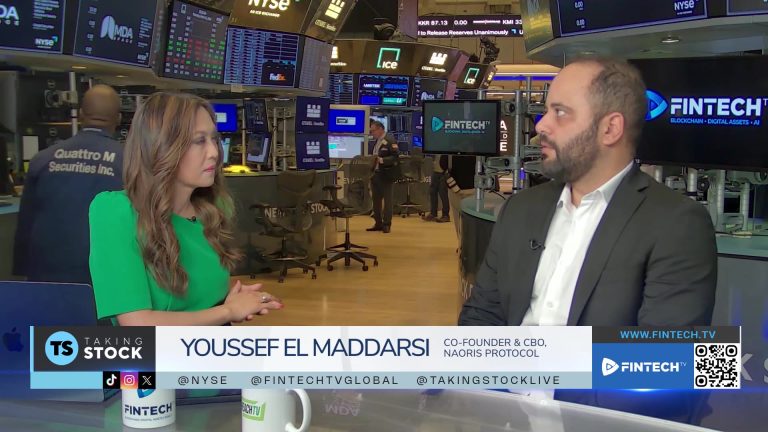
Youssef El Maddarsi, Co-Founder and Chief Business Officer of Naoris Protocol, joins us live from the trading floor of the New York Stock Exchange to discuss the future of cybersecurity in an increasingly complex digital world. He explains how resilience in 2026 has evolved beyond traditional perimeter defense into continuous validation, decentralized infrastructure, and quantum-ready systems. Youssef highlights the growing risks enterprises face, particularly the dangers of single points of failure, and emphasizes the need for organizations to rethink how they secure their networks by leveraging decentralization and trust-based frameworks. The conversation also explores the rising influence of nation-state cyber threats, the urgency of preparing for a post-quantum world, and how artificial intelligence is both a powerful defense tool and a rapidly evolving threat vector. From polymorphic attacks to infrastructure outages, Youssef outlines why businesses must prioritize identity security, adopt post-quantum cryptography, and continuously verify system integrity. Looking ahead, he shares how innovations in blockchain and decentralized validation could redefine cybersecurity—ensuring trust, resilience, and protection across every layer of digital infrastructure.

From 2017 to Now: How Early AI Investors Are Winning Big

0

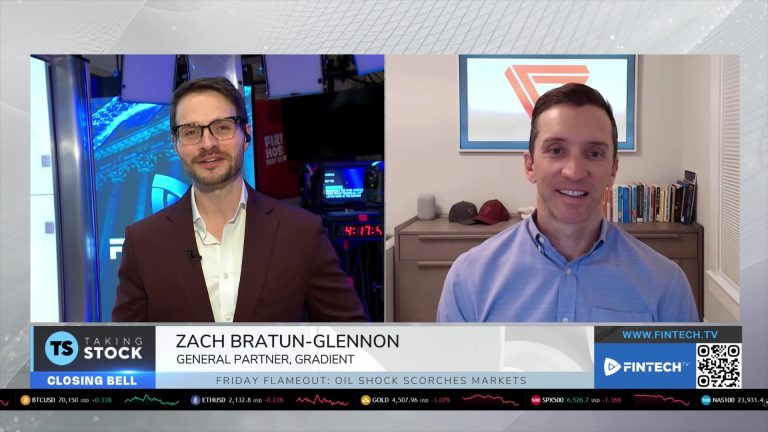
Zach Bratun Glennon, General Partner at Gradient Ventures, joins to discuss the firm’s early conviction in artificial intelligence and how that foresight is shaping today’s investment landscape. Having focused exclusively on AI since 2017, shortly after the groundbreaking transformer research from Google, Zach explains how his background in engineering and data science helped identify the massive potential of AI long before it became mainstream. He shares insights into Gradient’s recently oversubscribed $220 million Fund V, highlighting the surge in investor interest, rapid growth in AI startups, and the expanding ecosystem of founders building in the space. The conversation also tackles the so-called “SaaS apocalypse,” with Zach offering a more measured perspective arguing that rather than a collapse, the sector is undergoing a repricing as AI-native companies reshape the competitive landscape. Looking ahead, he emphasizes how AI-driven innovation will continue to redefine software, creating new opportunities while challenging traditional business models.