[stock-market-ticker symbols=" ^NYA;CRYPTO:BTC;CRYPTO:ETH;CRYPTO:USDT;CRYPTO:USDC;CRYPTO:BNB;CRYPTO:ADA;CRYPTO:XRP;CRYPTO:SOL;CRYPTO:DOGE " stockExchange="NYSENASDAQ" width="100%" transparentbackground=1 palette="financial-light"]

Home Blog Page 43

How AVAX One is Building the Institutional Gateway to Avalanche

0

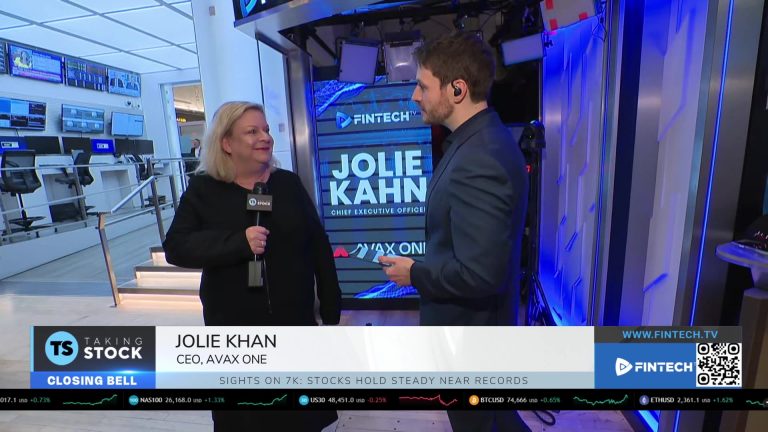
Jolie Khan, CEO of AVAX One, joins from the trading floor to discuss how her company is positioning itself as a gateway to the on-chain economy. She explains that AVAX One allows traditional investors to gain exposure to the Avalanche (AVAX) ecosystem through a public equity structure, effectively bridging the gap between traditional finance and blockchain-based assets. For investors unfamiliar with AVAX, she highlights its key features, including a limited supply, staking rewards that generate yield, and a fee-burning mechanism that reduces supply over time factors that can potentially drive long-term value.

The conversation also explores the broader appeal of digital asset treasuries, particularly as regulatory frameworks continue to evolve. Jolie notes that as clearer guidelines emerge, these structures are beginning to resemble more familiar traditional finance investment vehicles, making them increasingly accessible to mainstream investors. She emphasizes that platforms like AVAX One offer a unique opportunity to participate in innovative blockchain ecosystems while benefiting from experienced management teams and structured investment approaches.
Bitcoin Eyes Breakout as ETF Momentum and Stablecoin Growth Boost Crypto Market

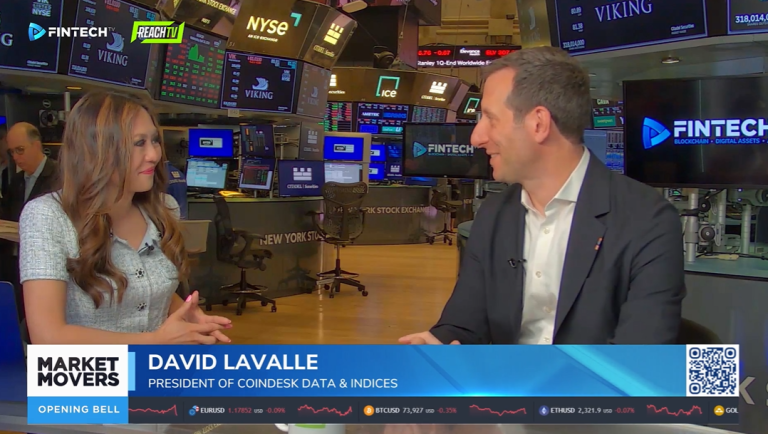
David LaValle, President of CoinDesk, joins Remy Blaire to discuss the current state of the cryptocurrency market. With momentum building, they discuss Morgan Stanley’s recent launch of a Bitcoin ETF and the stablecoin industry’s market cap surpassing $320 billion. Despite these advancements, Bitcoin has been trading below $80,000 since January,

Dave shares insights on the recent price movements of Bitcoin, noting a potential breakout in the $74,000 to $76,000 range. He emphasizes that the volatility in Bitcoin prices reflects a lack of adoption rather than a downturn in the overall crypto market, highlighting ongoing developments in tokenization and other platform builds.

As we approach tax day, Dave points out that the ETF market remains robust, with over $60 million in assets just a week after launch, indicating strong early adoption.

They further discuss the concept of 24-7 tokenization and its relevance in the context of geopolitical events, such as the situation in the Middle East. Dave argues that tokenization is not just a solution looking for a problem but a significant advancement that offers liquidity and trading opportunities outside traditional market hours.

$1 Million Bitcoin? Matt Hougan Outlines Long-Term Bull Case for 2035

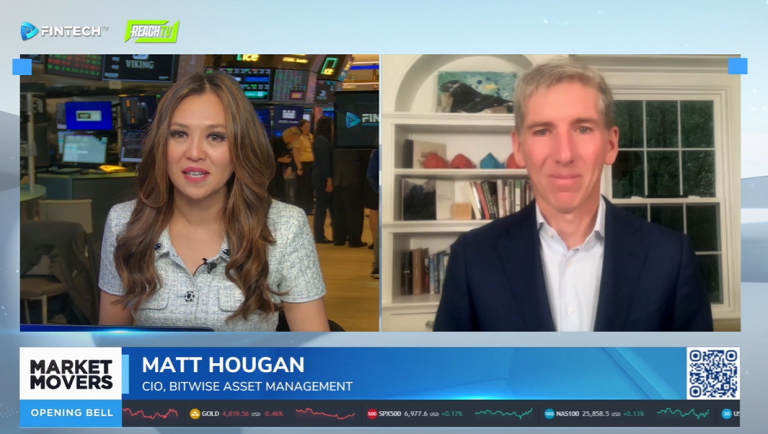
Matt Hougan, the CIO of Bitwise Asset Management, joins Remy Blaire to discuss Bitcoin’s rally, currently hovering around the $74,000 mark, and how it tends to thrive during geopolitical uncertainty. Matt explains that buying Bitcoin is akin to making two bets: one as a store of value and the other as a potential international currency for settling transactions.

They also explore the performance of Ethereum and the broader crypto market, noting an 18% increase in trading volumes. Matt highlights the positive catalysts for crypto, including major firms launching Bitcoin ETFs and the growth of stablecoins. However, he cautions that we may not see a classic altcoin season, but rather a focus on high-quality assets like Ethereum and Solana.

As they look ahead, Matt shares his short and mid-term price targets for Bitcoin, suggesting we may remain in a channel between $60,000 and $80,000 before breaking out. He also discusses his ambitious $1 million price target for Bitcoin by 2035, driven by the growth of the store of value market and Bitcoin’s increasing market share.

Finally, they touch on the potential threat of quantum computing to Bitcoin. Matt reassures that while it is a concern, the crypto community is actively addressing it, and he believes we will overcome this challenge.

AI and Defense: Key Drivers of Today’s Stock Market Rally

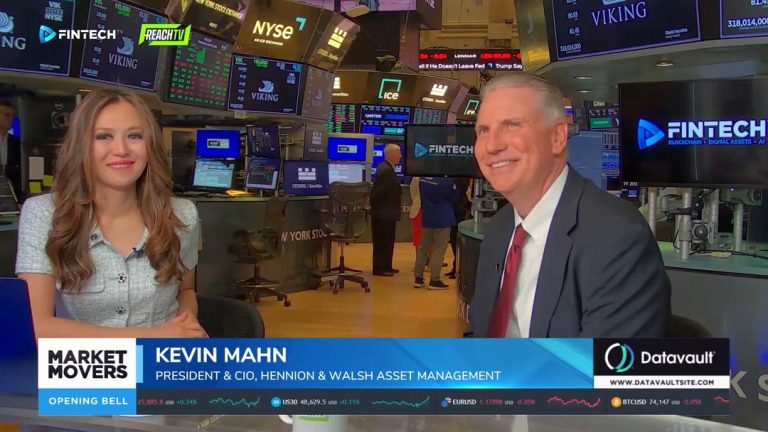
Kevin Mahn, the President & CIO at Hennion & Walsh Asset Management, joins Remy Blaire to discuss how Wall Street seems to be tuning out the geopolitical noise as institutional investors return to equities. The S&P 500 saw a significant surge of 1.2% on Tuesday and has gained nearly 10% since March 27th, while the Nasdaq has advanced about 12%, achieving its longest winning streak since 2021.

Kevin emphasizes the importance of not trying to time the market and suggests that investors reassess their portfolios to align with their true risk tolerance. Diversification is key, and he recommends considering international stocks and bonds for income potential.

They also discuss the driving forces behind the current rally, particularly the ongoing investment in AI infrastructure, which remains robust despite geopolitical tensions. Kevin highlights opportunities in various sectors, including data center construction and power supply, as essential components of the AI ecosystem.

Additionally, they touch on the aerospace and defense sectors, which are gaining attention due to recent military conflicts and increased defense spending commitments from NATO countries. Kevin expresses optimism about the American consumer’s health, noting that while spending has remained strong, rising gas prices could pose challenges if the conflict in Iran persists.

As they look ahead to the Federal Reserve’s upcoming meetings and potential rate changes, Kevin shares his outlook, suggesting that the Fed may remain on pause for the rest of the year, with a possibility of one rate cut.

Geopolitics, Cooling Inflation and Rising Risk Appetite Shape Q2 Fixed-Income Outlook

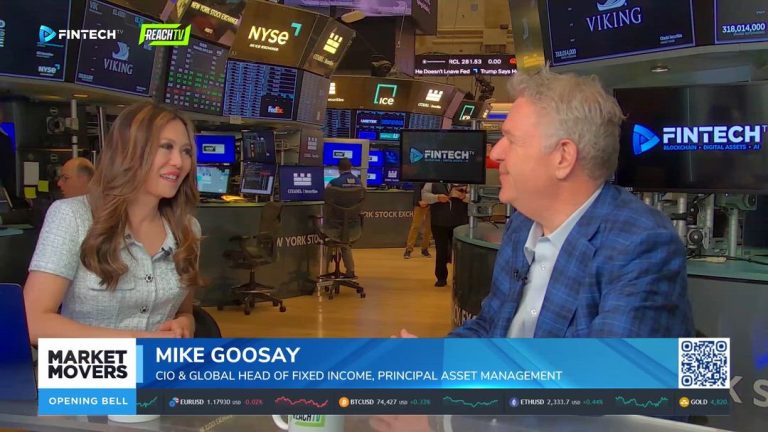
Mike Goosay, the CIO & Global Head of Fixed Income at Principal Asset Management, joins Remy Blaire to delve into the current state of the fixed-income market as we enter the second quarter of 2026.

They discuss the complex interplay between geopolitical tensions, particularly regarding Iran, and the returning risk appetite on Wall Street, fueled by hopes for a peace deal and a cooler-than-expected inflation report. Mike shares his insights on how these factors are influencing the Federal Reserve’s outlook, suggesting that the Fed is more likely to cut rates rather than hike them, which the bond market may be mispricing.

They explore the dynamics of bond yields, noting that the long end of the yield curve is sensitive to inflation expectations, while the short end reacts more to changes in the Fed’s policy rates. Mike emphasizes the attractiveness of the five to ten-year bond range, especially as investors consider their portfolios on tax day.

Turning their attention to emerging markets, they discuss how geopolitical risks and a strong U.S. dollar are impacting these economies. Despite the challenges, Mike sees opportunities in emerging markets due to their improved fiscal positions and growth potential.

They also touch on the role of the U.S. dollar in global equity markets and how it affects corporate bond spreads. Mike highlights the importance of quality companies in this volatile environment.

Finally, they examine municipal bonds, where Mike recommends focusing on revenue-oriented assets like toll roads and water and sewer projects, which tend to be more resilient in uncertain markets.

Market Resilience: Analyzing the S&P 500’s Recovery and Future Prospects

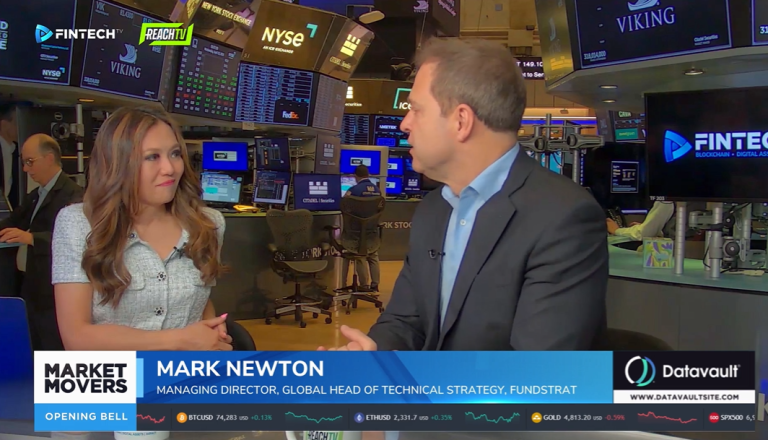
Mark Newton, Managing Director and Global Head of Technical Strategy at Fundstrat Global Advisors, joins Remy Blaire to discuss the current state of the U.S. stock market, focusing on the S&P 500, which has recently experienced a remarkable recovery, gaining over 10% in just ten trading days. With the index nearing a new closing high, they discuss the factors contributing to this rally, including a cooling geopolitical climate, a ceasefire between the U.S. and Iran, and a restoration of Saudi pipeline capacity leading to a drop in crude oil prices.

Mark shares his year-end target of 7,300 for the S&P 500 and highlights the importance of market breadth and sector performance. He notes that while defensive industries are declining, technology and financials are showing signs of recovery, which is encouraging for a broad-based market rally.

They also explore expectations for the U.S. dollar, with Mark predicting a temporary weakening before it strengthens again. He emphasizes the significance of internal market dynamics, including the reversal in short positions among Commodity Trading Advisors and the importance of breadth in the market.

As they look ahead, Mark identifies potential leaders and laggards within the S&P 500, suggesting that energy may lose its leading position while technology, industrials, and financials could gain traction. He expresses optimism about the upcoming earnings season, particularly for big tech and financials, and reassures listeners that, despite global uncertainties, the market remains resilient.

The Future of Global Money Movement

0

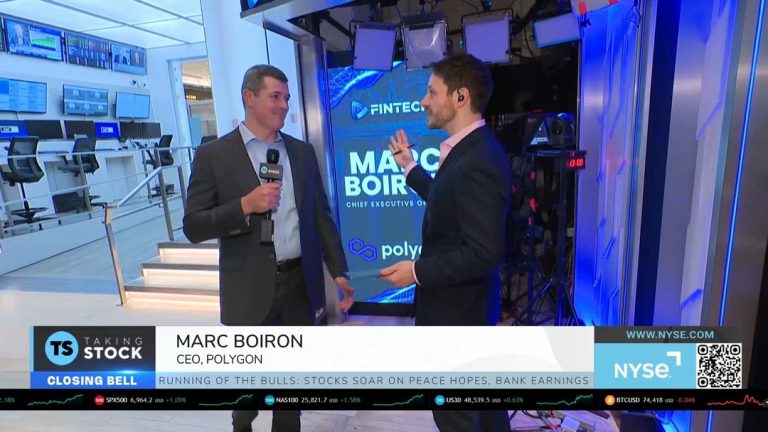
Mark Boiron, CEO of Polygon, joins from the trading floor of the New York Stock Exchange to break down the future of global money movement and how blockchain is reshaping traditional finance. He explains Polygon’s “open money stack” vision a fully integrated system designed to move money seamlessly across borders using stablecoins, reducing the friction, delays, and fragmented processes common in today’s banking infrastructure.

In the conversation, Mark highlights how legacy payment systems often rely on multiple intermediaries, creating inefficiencies and limited visibility, whereas Polygon’s model consolidates this into a single API-powered infrastructure. He also discusses real-world use cases, such as sending stablecoins instantly across borders, and how this technology could replace outdated cross-border payment experiences with faster, more transparent alternatives.

The discussion further explores developer adoption, with Mark pointing to strong ecosystem traction driven by high transaction volumes and proven applications like Polymarket. With over trillions in transaction activity and a growing share of stablecoin usage, Polygon continues to demonstrate scalability and reliability for builders. He also emphasizes the evolving relationship between blockchain networks and traditional banks, where tokenized deposits and stablecoins may increasingly work together to unlock new financial use cases, from global remittances to digital asset-based yield generation.

Why Tech Stocks Are Still Undervalued & Where Smart Money Is Heading Next 

0

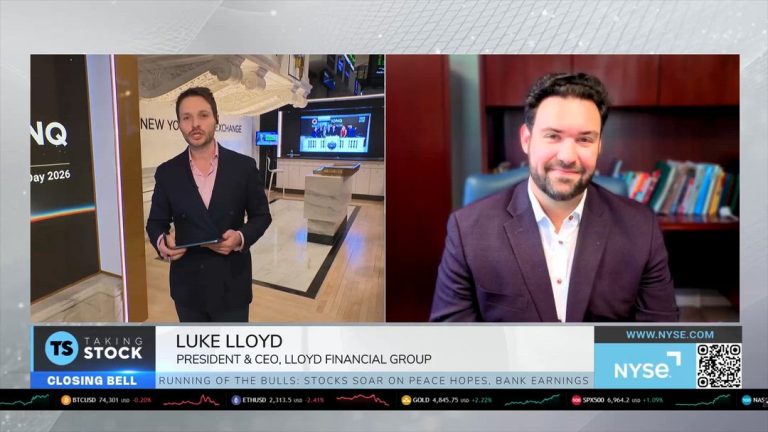
Luke Lloyd, President and CEO of Lloyd Financial Group, joins the show to break down the recent market rally and why he believes investors are getting the narrative wrong. Highlighting the resilience of equities, Luke pushes back against the “sell the dip” sentiment that dominated earlier in the downturn, arguing instead that this was one of the clearest buying opportunities in recent memory. He points to major tech names like Microsoft, where valuations dropped significantly despite continued revenue and earnings growth, creating what he sees as compelling entry points for long-term investors.

Luke emphasizes that much of the recent surge, particularly in software stocks, is being driven by a combination of undervaluation and a major short-covering rally. With indices like the iShares Expanded Tech-Software Sector ETF heavily shorted, institutional investors are now being forced back into the market, fueling upward momentum. He remains bullish on tech and AI-driven companies, dismissing fears that artificial intelligence will disrupt industries negatively. Instead, he argues that AI will enhance productivity and profitability across sectors, ultimately supporting higher stock prices.

The Future of Quantum Computing

0

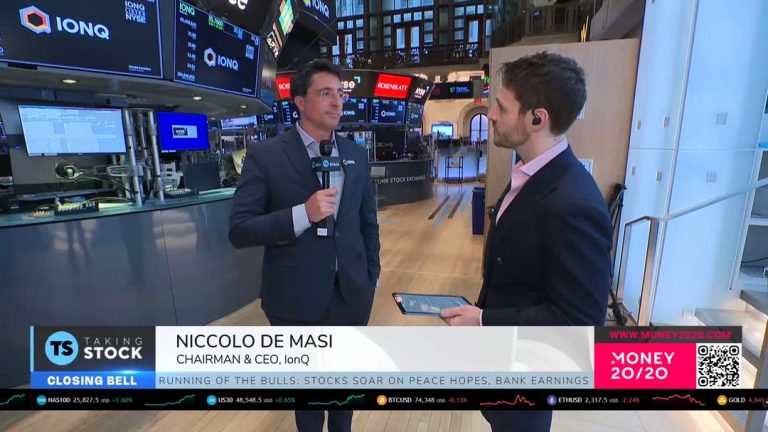
Niccolo de Masi, Chairman and CEO of IonQ, joins us from the trading floor following a celebratory bell-ringing to discuss the future of quantum computing and why his company is leading the charge. With nearly 30 years of innovation behind it, IonQ has grown into one of the most advanced players in the space, measured by revenue, talent, and technological breakthroughs. At its core, the company is focused on building more precise and stable quantum computers that can solve complex problems faster and more efficiently than traditional systems, all while using less energy.

During the conversation, Niccolo highlights several major announcements, including expanded partnerships with organizations like the Air Force Research Laboratory and DARPA. These collaborations are pushing the boundaries of quantum networking, quantum memory, and even the development of future quantum data centers. IonQ also revealed new benchmarking results showing its systems outperform competitors in speed, efficiency, and cost, positioning the company not only as a leader but also as a key supplier within the broader quantum ecosystem.

25 Years of Diversified Energy: Growth, Markets & the Future of U.S. Energy

0

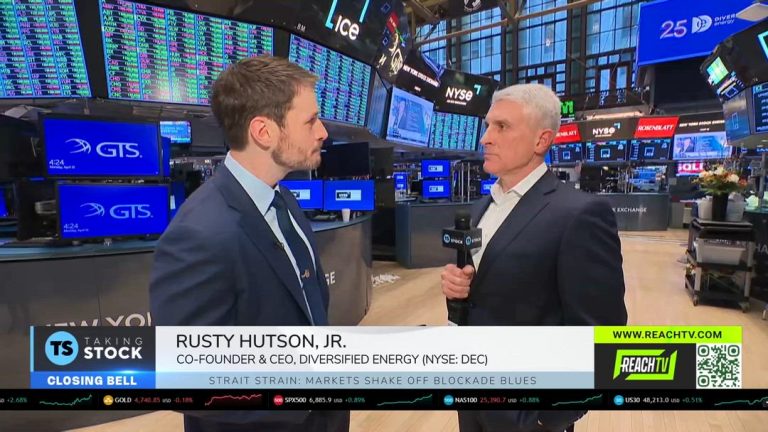
Rusty Huston Jr., Co-Founder and CEO of Diversified Energy, joins the show following a memorable moment on the trading floor as he and his team rang the closing bell at the New York Stock Exchange. The celebration marked two major milestones for the company, its 25th anniversary and the strategic move of its primary listing from London to the United States. Rusty describes the experience as surreal, highlighting the significance of sharing the moment with employees while reflecting on the company’s growth journey.

The conversation dives into the broader energy landscape, where demand and attention around oil, gas, and fuel sources are at an all-time high. Diversified Energy focuses on operating and optimizing existing wells extending their lifespan and improving efficiency to meet growing energy needs. With operations spanning 13 states, including key regions like the Appalachian Basin, Texas, Louisiana, and Oklahoma, the company plays a critical role in supporting energy supply and contributing to U.S. energy independence, while also exporting to global allies.