[stock-market-ticker symbols=" ^NYA;CRYPTO:BTC;CRYPTO:ETH;CRYPTO:USDT;CRYPTO:USDC;CRYPTO:BNB;CRYPTO:ADA;CRYPTO:XRP;CRYPTO:SOL;CRYPTO:DOGE " stockExchange="NYSENASDAQ" width="100%" transparentbackground=1 palette="financial-light"]

Home Blog Page 15

The Trillion Dollar AI Market: How Compute is Becoming a Commodity

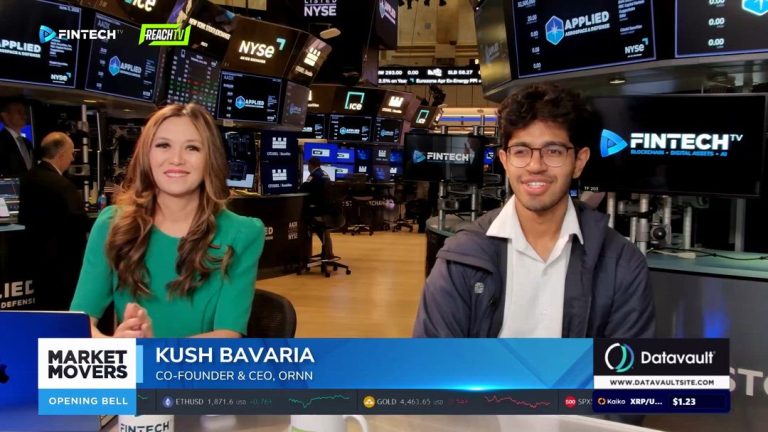
Kush Bavaria, co-founder & CEO of ORNN, joins Remy Blaire to dive into the rapidly evolving landscape of AI and its burgeoning market, now valued at trillions of dollars. Kush shares insights on the innovative financial tools emerging to commoditize computing power, particularly through the launch of U.S. Dollar Denominated Compute Futures in partnership with ICE.

Kush explains how ORNN has developed indices that track the price of compute, likening it to traditional commodities like oil and natural gas. He highlights the current insatiable demand for GPUs, driven by AI companies and startups, which has led to skyrocketing prices as supply has not kept pace.

They also discuss the recent announcement that futures markets are set to go live soon and the growing interest in prediction markets, which are becoming more institutionalized. Kush emphasizes the strong liquidity in the compute market, with significant month-over-month growth.

Looking ahead, they explore ORNN’s long-term vision of building a robust market in the U.S., aiming to support the AI race against global competitors like China. With projections suggesting the AI market could reach $7 to $10 trillion by 2030, Kush believes that a futures market for compute is essential for hedging costs associated with data centers.

Finally, they touched on ORNN’s impressive growth trajectory, with plans to expand their team significantly in the coming year.

Strategy’s bitcoin sale shocks the market: overblown, or an ominous sign?

0

Strategy opened the week with a boom, as an 8-K filing revealed that the largest corporate Bitcoin holder sold 32 BTC between May 26 and May 31, marking its first Bitcoin sale since December 2022. BTC abruptly sliced through underlying support, falling under $67,000, but is the market reaction overblown? 

Saylor telegraphed his intent nearly 2 months prior to the sale, saying,

“We’ll probably sell some bitcoin to fund a dividend just to inoculate the market, just to send the message that we did it.”

Rather than a one-off catalyst, Bitcoin’s reaction to Strategy’s sell-new might be the culmination of multiple factors piling up and finally breaking the risk tolerance threshold, i.e., the proverbial camel’s back.  

Although newly confirmed Federal Reserve Chair Kevin Warsh was projected to be a rate cut happy guy, financing the US-Israel War in Iran, the energy price shock resulting from the closure of the Strait of Hormuz, and the longer-term projected impact of President Trump’s One Big Beautiful Bill Act have analysts’ expectations for rate cuts in 2026 down, while rate hike odds in 2027 have risen above 50%. 

Fortunately, in the case of bitcoin, sharp downside moves tend to have a silver lining, in this case, a discount. According to Wintermute, a major algorithmic trading firm and liquidity provider within crypto markets, 

“The longer-term picture is more constructive than price suggests. While there’s still some debate over whether we’re in a bear market or not, to us it looks like the cycle is resetting. The setup looks relatively weak into the summer months, but we’re seeing longer-term holders start to TWAP into the market through the OTC desk, with no appetite to call the exact bottom but a view that these levels look attractive on an 18-month basis.”

Retail and institutional spot market orderbook data also appear to concur with Wintermute’s observation. Hyblock’s bid-ask ratio metric (set to 10% of aggregate order book depth) shows an accelerating bid for bitcoin, reinforcing the view that traders see sub-$60,000 BTC as discounted. 

BTC/USDT bid-ask ratio (10% depth) turns positive. Source: Hyblock

The indicator ranges from -1 to +1, with values above zero pointing to an increasing imbalance in the orderbook structure. 

Beyond the bearish technicals, bitcoin lacks a fresh set of newsflow and narrative catalysts that would lift investor sentiment. While value investors, sovereigns, and institutions may lean into the current undervaluation, investor mindshare disruption, capital flows focused on AI stocks, and the SpaceX and OpenAI IPOs are likely to continue making bitcoin the laggard. 

Why Bitcoin Is Struggling While AI Stocks Soar

0

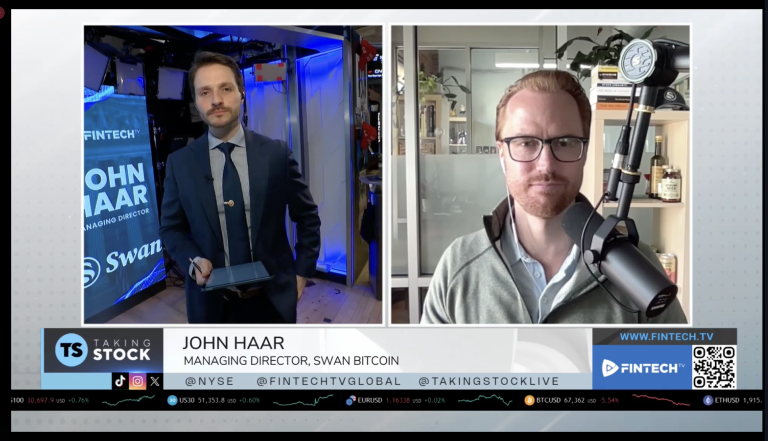
Bitcoin has pulled back to retest key support levels, hovering around $67,000, but according to Swan Bitcoin Managing Director John Haar, the long-term Bitcoin story remains intact. Speaking with J.D. Durkin, Haar explained that Bitcoin is currently taking a backseat as investors chase the explosive gains being seen across AI-related stocks, semiconductors, software companies, and data center plays. While institutional adoption continues to grow through major players like Morgan Stanley, Charles Schwab, and Strategy, investor attention has shifted toward sectors delivering faster short-term returns. Haar believes Bitcoin’s next major catalyst could come from either a cooling of AI market enthusiasm or a future wave of monetary stimulus that refocuses investors on Bitcoin’s role as a store of value. He also addressed headlines surrounding Strategy’s recent Bitcoin sale, describing it as a minor transaction designed to satisfy credit rating agencies rather than signal a change in the company’s long-term Bitcoin strategy. As Wall Street institutions continue building exposure to digital assets, Haar argues that Bitcoin’s long-term investment thesis remains stronger than ever despite recent price weakness.

Why AI Infrastructure Stocks Are Leading the Market Higher

0

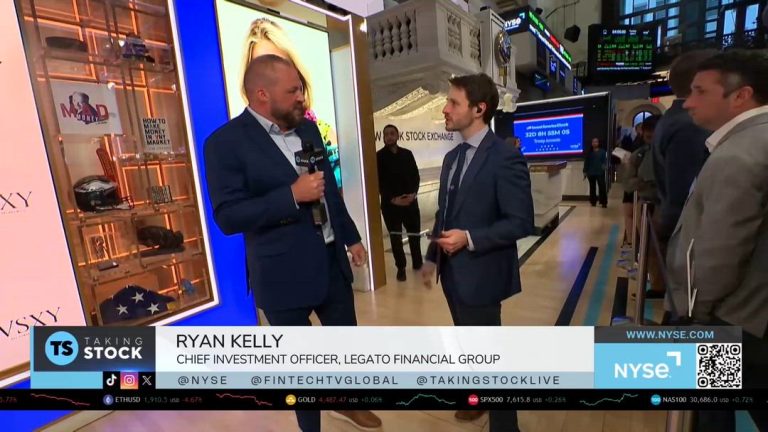
Ryan Kelly, CIO of Legato Financial Group, joins J.D. Durkin from the floor of the New York Stock Exchange to discuss the powerful rally driving markets to fresh all-time highs and what investors should expect in the second half of 2026. While enthusiasm surrounding artificial intelligence continues to fuel market momentum, Kelly argues that earnings not just hype will ultimately determine which companies emerge as long-term winners.

The conversation highlights the latest surge in AI infrastructure stocks, including Hewlett Packard Enterprise and Dell, as investors continue pouring capital into the data center buildout powering the AI revolution. Kelly notes that while companies building servers, chips, and infrastructure are seeing significant gains, the next phase of the AI story will depend on businesses demonstrating real profits and productivity gains from actually using AI technologies.

Kelly also addresses the growing role of investor psychology and fear of missing out (FOMO) in today’s market, pointing to explosive moves in companies like Marvell following bullish commentary from NVIDIA CEO Jensen Huang. While some stocks are soaring based on future expectations, Kelly believes investors should focus on companies with strong earnings potential and sustainable business models.

The discussion concludes with a look beyond the obvious AI winners, including industrial and infrastructure plays such as Nucor, which stands to benefit from both AI-related data center construction and broader U.S. infrastructure investment. As AI continues to reshape the market landscape, Kelly explains why balancing innovation themes with fundamental analysis remains critical for investors seeking long-term success.

Bitcoin slide, CME Group crypto, Binance trading, Bermuda onchain

0

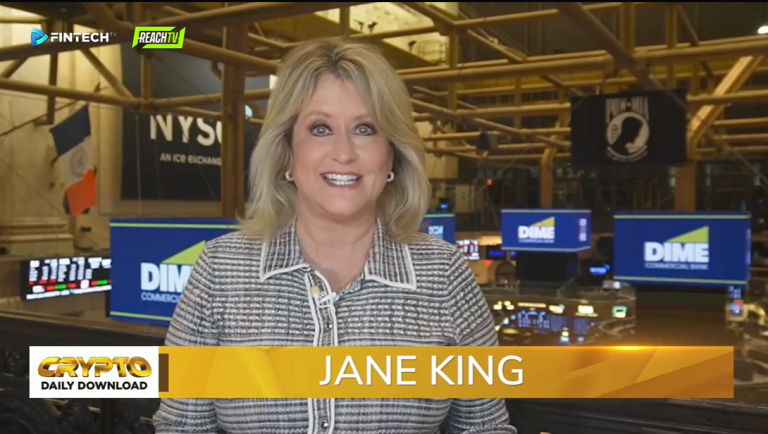
In today’s episode of the Crypto Daily Download, Jane King discusses the recent downturn in Bitcoin’s value, which has dropped to below $70,000, largely influenced by stock market trends and the news that Michael Saylor’s MicroStrategy sold $2.5 million worth of Bitcoin—his first sale since 2022.

Jane also highlights the CME Group’s launch of 24-7 trading for cryptocurrency futures and options, which went live on May 29. This initiative saw over 7,200 contracts traded over the inaugural weekend, indicating strong demand for these markets.

In other news, Binance expands its offerings by providing access to over 7,000 U.S. stocks and ETFs, allowing users to convert these shares into blockchain tokens. Co-CEO Richard Teng shared that they are introducing zero-commission trades for non-U.S. customers and enabling fractional purchases starting at just $5, as part of their vision for a multi-asset financial super app.

Lastly, she dissects the collaboration between the Stellar Development Foundation and the government of Bermuda, which aims to transition key payment and financial services onto the Stellar network. This marks a significant step towards Bermuda’s goal of becoming the world’s first fully on-chain national economy, a plan first announced at the World Economic Forum in January.

Jane King with the latest from the NYSE.

AI Boom Leaves Digital Assets Behind as Crypto ETFs Face Fresh Outflows

Jordi Visser, founder of VisserLabs and creator of AI Macro Nexus Research, joins Remy Blaire to dive into the current state of global risk capital, particularly focusing on the contrasting fortunes of digital assets and the tech sector. Despite President Donald Trump’s claims of the U.S. becoming the crypto capital, the crypto market is experiencing ETF redemptions, particularly from BlackRock’s Azure trust.

Jordi highlights the ongoing rotation from digital assets to the booming artificial intelligence sector, which is currently driving a remarkable tech rally, especially in semi-stocks. He emphasizes that we are only at the beginning of the agentic world, where AI will significantly impact both consumer and enterprise sectors.

Jordi also discusses the implications of this shift for digital assets, noting that while there is a bear market in crypto, the infrastructure for tokenization and stablecoins is gaining momentum. He believes that as the AI sector matures, the financial side of the market will also see a redesign, which will eventually attract investment back into crypto.

Wrapping up, Jordi shares insights on potential opportunities within the infrastructure side of tech, particularly in companies that support AI development. He expresses a cautious outlook on crypto price targets but remains optimistic about the long-term necessity of the crypto network in the evolving financial landscape.

AI-Fueled Rally Powers Stocks Higher as Investors Look to Labor Market Signals

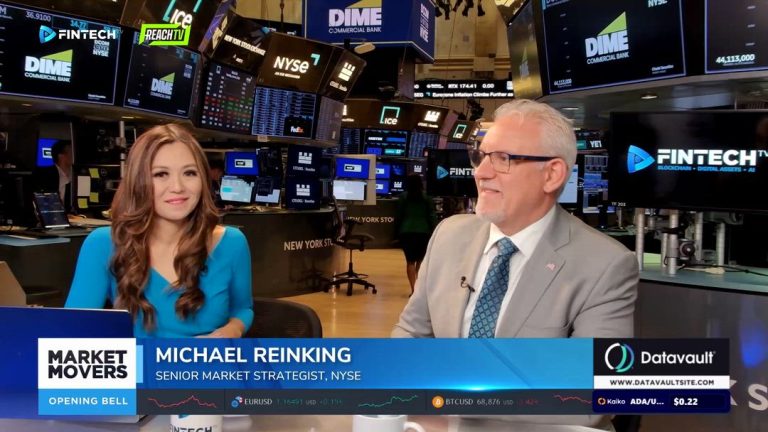
Michael Reinking, Senior Market Strategist at the NYSE, joins Remy Blaire to dive into the latest developments on Wall Street as the S&P 500 hits a remarkable milestone, closing at the 7,600 mark and marking an eight-day winning streak—the longest since May of last year. They discuss the significant momentum in the AI sector and the anticipation surrounding this week’s jobs data, alongside ongoing geopolitical tensions and fluctuating oil prices.

They explore the implications of recent manufacturing data and the potential pull forward of demand in the economy, particularly in the tech sector. Michael highlights the importance of upcoming labor market data, including jolts and nonfarm payrolls, as we approach the June Fed Reserve meeting.

They also touch on Alphabet’s recent move to tap into capital markets, signaling a shift in strategy for the Mag 7 companies, which have historically been asset-light and cash-rich. Michael discusses the potential impact of this change on the market and the necessary capital expenditures for these tech giants.

Finally, they examine the state of oil prices amid geopolitical tensions in the Middle East and the onset of the summer driving season in the U.S. Michael suggests that we may be entering a “higher for longer” oil price environment unless significant demand destruction occurs.

Bitcoin’s Price Action: Insights from Bryan Courchesne on Market Cycles and Strategy Shifts

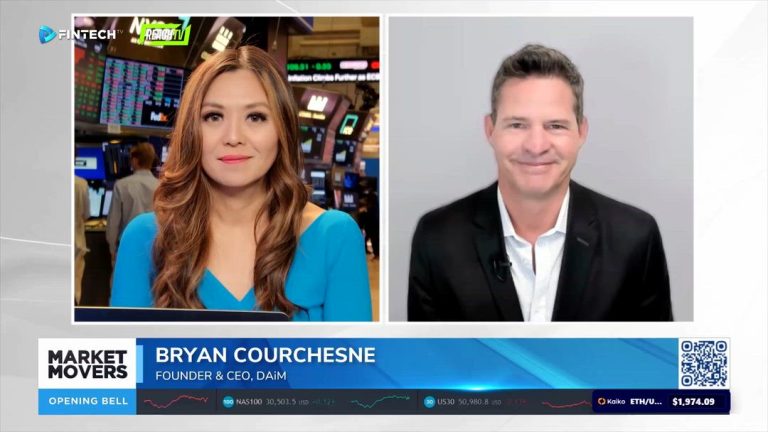
Bryan Courchesne, founder of DAiM, joins Remy Blaire to dive into the current state of the cryptocurrency market. They discuss Michael Saylor’s recent decision to sell Bitcoin for only the second time in his history, marking a shift from his previous “never sell” mantra. This move is part of a strategy to fund a new yield-paying security, raising questions about the implications for everyday investors.

They explore the cyclical nature of Bitcoin’s price movements, particularly during midterm election years, and how these cycles present opportunities for investors. Brian emphasizes that Saylor’s actions may be a strategic test case rather than a cause for concern, suggesting that he could be positioning himself for a significant purchase following the current pullback.

They also discuss the growing trend of tokenization in the crypto space, with $25 billion already tokenized. Brian highlights the benefits of increased liquidity and market access, while cautioning that tokenization does not guarantee value. He provides an update on Ethereum, noting its current use primarily on Layer 2 solutions and its role as infrastructure within the broader crypto ecosystem.

Finally, they address how everyday investors can safely diversify their portfolios amidst the noise in the crypto sector. Brian advises considering Bitcoin as a unique asset, especially during this pullback, and suggests allocating a small percentage of their portfolios to it for long-term wealth building.

Unlocking Institutional Adoption: Kaiko’s Strategic Acquisition of Amberdata

Ambre Soubiran, the CEO of Kaiko, joins Remy Blaire to discuss Kaiko’s acquisition of Amberdata, a move that marks a pivotal moment in the digital asset data landscape. Ambre shares insights on how this strategic consolidation aims to enhance data and analytics capabilities for institutional finance.

Ambre highlights that the acquisition is crucial as digital assets evolve from crypto into broader tokenized and real-world assets. By merging their offerings, Kaiko is now positioned as the only independent and regulated data solutions provider in the sector, serving over 250 institutional clients globally.

They discuss how Amberdata’s strong client base, particularly among active crypto investors, complements Kaiko’s focus on financial institutions and regulators. This integration will enhance their analytics and derivatives data offerings, providing clients with comprehensive market intelligence.

Ambre emphasizes the importance of regulatory standing in building trust with institutional clients, noting that Kaiko operates under strict regulations and has recently expanded its capabilities with the acquisition of a MiCA-regulated DeFi engineering company.

MicroStrategy’s First Bitcoin Sale in Four Years Sparks Debate Over Treasury Strategy

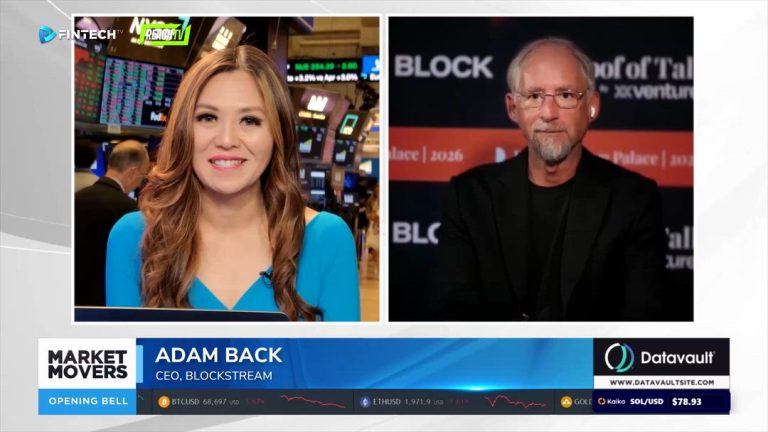
Adam Back, co-founder & CEO of Blockstream, joins Remy Blaire to discuss the current state of Bitcoin, which is holding below $69,000, while also keeping an eye on the 200-week moving average. They discuss evolving corporate treasury strategies, highlighted by MicroStrategy’s recent SEC filing, which revealed its first Bitcoin sale in four years, in which it sold 32 Bitcoin to fund preferred stock distributions.

Adam shares insights on the market’s reaction to this news and the implications of using Bitcoin for dividend payments. They explore the concept of dollar-cost averaging and why many investors struggle to accumulate in such a volatile market. Adam emphasizes the importance of the 200-week moving average as a strategic buying point for those who believe in Bitcoin’s long-term value.

Finally, they touch on the governance debate surrounding BIP 110 and the risks associated with using consensus rules to police transactions. Adam believes that significant changes to Bitcoin require widespread technical and market consensus, and he predicts that the activation date for BIP 110 will likely pass without major events.