
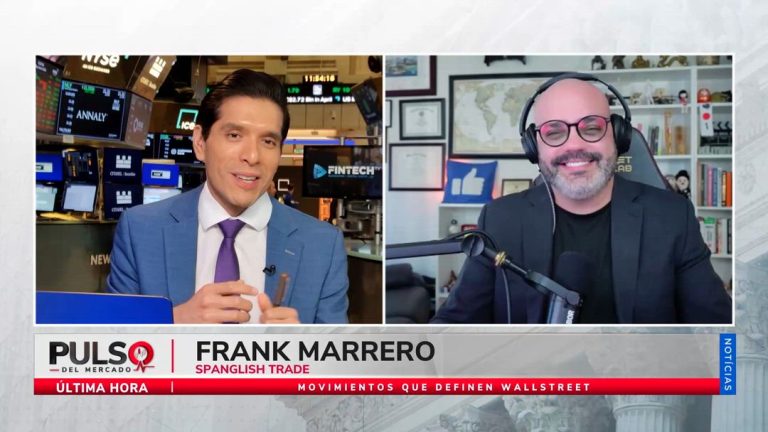
SpaceX podría convertirse en la salida a bolsa más grande de la historia, con una valoración cercana a los 350 mil millones de dólares. Pero la empresa no genera ganancias — y el IPO ya está doble sobresubscrito. Frank Marrero, fundador de Spanglish Trades, analiza cómo se justifica esa valoración, por qué el FOMO puede ser el mayor enemigo del inversionista retail en este momento, qué preguntas debe hacerse antes de comprar, cómo podría moverse el precio en las primeras semanas, y qué significa apostar por SpaceX en realidad: apostar por el nombre de Elon Musk.
Coinbase Bets on the UAE as Regional Demand Grows for Crypto, Payments and Digital Assets
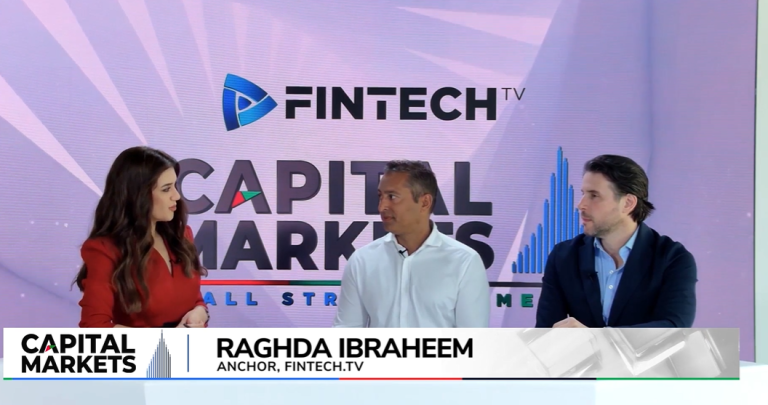
Coinbase Institutional Co-CEO Brett Tejpaul and Head of Strategy John D’Agostino, join Raghda Ibraheem as the first guests at our brand new Dubai studio to discuss the significance of the UAE as a strategic hub for the company. Brett, who has been advocating for the UAE as an international base for Coinbase for over two decades, highlights the region’s leadership in innovation and its role as a midpoint between Wall Street and the MENA region.
John shares insights on how the UAE has emerged stronger from recent turbulence, reinforcing the idea that having a presence in the UAE is essential for any global business. They explore the growing interest from regional banks and family offices in crypto exposure, payment platforms and financing.
The conversation also touches on the evolving landscape of digital assets, with Brett noting the blurring lines between traditional finance and crypto. They discuss Coinbase’s recent launch of tokenized equities and the importance of 24/7 trading, which aims to meet the needs of investors in the region.
John draws parallels between the current moment in digital assets and the establishment of the Dubai Mercantile Exchange, emphasizing the UAE’s willingness to innovate and adapt. They conclude with a discussion on the integration of Coinbase’s recent acquisition of Deribit, a major crypto derivatives platform, and the vision of creating a seamless trading experience that connects global markets.
From Crypto Asset to Business Tool: How Stablecoins Are Transforming Cross-Border Commerce
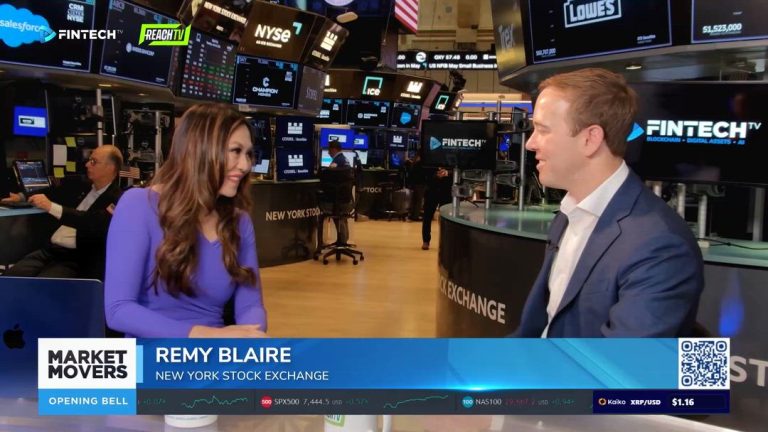
Rob Morgan, Head of Stablecoin & Banking Strategy at Payoneer, joins Remy Blaire to dive into the evolving world of stablecoins and their potential to revolutionize payments for small and medium-sized businesses operating across borders. Rob shares insights on how stablecoins have matured from mere crypto assets to essential tools for improving money movement in the real world.
Rob highlights the challenges faced by businesses in navigating traditional payment systems, particularly the fragmentation and high costs associated with cross-border transactions. He explains how stablecoins can serve as a universal translator, enabling instant fund transfers between jurisdictions and significantly enhancing the efficiency of global business operations.
They also discuss the current landscape of stablecoin adoption, noting that while retail adoption has been strong, businesses are now beginning to embrace stablecoins more widely. However, Rob points out a critical barrier to broader adoption: the need for effective off-ramps that allow businesses to convert stablecoins into local fiat currency for everyday transactions.
Finally, they explore Payoneer’s initiative to pursue a U.S. National Trust Bank charter to issue its own stablecoin, aimed at enhancing interoperability and simplifying the transaction process for customers. This stablecoin will not compete with existing ones but will serve as a holding currency within Payoneer’s ecosystem, streamlining operations for businesses.
Bits + Bips: How the Dimon vs. Armstrong Clash Reveals Crypto at Peak Political Power
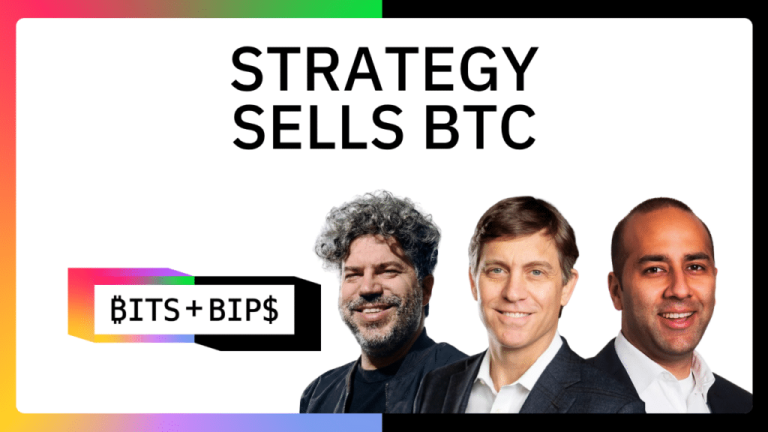
Strategy sold Bitcoin for the first time since 2022 — 32 BTC to cover preferred stock dividends. Ram, Austin, and Chris discuss whether that small sale signals a deeper structural tension between equity holders, preferred holders, and Bitcoin itself. They also covered the news that Anthropic filed for an IPO at a valuation approaching $1 trillion. The hosts lay out the bull and bear cases and ask whether retail investors can realistically get a 10x out of a company already priced like a finished product. Unpacking a spicier moment, they also discussed the moment when JPMorgan’s Jamie Dimon called Coinbase’s Brian Armstrong “full of shit” on live TV over the Clarity Act. Ram says crypto’s window of peak political power is closing fast, while Austin gives crypto lobbyists a great idea for how to turn the banks’ stablecoin yield crusade against them.
AI-Powered Crime Surging as Regulators Race to Modernize Financial Enforcement
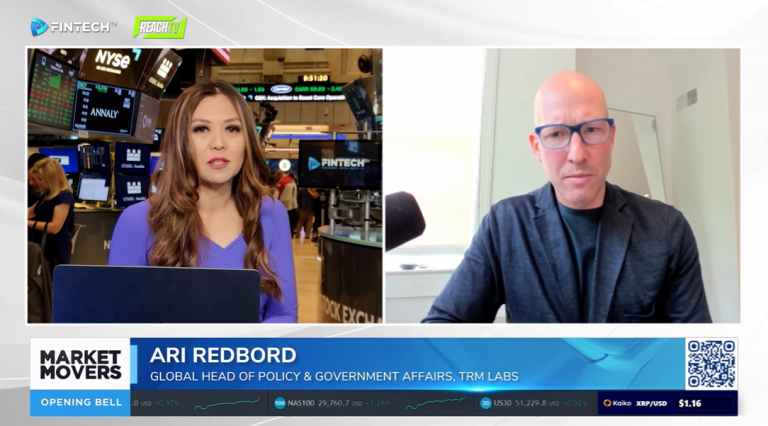
Ari Redbord, Global Head of Policy at TRM Labs, joins Remy Blaire to delve into the evolving intersection of decentralized finance (DeFi), artificial intelligence (AI), and national security, particularly in light of recent U.S. Treasury sanctions on Iranian crypto exchanges. Ari sheds light on how these sanctions target the infrastructure that Iran uses to launder funds and evade financial restrictions.
Ari emphasizes the urgent need for global institutions to upgrade their screening procedures to avoid indirect exposure to sanctioned platforms. He explains the critical differences between anti-money laundering (AML) practices and sanctions enforcement, highlighting the strict liability associated with sanctions violations.
They also discuss the outdated nature of the Bank Secrecy Act, which Ari argues is ill-equipped to combat modern financial crimes, especially given the rapid movement of illicit funds across blockchains. With a staggering 500% increase in AI-enabled scams, he advocates for the adoption of AI-native investigative tools to keep pace with bad actors.
Ari shares insights on the importance of real-time sanction screening and the need for compliance professionals to leverage advanced technology to protect against emerging threats. He warns consumers about the rise of sophisticated phishing attacks and deepfake technology, urging vigilance in an increasingly complex digital landscape.
Tech Rally Gains Steam on China Data Center Spending While Wall Street Watches Fed Signals
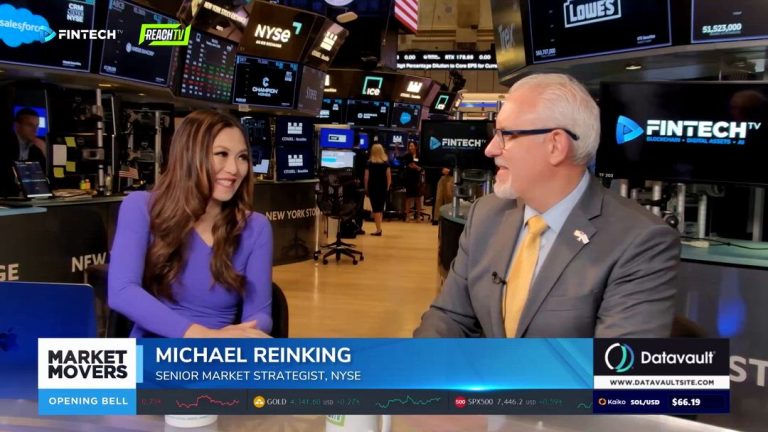
Michael Reinking, Senior Market Strategist at the NYSE, joins Remy Blaire to discuss the current state of the U.S. stock market. U.S. stock futures are showing positive signs, indicating a potential recovery after last Friday’s sharp sell-off, which ended a nine-week winning streak for the S&P 500. They discuss the ongoing geopolitical tensions in the Middle East, particularly the standoff between Washington and Tehran, which continues to impact the global energy supply chain.
They explore the tech sector’s resurgence, driven by news of China’s significant investment in data center infrastructure, and the implications of upcoming economic data on inflation and interest rates. With a strong jobs report from last week, they dissect how this might affect market expectations and the Federal Reserve’s upcoming meeting.
They also touch on the excitement surrounding major IPOs, including SpaceX, and the potential impact of these offerings on the market. Michael emphasizes the importance of monitoring the success of these IPOs and the broader implications for infrastructure investments.
Finally, they discuss the risks of market corrections, especially given the recent record highs in stock averages. Michael highlights the need to consider both earnings growth and valuation multiples as we navigate this volatile landscape.
Over 200 Crypto Firms Push Senate for Clarity Act Vote as GSR Secures FINRA Approval
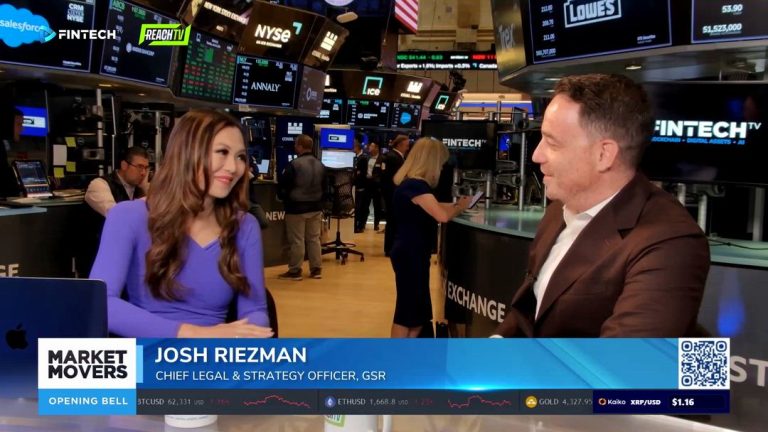
Josh Riezman, Chief Legal & Strategy Officer at GSR, joins Remy Blaire to discuss critical developments surrounding the push for comprehensive cryptocurrency legislation in the U.S. A coalition of over 200 digital asset companies has urged Senate leaders to vote on the Clarity Act, which recently passed the Banking Committee with bipartisan support. However, industry experts believe the bill still requires adjustments to effectively address the U.S. market structure.
Josh shares insights on GSR’s recent announcement of securing FINRA approval to launch GSR Securities, an SEC-registered broker-dealer. Josh highlights the significance of this approval, especially in light of the previous regulatory environment that discouraged crypto-native firms from pursuing broker-dealer registrations.
As the July 4th deadline approaches, they discuss the ongoing efforts to combine the Senate Banking and Agriculture bills into a single piece of legislation that can garner enough bipartisan support to reach the president’s desk. Josh emphasizes the importance of creating a safe and regulated environment for entrepreneurs to bring their projects to the U.S., as the lack of clarity could push talent and innovation offshore.
They also explore the global regulatory landscape, particularly in Europe and Asia, and the challenges and opportunities it presents for the U.S. market. Josh points out that while European legislation aims to protect customers, it may inadvertently create a closed environment that stifles entrepreneurial spirit.
Looking ahead, they discuss the future of tokenization in finance and how the intersection of traditional finance (TradFi) and decentralized finance (DeFi) is evolving. Josh shares his expectations for increased tokenization and the potential for a more user-friendly integration of crypto technology into everyday financial systems.
Roberto Salinas: ¿Qué pasaría con los mercados si el conflicto en Medio Oriente terminara mañana?

Los mercados llevan semanas reaccionando a cada titular sobre el conflicto en Medio Oriente — petróleo, inflación y activos de riesgo en constante movimiento. Pero la pregunta que pocos están haciendo es: si el conflicto terminara mañana, ¿cuánto tiempo tomaría volver a la normalidad? ¿Los precios del petróleo caerían de inmediato? ¿La inflación cedería rápido — o los efectos podrían durar meses o incluso años? Roberto Salinas, Director de Relaciones Internacionales de la Universidad de la Libertad, analiza los escenarios posibles y qué significaría para América Latina.
Citi Bets on Real-Time Payments and Banking as a Service to Drive Digital Growth
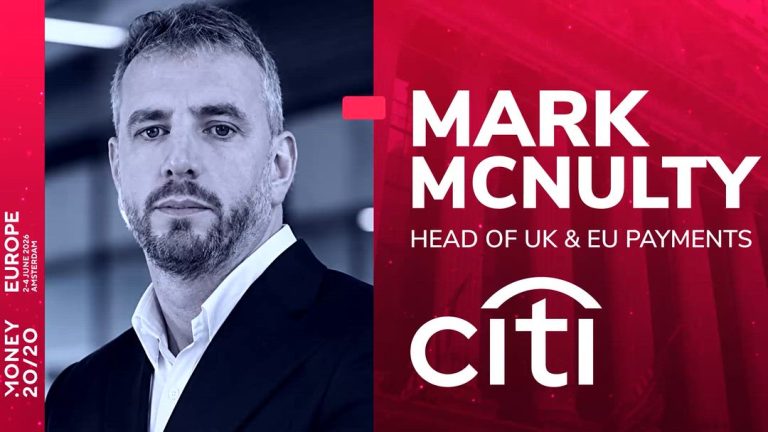
Mark McNulty, Head of UK and EU Payments at Citi, and Will Artingstall, Head of Banking as a Service from Citi, joins Anatasia Kinsky at Money20/20 Europe in Amsterdam to delve into the impressive scale of Citi Services, which processes a staggering $6 trillion in payments daily across 180 countries.
Mark and Will share insights into how Citi is leveraging digital innovation to enable clients to thrive in the rapidly evolving digital economy. They discuss the importance of real-time payment solutions, highlighting the Citi Instant Payments platform, which has already launched in 23 countries and processes 10 million payments a day.
They also explore the complex regulatory landscape in Europe, particularly with the upcoming PSD3, and how Citi is navigating these changes to foster innovation while maintaining compliance. Mark emphasizes the significance of being integrated into local markets and having deep relationships with regulators, which allows Citi to shape the regulatory environment effectively.
Discover how the Banking as a Service model is crucial for supporting fintechs and e-commerce players, especially as they face new licensing requirements under PSD3. Will underscores Citi’s role as a trusted advisor in helping clients navigate these complexities.
Finally, they touch on Citi’s strategies for digital assets, including its commitment to 24/7 operations and the expansion of its network to support virtual asset service providers.
Breaking Down Barriers: How Li.Fi is Simplifying Stablecoin Transactions
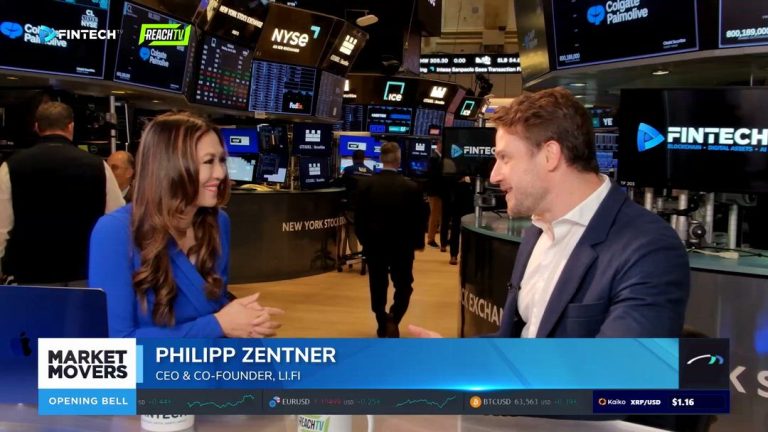
Philipp Zentner, co-founder and CEO of Li.Fi, joins Remy Blaire to dive into the rapidly expanding world of stablecoin adoption and its potential to revolutionize mainstream consumer payments.
Philipp highlights the significant hurdles that still exist for retail consumers, particularly around tax compliance and the fragmented blockchain infrastructure. He emphasizes the importance of recent regulations, such as MiCA in Europe, which ensures that stablecoins are backed by liquid assets, fostering a safer environment for adoption.
They discuss how Li.Fi is addressing these challenges by serving as a leading orchestration layer across the crypto space, simplifying interoperability and providing a unified API for various applications. Philipp explains the concept of tokenization and its role in enabling continuous settlement and programmability in trading, which is crucial for a fast-paced global market.
As they explore the competitive landscape, Philipp notes the complexities faced by market makers, or “solvers,” in the DeFi space, who must navigate on-chain money markets to optimize trade execution.