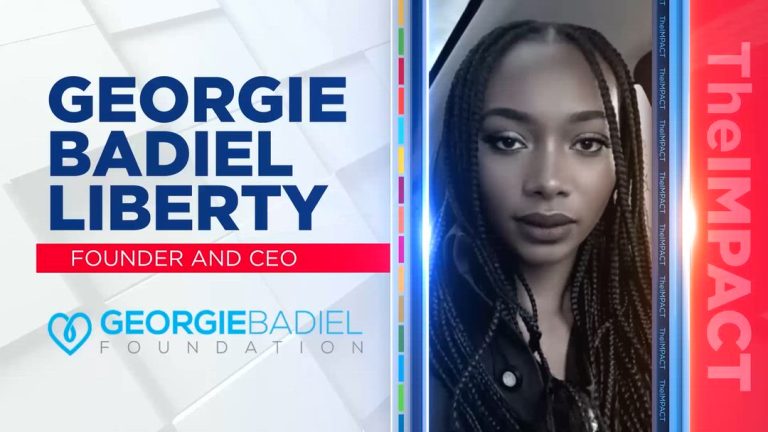
On this episode, Jeff Gitterman sits down with Georgie Badiel, CEO of the Georgie Badiel Foundation, for a powerful conversation on purpose, water access, and sustainable impact. Georgie shares her deeply personal journey from walking hours each day as a child in Burkina Faso to fetch water with her grandmother, to building an international modeling career, and ultimately returning home to tackle the very challenge she once lived through. Her turning point came when she witnessed her own sister still struggling for water years later, inspiring her to dedicate her life to solving the crisis of clean water access in underserved communities.
Through her foundation, Georgie is doing more than just building wells, she’s creating long-term, sustainable solutions. The organization has delivered over 285 water projects, while training hundreds of local women in basic engineering so they can maintain and repair wells themselves. This innovative “women engineers” model not only ensures sustainability but also empowers women economically, transforming them into skilled workers who support entire communities. Despite initial skepticism, the program has driven real change, shifting mindsets and creating new opportunities across villages.
Georgie also highlights the foundation’s broader “Oasis” model, which integrates clean water with sanitation, solar-powered electricity, and agriculture to address food security and economic growth holistically. While challenges remain particularly in maintaining infrastructure, her mission is rooted in generational impact, ensuring communities can thrive long after projects are completed. Through partnerships, storytelling, and initiatives like her children’s book The Water Princess, she continues to raise awareness and funding, with a current goal of building 20 new boreholes before the rainy season. It’s a story of resilience, purpose, and redefining what true impact looks like on the ground.
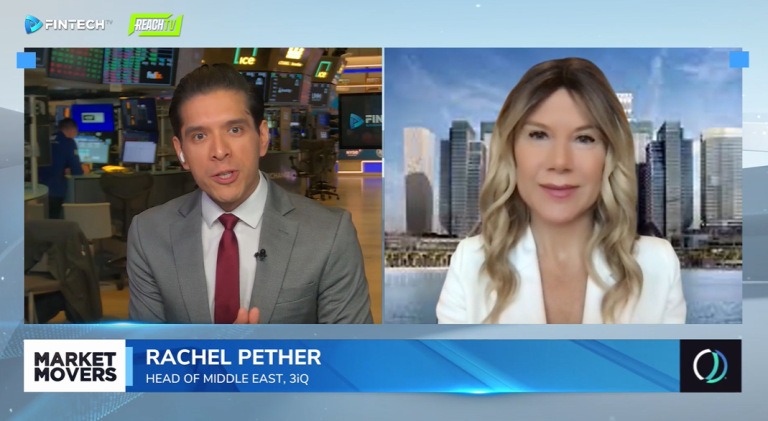
Rachel Pether, Head of Middle East for 3iQ and a FINTECH.TV Contributor, joins Johny Fernandez to discuss the resilience of Abu Dhabi and the Abu Dhabi Global Market (ADGM) amid ongoing conflicts in the Middle East. Rachel highlights how the initial nervousness in the region quickly gave way to a sense of safety and community, thanks to ADGM’s proactive measures to support the business environment.
They delve into the impact of the digital asset ecosystem in the UAE, emphasizing that the war has had minimal effect on the region’s commitment to regulating and fostering innovation in digital assets. Rachel explains that the UAE recognizes the broader potential of digital assets beyond just cryptocurrencies, viewing them as a transformative force for capital markets.
Additionally, they explore how the digital asset ecosystem fits into Abu Dhabi’s economic growth story, particularly with government initiatives aimed at attracting investment and creating jobs in the fintech space. Rachel also shares insights about 3iQ’s recent launch of a multi-strategy digital asset fund in partnership with a regional wealth fund, reinforcing the company’s long-term commitment to the region despite current challenges.
A new paper from Google’s Quantum AI team, co-authored with researchers from the Ethereum Foundation and Stanford, has not-so-quietly moved one of digital finance’s most consequential deadlines much closer, causing a mini shake up in the crypto markets.
Quantum’s threat to blockchain security is not new, but the math just changed dramatically. The paper concludes that breaking the elliptic-curve cryptography underpinning Bitcoin and Ethereum would require fewer than 500,000 physical qubits, roughly a 20-fold reduction from prior estimates.
A sufficiently powerful quantum machine could derive a Bitcoin private key in around nine minutes, potentially beating block confirmation in over 40% of cases. Approximately 6.9 million bitcoin already sit in exposed wallets, making them vulnerable to “at-rest” attacks.
So What?
This is not a story about computers. It is a story about trust – blockchain being the trust machine. Every stablecoin, tokenized asset, and digital payment rail rests on the same cryptographic foundations now shown to be shakier than assumed.
For Bitcoin alone, migration could take up to ten years—and there is no agreement yet on how. The real question is no longer when to plan, but whether anyone has started.
Markets Today
Bitcoin is trading around $68,000, ending March with a modest gain despite a difficult quarter. Quantum-resistant tokens surged sharply as markets repriced long-term security risk.
The US-Iran conflict remains the macro backdrop, impacting oil and equities globally.
Tale to tell?
We want to hear from you
New colleagues, products, regulatory updates, or insights on the future of finance? Share your news.
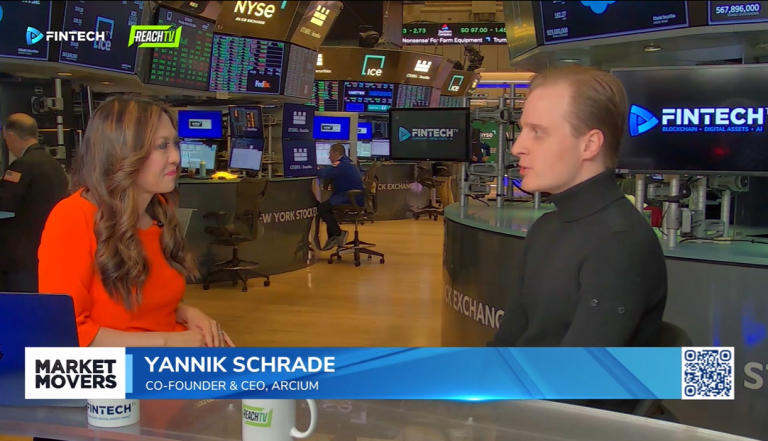
Yannik Schrade, co-founder and CEO of Arcium, joins Remy Blaire to dive into the critical role of privacy in the blockchain and digital asset space, especially as institutions increasingly recognize it as essential infrastructure rather than an optional feature.
Yannik emphasizes the importance of privacy for both retail and institutional users, highlighting a growing consensus that privacy is necessary for broader adoption of blockchain technology. They discuss the recent Digital Asset Summit in New York City, where institutional interest in crypto was surprisingly robust, despite a generally cautious market sentiment.
A key point of the conversation was the need for advanced privacy solutions that comply with regulatory requirements. Yannik explains how Arcium’s technology enables multi-dimensional privacy, allowing institutions to conduct operations securely without compromising compliance. He also introduced Umbra, a privacy-preserving wallet built on Arcium’s technology, which aims to bring privacy to everyday transactions for users on the Solana blockchain.
Looking ahead, they explore the challenges of achieving widespread adoption of privacy technologies, particularly the tension between privacy and convenience. Yannik believes that by focusing on user needs first, superior products that integrate privacy seamlessly into the user experience can be created.
Ashim Gupta, the CFO and COO of UiPath, joins Remy Blaire to explore the transformative impact of AI on the business landscape. They kick off the discussion by highlighting the recent surge in the semiconductor ETF and the impressive performance of the Mag7 tech companies, which have all seen double-digit gains. Ashim shares insights into UiPath’s evolution from a Robotic Process Automation (RPA) company to a leading AI firm, emphasizing how they now leverage AI to automate complex processes for Fortune 500 companies.
They delve into UiPath’s vision for the future, focusing on their expertise in automating highly manual and secure processes across various sectors, including healthcare and commercial lending. Ashim discusses the current inflection point in AI adoption, noting how it is reshaping not only workflows but also mindsets within organizations. He emphasizes the importance of balancing AI’s potential with the need for security and control, which is where UiPath excels.
Finally, they touch on the so-called “SaaSpocalypse,” with Ashim arguing that while some software companies may struggle, many, like UiPath, are poised to harness AI to innovate and thrive.
Jamie Dimon does not chase trends. So when the chief executive of JPMorgan Chase tells CBS News that his firm is studying a potential move into prediction markets, Wall Street listens.
Dimon pointed to Kalshi and Polymarket as models, while setting clear limits: sports and politics would be off the table, and insider trading rules would apply without exception.
JPMorgan is not alone. Goldman Sachs, Intercontinental Exchange, Robinhood, and Coinbase are all showing interest in prediction markets, each from a different angle.
When pressed on whether prediction markets are closer to gambling or investing, Dimon said, “for the most part, it’s more like gambling,” while allowing that deep expertise could make participation look more like investing.
Both investing and gambling involve staking capital on uncertain outcomes. The distinction traditionally comes down to purpose and structure: financial markets are supposed to support price discovery, hedging, and capital allocation.
Prediction markets sit uncomfortably across that entire spectrum. A contract on inflation may look like a macro hedge. A contract on geopolitical conflict may look like something much darker.
New rules or old?
On March 12, the CFTC issued an Advanced Notice of Proposed Rulemaking, its first formal step toward a dedicated framework for event contracts. Its enforcement chief has also reminded the market that insider trading laws already apply.
The larger question is whether prediction markets need entirely new legislation, or simply targeted clarification around event contracts, market categories, and enforcement standards.
Markets Today
Bitcoin gave back Tuesday’s gains, sliding 2.2% to around $66,600 after President Trump’s primetime address offered no diplomatic off-ramp.
Every major token in the top 10 dropped, with Ether, BNB, XRP, and Solana all falling as geopolitical risk weighed on crypto markets.
Brent crude jumped 6.6% to near $108 a barrel, with the Strait of Hormuz still effectively shut and markets watching inflation risk closely.
Tale to tell?
We want to hear from you.
New colleagues, new products, new regulatory status, or fresh insight on the future of finance and digitalization? We want to spread your news.
Chris Watling, CEO & Chief Market Strategist at Longview Economics, joins Remy Blaire to dive into the current state of the U.S. stock market and the broader global economy. As the expiration of the ceasefire deadline between the U.S. and Iran approaches, U.S. stock futures are trending higher, despite a generally dour mood at the recent IMF meetings, where they slashed the global growth forecast for 2026 to 3%.
Chris shares his insights on the changing market dynamics post-covid, noting that while the stock market is rallying, there remains significant uncertainty in geopolitics. He emphasizes the importance of understanding the macroeconomic environment, highlighting that while the earnings outlook is positive, there are risks associated with rising energy prices and potential policy errors from central banks.
They also discuss the implications of these factors on consumer spending and the currency markets, with Chris expressing a bearish outlook on the U.S. dollar as rate cuts are anticipated. He suggests that this could create favorable conditions for investing overseas, particularly in markets like Spain, which has shown remarkable performance.
As they look ahead, Chris believes that the global economy is on the verge of a recovery, driven by a shift in the market structure and a potential resurgence in the Western industrial cycle. He remains optimistic about the outlook for global equity markets, despite the IMF’s recent downgrade.
Keith Grossman, President of MoonPay, joins Remy Blaire to discuss the collaboration between House of Doge, MoonPay, the Dogecoin Foundation, and the AKC Humane Fund, which is set to make a significant impact in the world of animal welfare. They discuss their recent initiative that kicked off with a $1 million Dogecoin donation aimed at supporting dogs in need.
Keith shares insights on how their platform is facilitating crypto donations, making it easier for nonprofits to accept digital assets without the worry of asset volatility. He explains how MoonPay acts as a bridge between the crypto and fiat communities, converting donations into U.S. dollars for nonprofits to use seamlessly.
They also explore the broader implications of integrating cryptocurrency into philanthropy, highlighting how this approach can resonate with donors who are passionate about animals. Keith emphasizes the importance of making crypto relatable and accessible, especially for those who may not be familiar with the technology.
Finally, they touch on the challenges that charities face in adopting digital assets and how initiatives like this can pave the way for broader acceptance in the nonprofit sector.
Stephen Schork, co-founder of The Schork Group, joins Remy Blaire to discuss the current state of the oil market, which is experiencing notable fluctuations amid geopolitical tensions. Oil prices are showing little change, with the May WTI contract down nearly 0.9% and Brent prices hovering around the $95 mark. The uncertainty surrounding the Middle East, particularly with President Donald Trump’s prediction of a potential deal with Iran, adds complexity to the situation.
He highlights the significant disconnect between the physical market, where oil is trading between $130 and $170 a barrel, and the paper market, which is lagging. Stephen emphasizes that without resolving the ongoing tensions, oil prices could rise significantly, especially as we approach peak demand in July and August.
The conversation also touches on the broader implications of rising energy costs, not just for American consumers but for global businesses as well. Stephen points out that the disruptions in supply chains are affecting various sectors, including food production and technology, due to the reliance on fossil fuels for fertilizers and other essential materials.
As they examine the equity markets, it becomes clear that while energy stocks are performing well, the refining margins are under pressure due to access issues. Stephen explains that even though refiners are currently benefiting from high margins, their ability to realize these profits is hampered by supply chain challenges.
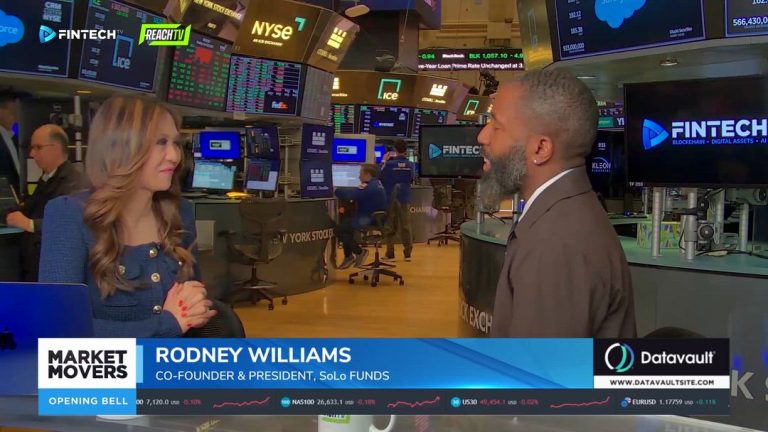
Rodney Williams, co-founder and President of SoLo Funds, joins Remy Blaire to discuss the current state of inflation and its implications for both consumers and businesses. Despite a recent cooling in oil prices, they discuss the significant inflation surge driven by skyrocketing gas prices, which rose over 20% in March alone. They also highlight some areas of relief for consumers, such as a dip in grocery prices and a decline in used-car prices.
Rodney shares insights on their innovative prediction engine, Solo NowCAST. This tool aims to provide real-time predictions of the Consumer Price Index (CPI), helping both consumers and enterprises better understand inflation trends. Rodney emphasizes the importance of data in enhancing the accuracy of their AI-driven solutions, which have successfully predicted CPI changes in recent months.
They also explore the role of artificial intelligence in risk assessment and how Solo Funds is leveraging unique datasets to support underbanked communities. Rodney explains their commitment to being a B Corp, ensuring that their business practices align with social responsibility. He discusses their approach to lending, which features simple, flat fee structures designed to avoid the pitfalls of traditional credit products.