[stock-market-ticker symbols=" ^NYA;CRYPTO:BTC;CRYPTO:ETH;CRYPTO:USDT;CRYPTO:USDC;CRYPTO:BNB;CRYPTO:ADA;CRYPTO:XRP;CRYPTO:SOL;CRYPTO:DOGE " stockExchange="NYSENASDAQ" width="100%" transparentbackground=1 palette="financial-light"]

Home Blog Page 36

Why Central Banks Are Driving Demand & Royalty Growth Explodes

0

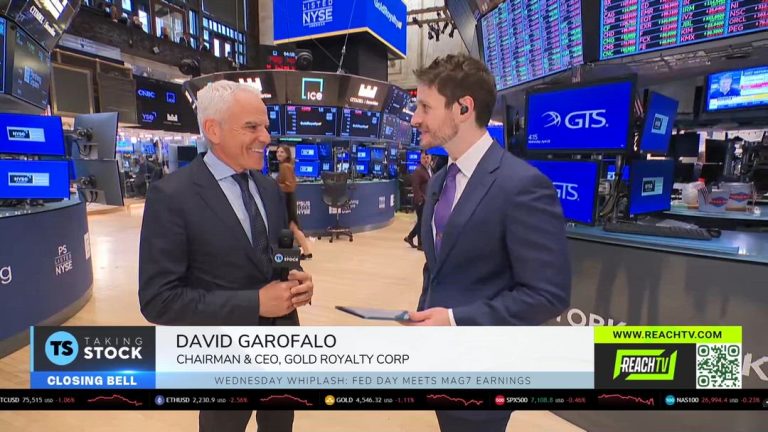
David Garofalo, Chairman and CEO of Gold Royalty Corp, joins us after ringing the closing bell to mark the company’s 5-year milestone since going public. Over that period, he highlights a major transformation from a $200 million market cap to roughly $1 billion today alongside a massive expansion of its portfolio from 18 precious metal royalties at IPO to more than 250 royalties globally, setting the stage for significant long-term revenue growth.

Garofalo breaks down the company’s unique NSR (Net Smelter Return) model, explaining how Gold Royalty earns a fixed percentage of revenue from mining operations without being exposed to direct operating costs like labor or fuel. He compares it to a music royalty structure capturing top-line revenue while remaining insulated from inflation pressures at the mine level. He also emphasizes the importance of geopolitical stability, noting that roughly 80% of the company’s assets are located in the U.S. and Canada, including highly prospective regions like Nevada, Quebec, and Ontario.
Fed Holds Rates Steady: What “Higher for Longer” Means for Mortgages, Consumers & Big Tech Earnings

0

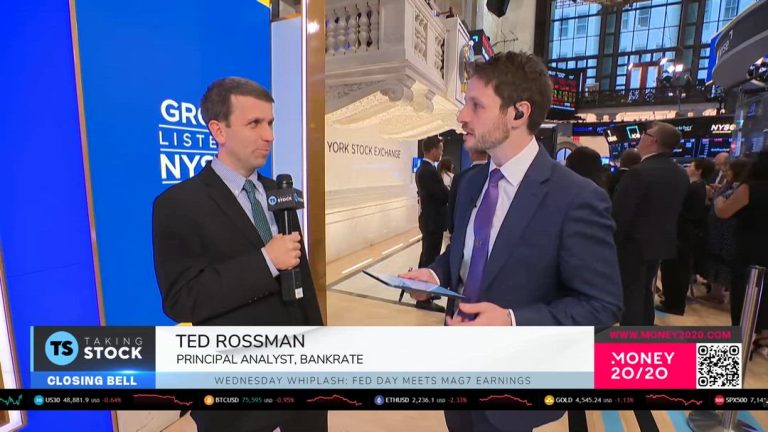
Ted Rossman, Principal Analyst at Bankrate, joins the discussion to break down a pivotal Fed Day and what it signals for markets, consumers, and interest rates going forward. With the Federal Reserve striking a clear “wait-and-see” stance, Rossman highlights how markets are now pricing in a high probability that rates remain unchanged for the rest of the year, reinforcing the narrative of “higher for longer.”

A key focus of the conversation is the evolving direction of monetary policy under Chair Jerome Powell, including internal divisions within the FOMC and what that could mean for future leadership transitions. Rossman also explains how persistent interest rates are continuing to impact consumers, with 30-year mortgage rates hovering around the mid-6% range, credit card rates near 20%, and housing affordability remaining under pressure despite strong demand.

Despite these headwinds, he notes that the consumer remains surprisingly resilient, with spending still holding up across travel, retail, and dining. As attention now shifts to major tech earnings from companies like Microsoft, Amazon, Meta, Alphabet, and Apple, Rossman emphasizes that both corporate investment and consumer activity remain stronger than expected challenging earlier fears of an economic slowdown. Looking ahead, upcoming inflation data like PCE will be key in determining whether that strength can continue.

MoonPay: Stablecoins, Regulation & Institutional Adoption

0

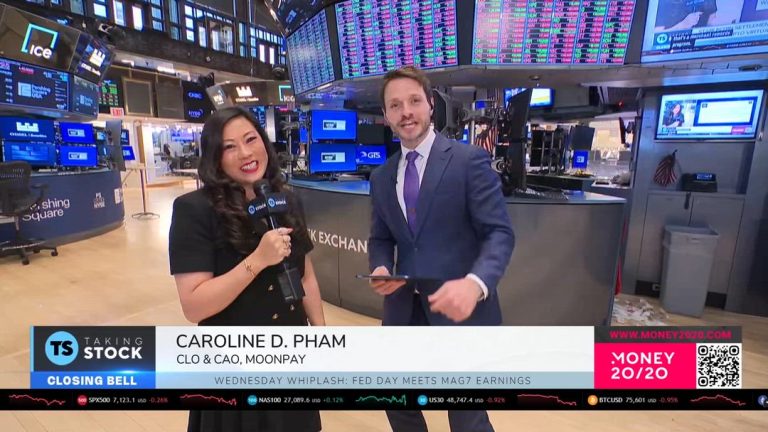
Caroline Pham, Chief Legal Officer and Chief Administrative Officer at MoonPay, returns to discuss the accelerating push toward institutional adoption in crypto and what’s next from Washington. With banks already building on blockchain for nearly a decade, Pham points to growing regulatory clarity as the foundation for broader participation, noting that 2026 could mark a breakout year for institutions entering the space. As lawmakers continue to debate the Clarity Act, the focus remains on aligning rules and unlocking innovation across digital assets.

Pham also highlights the evolving role of stablecoins, emphasizing that they are not replacements for traditional checking accounts but rather modern financial tools comparable to rewards programs or even digital-era traveler’s checks. As the U.S. advances its regulatory framework, including developments like the Genius Act, she expects global standards such as Europe’s MiCA to eventually adapt. Meanwhile, central bank leadership, including the role of the Federal Reserve, will play a key part in shaping how blockchain integrates into financial infrastructure, particularly in areas like collateral management and real-time settlement.

On the business front, MoonPay is doubling down on institutional growth, highlighted by its acquisition of Israeli security firm SoaT. The move strengthens its capabilities in secure key management and positions the company as a bridge between decentralized finance and traditional finance. With millions of users across 180 countries and deep experience in compliance and cross-border transactions, MoonPay is aiming to bring safe, scalable access to DeFi liquidity for institutions worldwide.

Bitcoin Goes Mainstream: Why Institutions Now See It as a Core Portfolio Asset

0

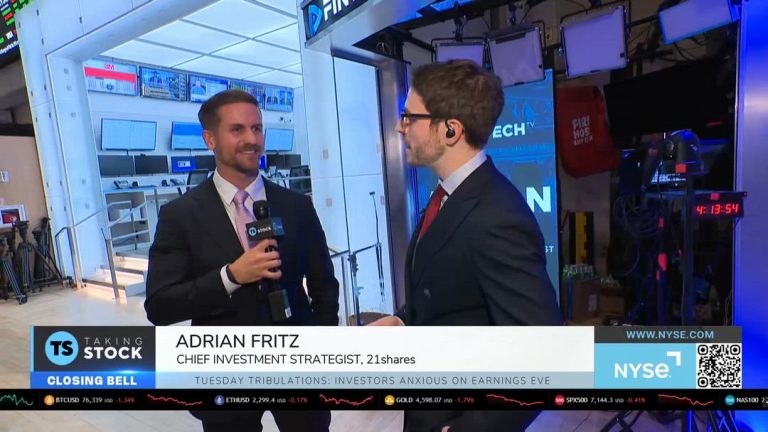
Adrian Fritz, Chief Investment Strategist at 21Shares, joins to break down how Bitcoin is evolving from a speculative trade into a core portfolio allocation. With major asset managers now recommending anywhere from 2% to 6% exposure, the conversation is shifting from whether to own Bitcoin to how much and how to integrate it into a diversified portfolio. As institutional adoption grows, Bitcoin is increasingly being viewed as a long-term strategic asset rather than a short-term bet.

Fritz also highlights Bitcoin’s performance during periods of global uncertainty, noting its role as a potential “chaos hedge,” with prices rising nearly 20% amid recent geopolitical tensions. At the same time, the influx of institutional capital, especially through ETFs is helping reduce volatility and bring more stability to the market. While most flows continue to concentrate in Bitcoin over other cryptocurrencies like Ethereum and Solana, this trend reflects growing confidence from traditional investors entering the space.

Looking ahead, Fritz sees regulation such as the proposed Clarity Act as important for long-term growth, though not necessarily a short-term price catalyst. The bigger shift, he says, is that crypto is no longer fighting for legitimacy; instead, the focus is now on education, adoption, and portfolio integration. As institutional momentum builds, Bitcoin’s role in global finance continues to mature.

Nvidia Carries Growth as Markets Broaden Ahead of Earnings

0

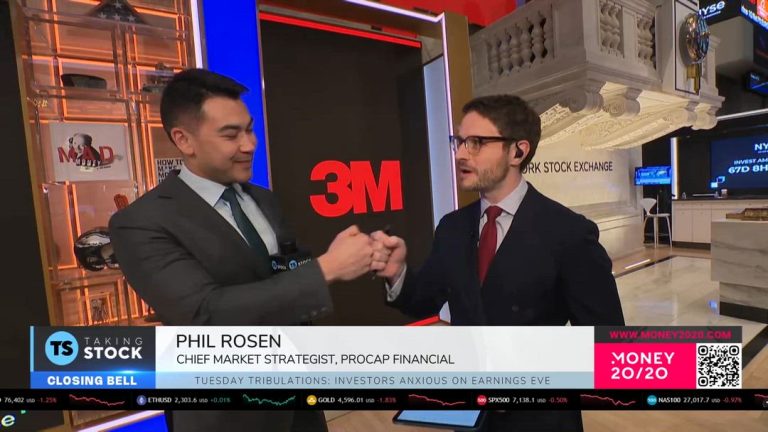
Phil Rosen, Chief Market Strategist at Pro Cap Financial, joins to break down the shifting dynamics of market leadership ahead of a major wave of Big Tech earnings. While the so-called Magnificent 7 continue to dominate headlines, Rosen highlights a key shift, remove NVIDIA from the equation, and earnings growth for the group drops sharply from around 23–24% to just 6.5%, falling below the broader S&P 500. This raises questions about whether Big Tech’s dominance is starting to fade as growth slows across the rest of the group.

With earnings on deck from giants like Microsoft, Meta, Amazon, Alphabet, and Apple, the focus isn’t just on results, it’s on future spending. Investors are watching closely to see whether these companies increase capital expenditures, particularly around AI and data center buildouts. While long-term fundamentals remain strong, any surprise jump in spending could trigger short-term market reactions after years of already heavy investment.

Beyond Big Tech, Rosen points to improving market breadth as a positive signal, with the broader “S&P 493” keeping pace with the major indexes. This suggests a healthier, more balanced rally rather than one driven solely by a handful of mega-cap names. Looking ahead, all eyes also turn to the Federal Reserve and Jerome Powell, as a key policy decision and potentially historic press conference could shape the next phase of the market.

S&P 500 Surges 10% in April: Big Tech Earnings & Fed Decision in Focus

0

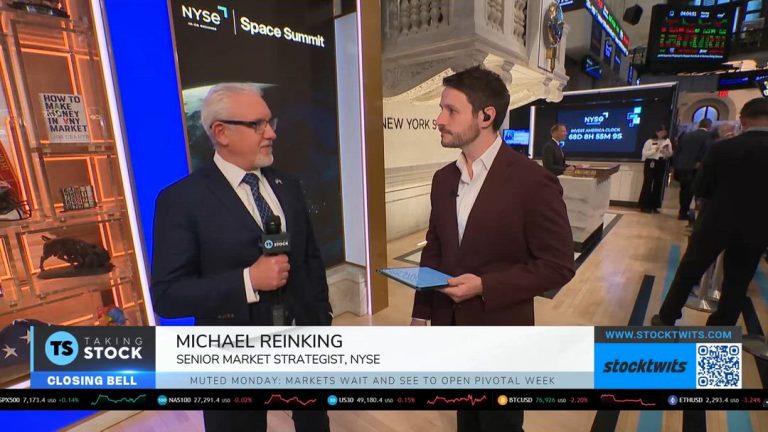
Michael Reinking, Senior Market Strategist at the New York Stock Exchange, joins to break down a quietly strong market as the S&P 500 posts one of its best months since 2020, climbing roughly 10% in April. While daily gains may appear modest, the broader trend reflects a powerful rally driven by strong earnings, with over 80% of companies beating expectations on both revenue and profit. However, a growing “guidance gap” is emerging, where cyclical companies are delivering solid results but remaining cautious about future outlooks.

In contrast, the tech sector, especially semiconductors, continues to show no signs of slowing. With names like NVIDIA hitting new highs, the semiconductor rally has broadened beyond just AI leaders to include industrial and analog chipmakers, signaling strength across the wider economy. Meanwhile, software stocks such as Salesforce, IBM, and Snowflake are lagging, weighed down by ongoing concerns around AI disruption and shifting market dynamics.

Looking ahead, all eyes turn to a pivotal week featuring major tech earnings and a key decision from the Federal Reserve. While markets expect interest rates to remain unchanged, attention is focused on Jerome Powell and whether this could mark a turning point in leadership. For now, earnings remain the dominant driver, with investors closely watching how Big Tech guidance and capital spending trends shape the next phase of the market rally.

How Jito’s Block Assembly Marketplace Is Driving Institutional Crypto Adoption

0

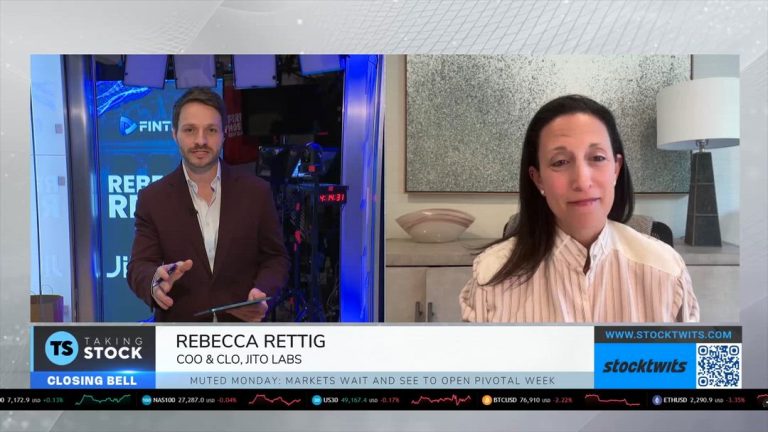
Rebecca Rettig, COO and CLO of Jito Labs, joins to break down the surge in activity across the Solana ecosystem and what’s driving growing institutional adoption. At the center of that momentum is BAM (Block Assembly Marketplace), a complementary network designed to enhance Solana’s capabilities by offering greater transaction speed, privacy, customization, and execution certainty key features that institutional players are increasingly demanding as they move on-chain. With Solana already known for its high-speed performance, BAM is helping unlock a new layer of efficiency and scalability for large-scale users.

Rettig also highlights the significance of expanding into Asia, particularly through partnerships like CODA in South Korea, which is emerging as a major hub for crypto innovation. The deal supports access to advanced digital assets like liquid staking tokens, opening the door for broader adoption in a region that has been both regulatory-forward and highly receptive to blockchain technology. As institutional infrastructure continues to evolve globally, Asia remains a critical growth engine for the crypto ecosystem.

Navigating the Markets: Insights on the U.S. Economy and Investment Opportunities with Michael Rosen

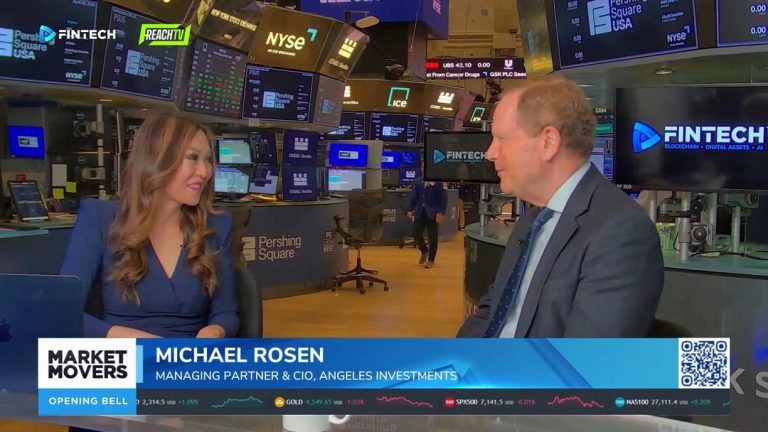
Michael Rosen, Managing Partner and CIO at Angeles Investments, joins Remy Blaire to discuss the current state of the U.S. economy. They discuss how the economy is faring, with GDP growth around 2-2.5% and record corporate profits and margins. Michael emphasizes that while the stock market, particularly the Nasdaq and S&P 500, is thriving, it’s essential to recognize that the market does not always reflect the broader economy.

They explore the dynamics within the tech sector, particularly the AI ecosystem, where demand for technology providers is outpacing supply. Michael highlights the strength of companies like Nvidia and Micron, which are benefiting from this demand.

As they look at global markets, Michael shares his insights on the shift in investment strategy, moving from overseas markets back to an overweight position in the U.S. due to rising energy prices impacting Europe and Asia. He believes that while long-term diversification overseas is still a sound strategy, the immediate outlook favors U.S. investments.

Finally, they touch on the topic of cryptocurrency. Michael candidly admits he has not invested in private cryptocurrencies, citing concerns over their volatility and the lack of proven use cases. However, he acknowledges the potential for central bank digital currencies and the digitalization of the financial system.

Revolutionizing Commercial Insurance: How Artificial Labs is Modernizing the Industry

0

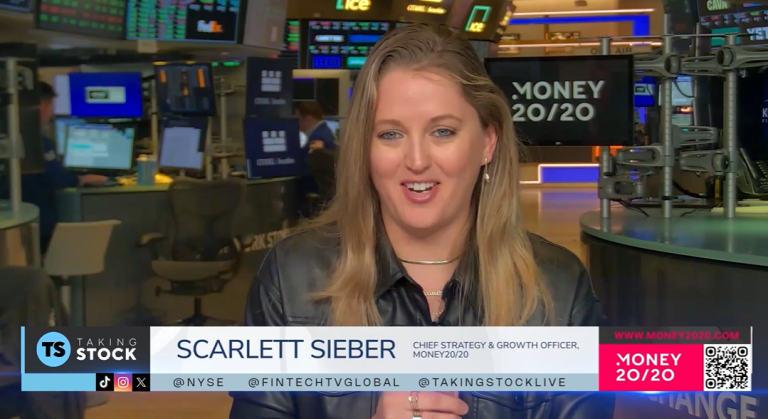
In this episode of Money20/20, Scarlett Sieber delves into the world of Artificial Labs, a fintech company that is modernizing the commercial and specialty insurance industry from within. Unlike many disruptors, Artificial Labs focuses on enhancing existing processes rather than overhauling the entire system.

The commercial insurance sector is vast and profitable, yet it still relies heavily on outdated manual processes. Artificial Labs addresses this by providing digital brokering and underwriting platforms that replace inefficient methods like spreadsheets and emails with software designed for real underwriting decisions.

Discover how Artificial Labs generates revenue through several key strategies like Enterprise SaaS Contracts, Long-term Institutional Deployments and Deep Workflow Ownership.

    Scarlett highlights the conservative nature of the commercial insurance industry, which changes slowly but is currently under pressure due to inefficiencies and regulatory demands for transparency. This backdrop has allowed Artificial Labs to gain momentum, culminating in a $45 million Series B funding round aimed at scaling globally and entering the U.S. market.

    Aditionally, Scarlett emphasizes that Artificial Labs is not about disrupting the insurance industry but rather about improving its operations. By becoming a trusted system for insurers to price risk consistently and profitably, Artificial Labs exemplifies a fintech that quietly compounds value over time.

    Markets on Edge as Fed Decision Looms and Powell Signals Likely Hawkish Tone

    David Busch, Co-Chief Investment Officer for Trajan Wealth, joins Remy Blaire to discuss the current state of the U.S. stock market. With the Federal Reserve’s rate announcement expected to remain unchanged, all eyes are on Chair Jerome Powell’s comments, especially as he prepares to be replaced by Kevin Warsh following his confirmation by the Senate Banking Committee.

    They explore the mixed macroeconomic landscape, highlighting solid labor markets and slowing economic growth, with a particular focus on inflation data. The recent CPI and PPI prints were higher than expected, and tomorrow’s core PCE report will be crucial for the Fed’s decision-making.

    They also discuss the implications of elevated oil prices on the central bank’s strategy and the anticipated hawkish tone from Powell during his press conference. Additionally, they look ahead to the earnings reports from the Mag 7 companies, which represent a significant portion of the S&P 500 market capitalization, and how their performance could impact market reactions.

    David shares insights on market breadth and the potential for a broadening out of tech stocks, while also emphasizing the importance of traditional value sectors benefiting from AI infrastructure. They touch on the rising gas prices and their impact on consumers, particularly in the context of the K-shaped economy, where the lower-income segments are feeling the pinch.

    As they wrap up, they discuss the current volatility across asset classes and David’s bullish outlook on the energy sector, alongside a cautious stance on large-cap tech. He also highlights the potential for fixed income to serve as a diversifier in today’s market.