[stock-market-ticker symbols=" ^NYA;CRYPTO:BTC;CRYPTO:ETH;CRYPTO:USDT;CRYPTO:USDC;CRYPTO:BNB;CRYPTO:ADA;CRYPTO:XRP;CRYPTO:SOL;CRYPTO:DOGE " stockExchange="NYSENASDAQ" width="100%" transparentbackground=1 palette="financial-light"]

Home Blog Page 30

Wall Street Reacts to Iran Headlines, AI Earnings, and the Next Big Market Risks

0

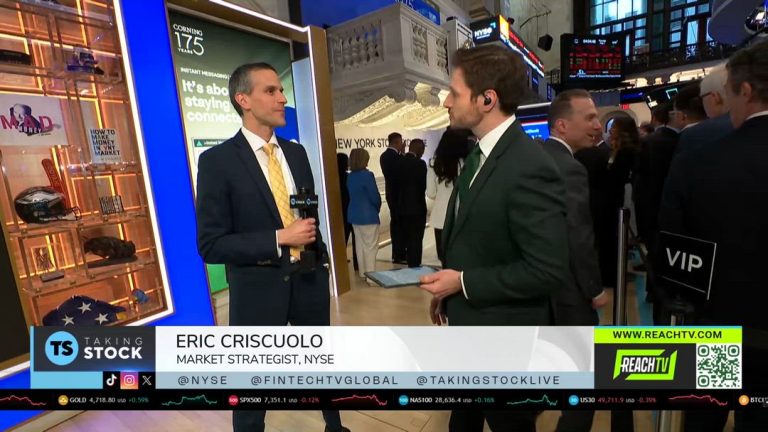
Markets pulled back slightly as investors reacted to renewed geopolitical uncertainty surrounding Iran, fluctuating oil prices, and a fresh wave of earnings reports. Joining FinTech TV live from the floor of the New York Stock Exchange, market strategist Eric Criscuolo breaks down how Wall Street interpreted the latest headlines, noting that optimism around possible progress in the Middle East quickly faded as new developments shifted sentiment. While the decline in equities was relatively modest, the reaction highlighted just how sensitive markets remain to geopolitical risks, especially as investors continue balancing macroeconomic uncertainty with strong corporate earnings performance.

The conversation also focused on the sharp divergence happening within the technology sector, particularly between semiconductors and software stocks. After months of heavy selling pressure, several software companies staged major rebounds, with names like Datadog surging while others like MongoDB remained volatile. Criscuolo explains that semiconductor stocks have led the broader market rally thanks to the AI boom, but software names may now be positioned for a temporary rotation as investors search for oversold opportunities. At the same time, earnings season continues to reward companies selectively, with many firms beating expectations but still facing pressure if guidance fails to impress Wall Street.

Looking ahead, investors are closely watching upcoming economic data, including the April jobs report and the Federal Reserve’s evolving stance on inflation and employment. Criscuolo says the labor market has remained resilient in a “low hire, low fire” environment, giving the Fed room to stay focused on inflation concerns. Markets are also preparing for potentially major geopolitical and economic developments next week, including a highly anticipated meeting between Donald Trump and Xi Jinping, which could become one of the next major catalysts for global markets.
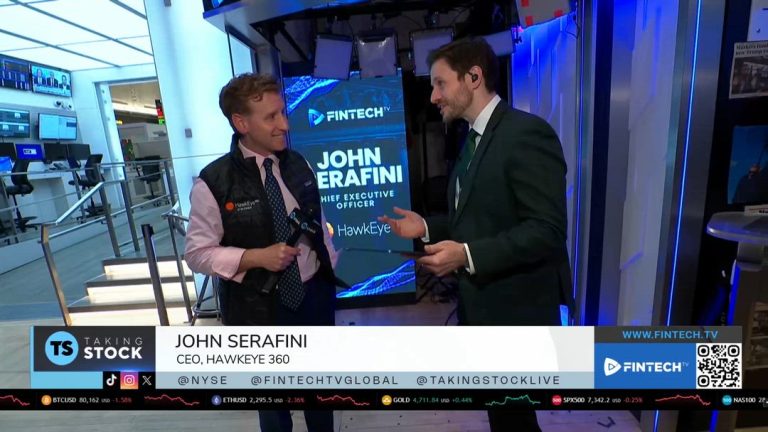
The Future of Space-Based Intelligence and Defense Tech

0

From the floor of the New York Stock Exchange, John Serafini, founder and CEO of HawkEye 360, joins FinTech TV on the company’s IPO day to discuss the future of space-based intelligence and defense technology. HawkEye 360 operates a constellation of small satellites flying in clusters of three, designed to detect, geolocate, process, and analyze radio frequency signals from around the globe. The company’s technology can identify signals ranging from 30 megahertz to 18 gigahertz, transforming raw RF data into actionable intelligence products used by customers operating in some of the world’s most sensitive geopolitical regions.

Serafini says the timing for HawkEye 360’s public debut follows a breakout year for the company, which delivered more than 70% year-over-year growth in 2025 alongside strong profitability metrics. The IPO provides over $400 million in proceeds that will help accelerate both organic growth and future acquisitions as the company expands its position within the defense and intelligence ecosystem. One of HawkEye’s biggest recent moves was the acquisition of ISA, a Texas-based firm specializing in processing data from national signals intelligence satellites. Serafini explains that integrating ISA’s expertise strengthens HawkEye’s existing capabilities and enhances its ability to deliver real-time intelligence solutions to global customers.

As geopolitical tensions continue reshaping defense priorities, HawkEye 360 sees growing demand for space-based intelligence and battlefield awareness technologies. Serafini emphasizes that speed, accuracy, and operational relevance are critical for modern defense systems, especially in active conflict zones where real-time information can directly impact mission outcomes. With its IPO now complete, HawkEye 360 is positioning itself at the center of the rapidly expanding commercial space and defense intelligence industry.

Unlocking Bitcoin’s Potential: The Rise of Bitcoin-Backed Loans

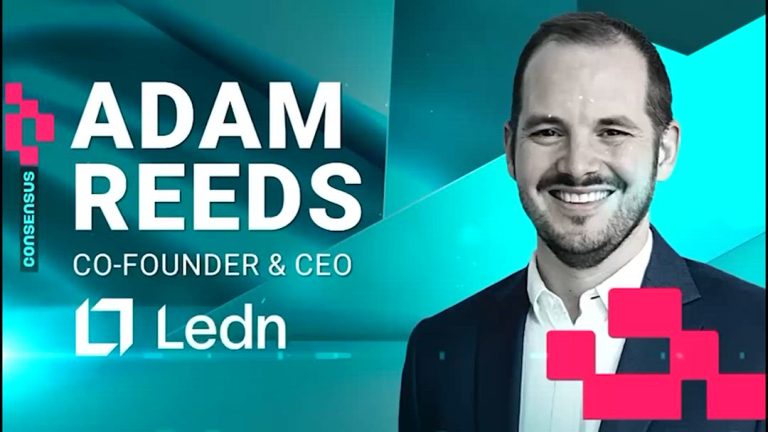
Adam Reeds, co-founder and CEO of Ledn, joins Remy Blaire at Consensus 2026 Miami to delve into the evolving landscape of Bitcoin-backed loans and their significance in the institutional-grade Bitcoin credit market.

Adam explains that Ledn has been at the forefront of Bitcoin lending for eight years and has recently achieved an investment-grade rating from S&P Global Ratings. This milestone underscores the growing acceptance of Bitcoin as reliable collateral, transforming it from a speculative asset into a foundational financial building block.

They discuss the potential of Bitcoin-backed lending to mirror the residential mortgage market, where a significant portion of assets could require financing. Adam highlights the unique advantages of Bitcoin as collateral, emphasizing its uniformity across jurisdictions, which allows for equitable financing terms globally.

Discover the risks associated with Bitcoin-backed loans, particularly volatility, and how Ledn mitigates them through efficient execution and market liquidity. Adam provides insights into the security measures in place, including technical and legal custody, and the importance of working with reputable custodians like Fidelity.

Polygon Is Building the Future of On-Chain Payments and Privacy Stablecoins

The future of blockchain payments is taking center stage as institutions, regulators, fintech leaders, and crypto builders converge to discuss the next evolution of digital finance. Jamal Raees, Head of U.S. Payments at Polygon Labs, explains how Polygon is evolving from a scaling solution into a global payments infrastructure company focused on moving money entirely on-chain. With stablecoins becoming a dominant theme throughout Consensus 2026, Ray says the industry is entering a new phase where regulation, compliance, and real-world payment utility are now driving adoption.

Polygon’s strategy centers around its “Open Money Stack,” an ecosystem designed to connect wallets, compliance systems, interoperability tools, and payment rails into one scalable blockchain infrastructure. Raees explains that Polygon identified payments as the network’s strongest use case after seeing massive international growth in peer-to-peer transfers and stablecoin activity. To accelerate this vision, Polygon acquired Coinme to strengthen fiat on-ramps and off-ramps, while also bringing in wallet and interoperability technology through the acquisition of Sequence. The goal is to make moving money across blockchain networks, traditional banking systems, and payment ecosystems seamless for both institutions and everyday users.

Privacy and compliance are also becoming critical priorities as larger financial institutions begin entering the stablecoin space. Polygon recently introduced private stablecoin payments that allow companies to send assets like USD Coin and Tether without exposing sensitive transaction details on public blockchains. Raees says institutions require privacy, auditability, and regulatory certainty before adopting blockchain-based payments at scale, especially during a year when lawmakers continue debating major digital asset legislation like the Digital Asset Market CLARITY Act. As blockchain adoption accelerates, Polygon believes payments, not speculations, will ultimately become the technology’s defining global use case.

Blockchain Infrastructure and Institutional Adoption 

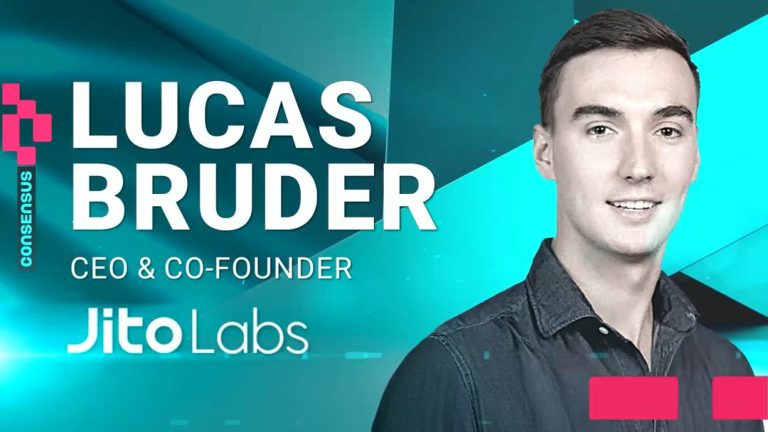
From Consensus 2026 in Miami, the conversation around blockchain infrastructure and institutional adoption continues to accelerate as major players push deeper into on-chain finance. Lucas Bruder, CEO and co-founder of Jito Labs, joined in to discuss the company’s latest developments within the Solana ecosystem. Following announcements at Solana Accelerate, Jito unveiled JTX, a new trading engine designed to bring more professional and retail traders on-chain by offering faster execution and more competitive pricing than many centralized exchanges.

Bruder says institutional adoption is no longer a future narrative, it is happening now. He points to growing interest in Solana-based ETFs, market-making activity, and the broader push to bring tokenized real-world assets, equities, and commodities onto blockchain rails. According to Bruder, Solana is evolving far beyond its reputation as simply a meme coin chain and is increasingly becoming one of the most efficient environments for trading digital assets like Bitcoin, Ethereum, and Solana itself.

The interview also touches on one of the industry’s biggest concerns in 2026: security. Bruder acknowledges that recent hacks and exploits have forced the industry to rethink operational safeguards, especially as attackers become more sophisticated and patient. Jito Labs is responding with the rollout of its next-generation validator and block-building infrastructure known as BAM, already supporting roughly 30% of Solana’s stake. As institutions, traders, and developers continue to converge at Consensus 2026, Bruder says the market sentiment feels “cautiously bullish,” with growing optimism around tokenization, on-chain trading, and the expanding role of blockchain infrastructure in global finance.

Bitcoin Conference a Bust? Clarity Act Status, Meta Stablecoin, & Tether’s $1 Billion Profit!

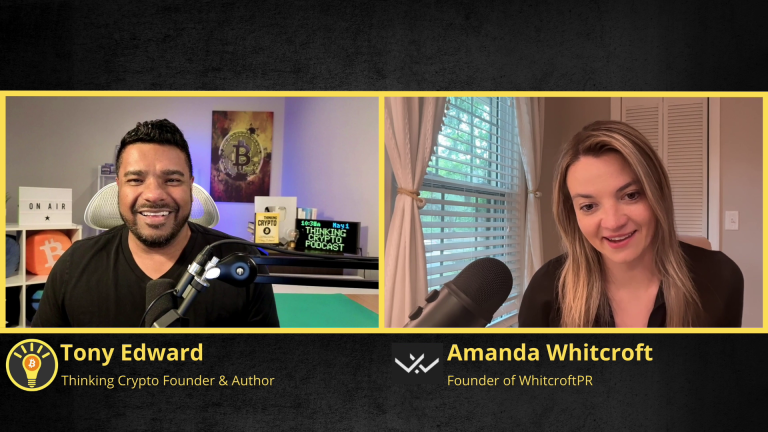
In this episode, Amanda and Tony discuss the Bitcoin Las Vegas conference takeaways, the Clarity Act’s status and when it may pass, Meta utilizing the USDC stablecoin for payments to creators, Celsius founder Alex Mashinsky’s sentencing, and Tether’s continued business growth and expansion.

The White House Says Crypto Is Critical to America’s Financial Future 

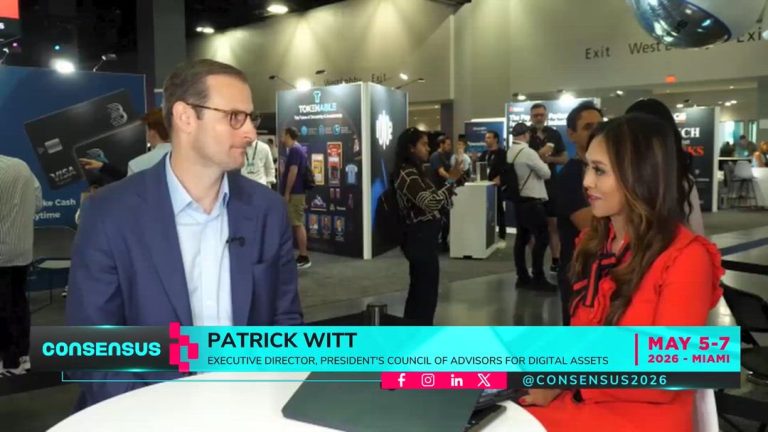
The future of digital assets and financial infrastructure is taking center stage as lawmakers, financial institutions, builders, and innovators gather at a pivotal moment for the industry. With over 20,000 attendees and growing momentum around tokenization, stablecoins, and blockchain-based finance, the spotlight is now firmly on Washington and the progress of the Digital Asset Market CLARITY Act. Joining the conversation is Patrick Witt, Executive Director of the President’s Council of Advisors for Digital Assets at the White House, who says major breakthroughs have already been made behind the scenes as lawmakers work toward advancing the legislation.

Witt explains that the U.S. government increasingly views digital assets, including Bitcoin, as strategically important to national and economic security. He reveals that new announcements regarding the Strategic Bitcoin Reserve and digital asset stockpile are expected in the coming weeks, signaling a broader effort to position the United States as a leader in the next generation of global financial infrastructure. According to Witt, blockchain technology and tokenized assets are becoming critical components of future markets, much like gold or sovereign currencies have historically been viewed in the global economy.

The conversation also highlights the geopolitical implications of crypto regulation, with Witt warning that if the U.S. fails to lead, competing nations like China could shape the rules of the emerging digital economy instead. He emphasizes that regulatory clarity is essential not only for investors and institutions, but also for software developers and startups that have increasingly moved offshore due to uncertainty in the U.S. market. As Consensus 2026 showcases the rapid institutionalization of crypto, Witt argues that blockchain infrastructure, tokenized assets, and digital finance are no longer fringe innovations, they are becoming foundational to the future of the global financial system.

Securitize & Computershare Are Bringing Equities On-Chain

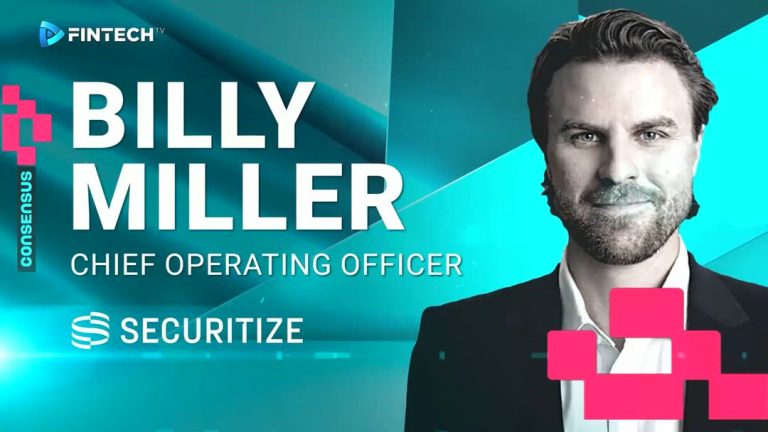
From Consensus 2026 in Miami, the conversation around tokenization is accelerating as the real-world asset (RWA) market surpasses $31 billion in value, excluding stablecoins, with projections pointing toward trillions by the end of the decade. Billy Miller, COO of Securitize, joins to discuss the company’s major new partnership with Computershare, which will allow publicly traded companies to issue shares directly on the blockchain. The collaboration aims to bring tokenized equities to scale by combining blockchain infrastructure with the traditional transfer agent system that already services many of the world’s largest public companies.

Miller explains that transfer agents play a critical but often overlooked role in financial markets by maintaining shareholder records, facilitating transfers, managing dividends, and overseeing voting processes for public companies. By integrating blockchain technology into this system, Securitize and Computershare hope to modernize how ownership is recorded and transferred while improving efficiency and accessibility for investors. Beyond issuance, Securitize is also launching regulated on-chain trading for tokenized equities on Solana through partnerships with Jump Trading and Jupiter, creating a compliant and liquid marketplace for blockchain-based stocks.

Regulation remains a major theme throughout Consensus 2026, with policymakers increasingly engaging directly with the industry as digital assets move toward mainstream adoption. Miller says the regulatory environment has improved significantly, particularly around the use of blockchain as a legitimate ledger for securities issuance and stablecoin infrastructure. He believes tokenization is rapidly bridging the gap between traditional finance and crypto, with institutions already embracing blockchain-based treasury products and expanding into broader asset classes. As the industry matures, Securitize aims to position itself at the center of the next phase of tokenized finance, serving both institutional and retail investors across a wide range of digital assets.

Consensus 2026: Crypto Is Becoming Wall Street’s Next Financial Infrastructure Play

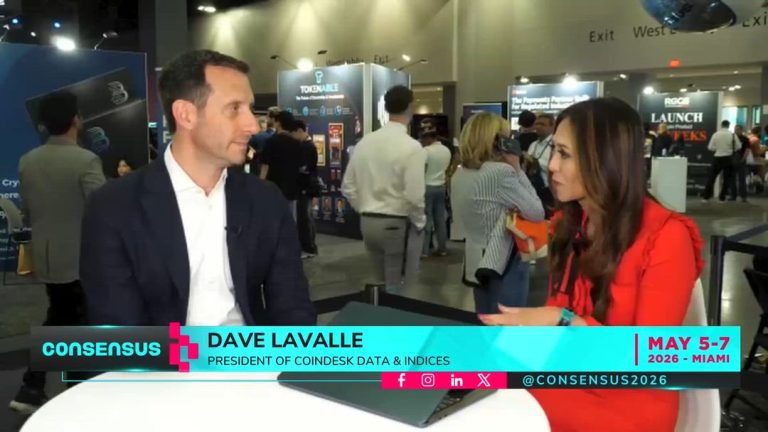
From Consensus 2026 in Miami, the conversation around digital assets has clearly shifted from speculation to full-scale financial infrastructure. With more than 20,000 attendees and firms representing over $4 trillion in assets, this year’s event highlights the accelerating convergence between traditional finance and crypto. As the real-world asset (RWA) tokenization market surpasses $31 billion in value and Bitcoin climbs back above $80,000, industry leaders, policymakers, builders, and global financial institutions are all focused on what comes next for blockchain-powered markets.

Dave Lavalle, President of CoinDesk Indices, explains that the old divide between TradFi and crypto is rapidly disappearing as some of the world’s largest banks and technology firms actively explore tokenization and digital asset infrastructure. One of the biggest announcements at the conference came from Bullish, which revealed a $4 billion acquisition of Equinity, signaling a major push into tokenization and transfer agent infrastructure. Lavalle notes that this deal could deeply integrate blockchain technology into ownership records for major public companies and global markets.

Regulation also remains front and center, with growing momentum around the Digital Asset Market CLARITY Act and continued discussions around stablecoin legislation. Lavalle says the tone in Washington has shifted dramatically, with crypto regulation increasingly becoming a nonpartisan issue as lawmakers recognize the scale of innovation and investment entering the space. Compared to earlier years, Consensus 2026 feels markedly more institutional, reflecting the broader maturation of the industry as blockchain technology moves closer to the core of global finance.

Morgan Stanley crypto, Polaris bought, Miner rally, NFT comeback?

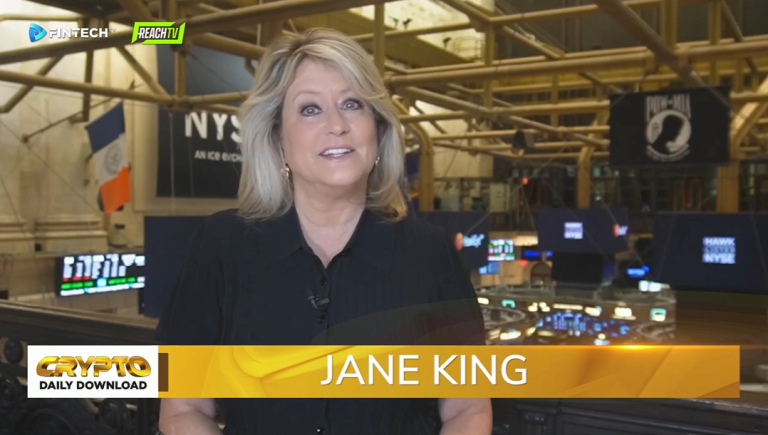
In today’s episode of Crypto Daily Download, Jane King covers significant developments in the cryptocurrency and blockchain space.

First up, Morgan Stanley is making waves by launching cryptocurrency trading on its E-Trade platform, offering clients a competitive pricing model at 50 basis points on each transaction. This move is part of their broader strategy to bridge traditional finance with decentralized finance, positioning themselves against competitors like Coinbase, Robinhood, and Charles Schwab.

Jane also highlights Core Scientific’s plans to expand its Muskogee, Oklahoma campus to a staggering 1.5 gigawatts of gross power capacity. This includes a notable acquisition of Polaris, which is expected to accelerate their growth timeline significantly.

In the world of Bitcoin mining, Jane discusses stock surges for Hut8 and Riot Platforms. Hut8’s stock jumped 35% after securing a massive 15-year lease with Riot Platforms, while Riot’s stock rose 13% as they expanded their Rockdale footprint. Both companies are shifting their focus from Bitcoin mining to hyperscale AI workloads, which promise higher returns per megawatt.

Lastly, Jane touches on Reid Hoffman’s insights regarding the potential resurgence of NFTs. He believes that as AI agents become more prevalent, there will be a growing need for crypto-based trust systems to facilitate transactions across the open Internet.

Jane King with the latest from the NYSE.