[stock-market-ticker symbols=" ^NYA;CRYPTO:BTC;CRYPTO:ETH;CRYPTO:USDT;CRYPTO:USDC;CRYPTO:BNB;CRYPTO:ADA;CRYPTO:XRP;CRYPTO:SOL;CRYPTO:DOGE " stockExchange="NYSENASDAQ" width="100%" transparentbackground=1 palette="financial-light"]

Home Blog Page 23

AI Adoption, SaaS Disruption & Cybersecurity Risks

0

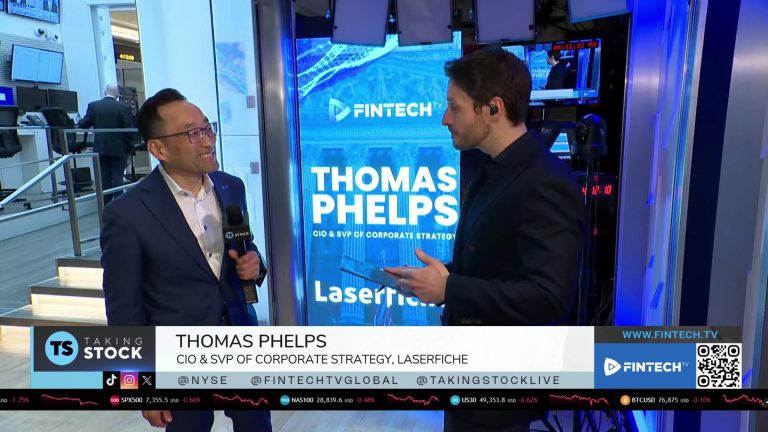
Thomas Phelps, CIO and SVP of Corporate Strategy at Laserfiche, joined J.D. Durkin from the floor of the New York Stock Exchange to discuss the evolving software landscape, AI adoption, and whether the so-called “SaaS apocalypse” is real. Phelps explained that while disruption is certainly coming to the software industry, many of the headlines surrounding the death of traditional SaaS platforms are overblown. Enterprise companies, he noted, are unlikely to suddenly replace critical systems because factors like security, compliance, scalability, and total cost of ownership remain essential considerations for CIOs and business leaders.

The conversation also explored the rapid rise of AI-driven development tools and “vibe coding,” which Phelps believes is here to stay. While CEOs and corporate boards are eager to embrace artificial intelligence, he said one of the biggest obstacles to mass AI adoption is workforce readiness. Many organizations still need to train and upskill employees before AI can be implemented effectively at scale. According to Phelps, CIOs must work closely with HR and people teams to identify practical AI use cases and help employees integrate these tools into everyday workflows.

Security and governance were another major focus of the discussion. Phelps warned that AI introduces entirely new cybersecurity challenges, including the ability for attacks to scale and evolve faster than ever before. He stressed that businesses must approach AI security both offensively and defensively by using AI-powered tools to monitor systems, detect vulnerabilities, and prevent attacks proactively. He also emphasized that companies need to evaluate the security practices of their vendors, since an organization’s overall cybersecurity posture is only as strong as the ecosystem supporting it.
Markets Brace for Nvidia Earnings as Oil Prices and Bond Yields Surge

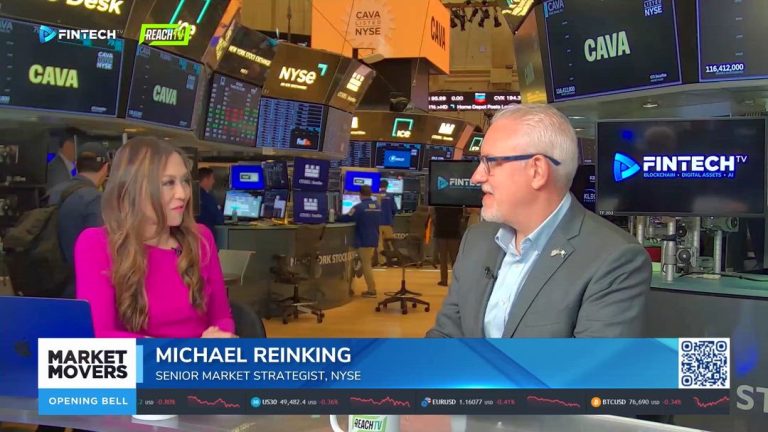
Michael Reinking, Senior Market Strategist at the New York Stock Exchange, joins Remy Blaire to dive into the current state of the markets. However, investors are shifting their focus back to macroeconomic factors, particularly as oil prices remain stubbornly above $100 per barrel amid mixed signals regarding a U.S.-Iran peace deal. They also discuss the rising global bond yields, which are hovering near multi-year highs following recent hot inflation readings.

They explore the recent pullback in equity markets, particularly in the semiconductor sector, and the implications of rising Treasury yields. Michael emphasizes that this trend is not just a U.S. issue but a global one, as yields have broken key technical levels.

They also touch on the geopolitical situation, with President Donald Trump suggesting a postponement of immediate strikes in hopes of a diplomatic resolution. Michael warns that we may be facing a prolonged period of higher rates and oil prices, as normalization in these markets could take years.

As they look ahead to Wednesday’s trading, all eyes are on Nvidia’s upcoming earnings report. Michael shares his expectations, noting that while strong numbers are anticipated, the real question will be how the stock reacts post-announcement.

Digital Asset Market Eyes Regulatory Certainty After Clarity Act Clears Major Hurdle

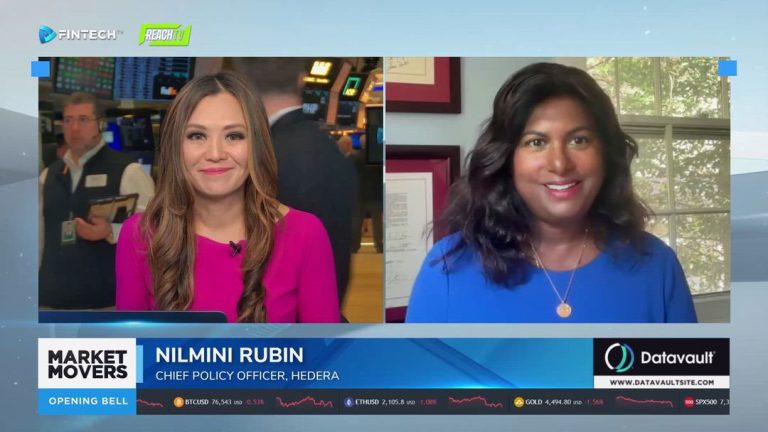
Nilmini Rubin, Chief Policy Officer at Hedera, joins Remy Blaire to dive into the recent developments surrounding the Clarity Act, which has just passed a crucial 15-9 markup vote, marking a significant step for the digital asset industry.

Nilmini highlights the importance of the Clarity Act in establishing a constructive framework for decentralized network governance. The bill aims to provide clear rules regarding the treatment of tokens, whether they are classified as commodities or securities, which is essential for companies looking to operate compliantly in the U.S. This clarity is expected to foster innovation and encourage builders and institutions to engage more confidently in the digital asset space.

They also discuss the bipartisan support for the bill, with notable Democratic senators voting in favor, indicating a potential for broader agreement as it moves to the Senate floor. Nilmini emphasizes the significance of advancing stablecoin and tokenization provisions, as they are crucial for integrating digital assets with traditional financial infrastructure.

As they look ahead, Nilmini believes that the Clarity Act is poised to open doors for practical use cases in tokenization, ultimately bringing efficiency to the markets and meeting the demands of both innovators and traditional financial institutions.

Nvidia Earnings, Rising Oil Prices and Rate Hike Fears Weigh on U.S. Markets

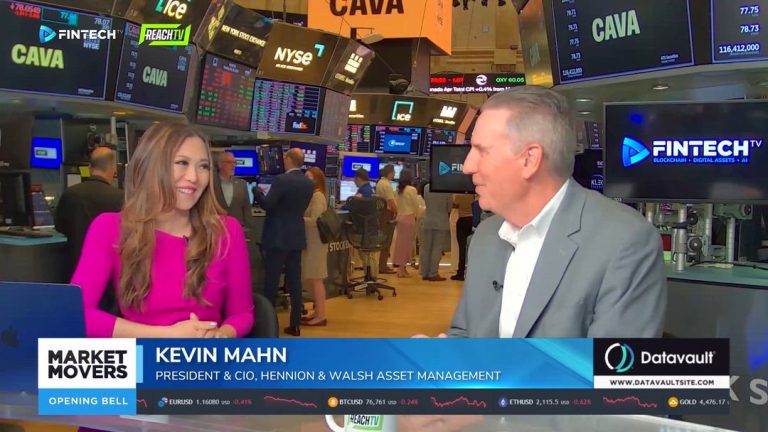
Kevin Mahn, President & CIO at Hennion & Walsh Asset Management, join Remy Blaire to discuss the current state of the U.S. stock market, which is experiencing a downturn with major indices like the Dow, Nasdaq, and S&P 500 all down by about 0.5%. They focus on key players such as Home Depot and Sherwin-Williams, which are leading the Dow lower, while Nvidia is in the spotlight as it prepares to report its first-quarter earnings this Wednesday.

Kevin introduces a new investment strategy he calls the “Air 7,” which contrasts with the well-known “Mag 7” stocks. Kevin explains that while the Mag 7 accounted for 62% of the S&P 500’s total return in 2023, their performance has significantly declined this year. The Air 7 consists of seven stocks that represent different components of the AI ecosystem, including Alphabet, Nvidia, Taiwan Semiconductor, Micron Technologies, Digital Realty, Virta, and American Electric Power.

They also discuss the geopolitical implications of Nvidia’s operations, especially in light of CEO Jensen Huang’s recent participation in the Trump-Xi business delegation. Kevin emphasizes the importance of data centers for Nvidia’s revenue, which is expected to come primarily from this sector rather than chip sales.

As they shift the focus to central banks, they touch on the G7 finance ministers’ meeting in Paris and the implications of Kevin Warsh’s upcoming swearing-in ceremony at the White House. Kevin shares his insights on the potential for interest rate hikes versus cuts, given the current economic indicators.

With rising oil prices impacting consumer spending, they explore how this could affect the economy leading into the midterm elections. Kevin suggests that American Electric Power could be a solid investment for those looking to navigate market volatility while still participating in the AI revolution.

Finally, they discuss the bond market’s current state, which reflects ongoing inflationary pressures and the potential for future rate hikes. Kevin advises investors to stay invested and avoid trying to time the market, emphasizing the importance of maintaining a consistent investment strategy.

Navigating the Crypto Landscape: Institutional Interest and Purpose-Built Blockchains

Christian Catalini, co-founder of the MIT Cryptoeconomics Lab, joins Remy Blaire to dive into the current state of the cryptocurrency market, with Bitcoin holding steady below $77,000 and major cryptocurrencies experiencing a downturn. They discuss the growing institutional interest in stablecoins, highlighted by A16z crypto’s $75 million investment in Circle’s Arc, a Layer 1 blockchain aimed at institutional money movement.

Christian shares insights on the implications of this funding round and the shift towards purpose-built blockchains. He emphasizes the importance of partnerships and distribution over mere technological superiority in the evolving landscape of blockchain solutions.

They also explore the role of privacy in crypto payments, with Christian noting that privacy is essential for real-world transactions. He discusses the potential for hybrid solutions that combine private and public blockchain functionalities.

As they turn their attention to regulatory developments, Christian provides an update on the Clarity Act. He highlights the implications for banks and stablecoins, suggesting that tokenized deposits may gain traction in the coming year.

Finally, they touch on the intersection of artificial intelligence and finance, with Christian discussing how companies like OpenAI and Anthropic are transforming financial operations. He warns that these foundational labs could disrupt traditional finance by absorbing key workflows.

AI, Misinformation Risk & Why Market Trust Is Breaking Down

0

Steven Rosenbaum, Executive Director of the Sustainable Media Center and author of The Future of Truth, joined in to discuss how trust, information, and AI are reshaping markets, media, and society. In a wide-ranging conversation, Rosenbaum explored what happens when the data behind financial markets can be manipulated or artificially generated, warning that growing “truth insecurity” could have serious consequences for investors, consumers, and even democracy itself. He noted that when people lose confidence in information sources, they may either step away from markets entirely or become increasingly numb to breaking news and geopolitical shocks.

The discussion also focused on the rise of AI and its impact on both information and financial systems. Rosenbaum described today’s AI as both a powerful tool for analyzing massive amounts of data and a potential risk when it comes to generating false or misleading information at scale. He highlighted concerns about “garbage in, garbage out” dynamics, especially as AI systems increasingly train on user-generated content from platforms like Reddit. While he acknowledged AI’s ability to dramatically improve productivity and creativity, he warned that it also introduces new challenges around authenticity, authorship, and trust.

On markets, Rosenbaum emphasized that information asymmetry has always existed, but AI is accelerating it in new and unpredictable ways. He explained that investors are increasingly dependent on understanding the incentives behind data sources, whether from news outlets, platforms, or AI tools. As predictive models and algorithmic trading evolve, he cautioned that markets may struggle to distinguish between real signals and manufactured noise, particularly as AI-generated data becomes more prevalent.

Nvidia Earnings, Consumer Risks & Why the AI Rally Isn’t Over

0

Chris Versace, CIO at Tematica Research, joined J.D. Durkin after the closing bell to break down why markets continue climbing despite rising consumer concerns, inflation pressures, and ongoing geopolitical tensions. While stocks pulled back slightly from all-time highs during Friday’s session, Versace said investors remain focused on the long-term growth potential of artificial intelligence rather than viewing it as a short-term trade. According to him, the AI boom is shaping up to be a prolonged multi-year investment cycle that continues supporting market momentum, especially as corporate earnings have largely exceeded expectations and consumers have remained surprisingly resilient.

Versace acknowledged, however, that several risks are still building beneath the surface. Concerns surrounding inflation, geopolitical uncertainty tied to the Middle East, and weakening consumer balance sheets have not fully materialized in earnings data yet, but he believes investors may soon be forced to confront those realities more directly. As retailers begin reporting earnings this week, Versace says markets will be paying close attention not just to recent quarterly performance, but more importantly to forward guidance for the second half of the year.

Retail giants like Walmart, Target, and Home Depot are expected to offer critical insight into the health of the American consumer. While recent retail sales data has remained stronger than expected, helped in part by tax refunds and continued spending activity, Versace warned that consumers are increasingly relying on credit and digging deeper into their wallets to maintain spending habits. He said investors should closely watch same-store sales trends, profit margins, and any pricing actions retailers are considering as key indicators of how inflation and economic pressures are impacting businesses and households alike.

The Clarity Act, DeFi Regulation & Crypto’s Future in Washington

0

John Medel, Head of Public Policy at Injective, joined J.D. Durkin to discuss the advancing Clarity Act and what it could mean for the future of the cryptocurrency industry in the United States. After years of congressional hearings and regulatory uncertainty surrounding digital assets, lawmakers are finally moving toward concrete rule making, a shift Medel says could be transformational for the industry. According to him, the Clarity Act delivers exactly what its name suggests clearer rules and regulatory guardrails that allow crypto companies to operate more transparently while continuing to innovate and build within the United States.

Medel explained that the latest version of the legislation is far more substantial than earlier drafts and discussions. Rather than simply offering broad guidance, the bill establishes a more structured framework for regulators and market participants alike. He believes this could significantly boost confidence across the crypto ecosystem by reducing uncertainty for developers, businesses, and institutional investors while giving regulators clearer authority and oversight tools.

The conversation also highlighted the ongoing educational gap between the crypto industry and lawmakers in Washington. Medel noted that while understanding of blockchain technology has improved in Congress over the years, many policymakers still struggle with the complexities of decentralized finance, or DeFi. He emphasized that the industry must continue working directly with lawmakers to explain both the opportunities and risks associated with blockchain technology and decentralized systems.

Taiwan and South Korea Lead Emerging Markets’ Push Into AI Infrastructure Boom

Tim Urbanowicz, Chief Investment Strategist at Innovator from Goldman Sachs Asset Management, joins Remy Blaire to delve into the current landscape of emerging markets (EM) and their potential as the next phase of the AI trade. Tim highlights the significant valuation gap between EM and the U.S., particularly noting the strong positions of Taiwan and South Korea in the AI infrastructure space.

As they discuss the winding down of earnings season in the U.S., Tim expresses concerns about rising Treasury yields and their impact on U.S. equities, especially if inflationary pressures persist. He emphasizes the importance of being cautious with portfolio structures, given the visible risks associated with higher interest rates and geopolitical tensions, particularly in Iran.

They also explore how investors can leverage EM oil exporters to mitigate downward pressure on indices, especially in light of Europe’s vulnerability due to its reliance on energy imports. Tim points out that while the U.S. market remains strong, Europe faces significant risks if the conflict in the Middle East escalates.

Finally, they touch on the resilience of small caps, which have been outperforming the S&P 500, and the need for investors to revisit their risk management strategies. Tim recommends considering derivative-based strategies, such as buffered ETFs, to provide built-in risk management in this uncertain environment.

Bitmine ethereum, Tokenized markets, Saylor Bitcoin, Clarity bill

0

In today’s episode of the Crypto Daily Download, Jane King covers significant developments in the cryptocurrency market.

First, Jane discusses Tom Lee’s Bitmine Immersion Technologies, which has reportedly made a substantial purchase of Ethereum—around $197 million—through four newly created wallets. Lee mentioned that the firm is moderating its buying as it aims to own 5% of the total Ethereum supply. Notably, Ethereum currently holds a dominant 72% market share in the tokenized ETF market.

Jane also touches on the broader tokenized market, which is projected to reach between $16 and $20 trillion by 2030, encompassing various assets like Treasury bills and equity funds represented as blockchain tokens.

In other news, Michael Saylor hints at a potential Bitcoin purchase strategy, sharing a chart that tracks his company’s Bitcoin acquisitions over the past six years. This comes as cryptocurrency stocks, including Coinbase and Robinhood, faced a downturn despite a recent legislative win with the Clarity Act.

Lastly, Jane notes that Bitcoin has weakened to its lowest level in over two weeks, influenced by macroeconomic risks related to the ongoing U.S.-Iran conflict, which has led traders to reduce their positions.

Jane King with the latest from the NYSE.