[stock-market-ticker symbols=" ^NYA;CRYPTO:BTC;CRYPTO:ETH;CRYPTO:USDT;CRYPTO:USDC;CRYPTO:BNB;CRYPTO:ADA;CRYPTO:XRP;CRYPTO:SOL;CRYPTO:DOGE " stockExchange="NYSENASDAQ" width="100%" transparentbackground=1 palette="financial-light"]

Home Blog Page 160

From Bitcoin Mining to AI: How Tech Giants are Adapting in a Rapidly Changing Landscape

“The fastest selling servers in their range are the ones with the Nvidia GPU’s.” – 02:47

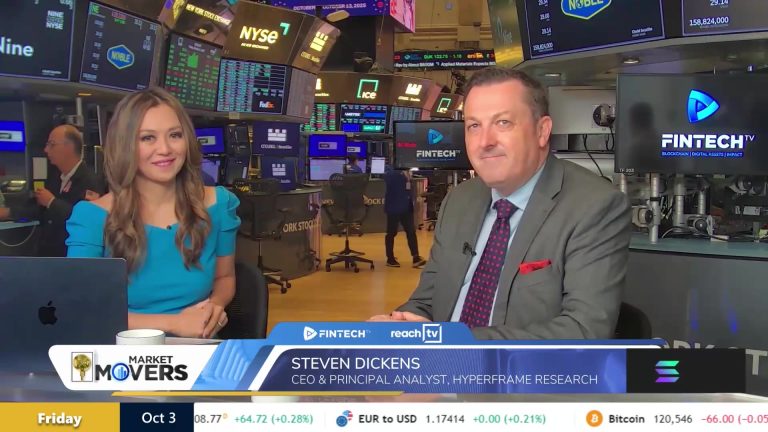
Steven Dickens, CEO & Principal Analyst at Hyperframe Research, joins Remy Blaire at the New York Stock Exchange to discuss the current state of the U.S. stock market, particularly in the tech sector, amidst ongoing government shutdown concerns.

Remy opens the segment by highlighting OpenAI’s remarkable $500 billion valuation and its recent partnerships with chipmakers Samsung and SK Hynix, which have positively impacted semiconductor stocks. Despite the government shutdown entering its third day, U.S. stock averages continue to reach new record highs, with a keen focus on the technology sector. Remy asks Stephen whether he believes tech is running ahead of its fundamentals.

Steven responds by likening the current AI boom to previous technological revolutions, such as the internet and mobile eras. He emphasizes that the market is still in the early stages of the AI explosion, with strong demand for GPUs from hyperscalers and cloud providers. He asserts that this demand is driving the market forward and is fundamentally different from the hype seen during the internet era.

The discussion then shifts to the topic of valuation in the tech sector. Remy inquires about how Steven approaches valuation given the numerous announcements and deals emerging in the AI space. Steven explains that he focuses on technology fundamentals rather than equity multiples, noting that companies like Lenovo, HPE, and Dell are experiencing robust sales of servers equipped with NVIDIA GPUs. He also mentions AMD’s recent announcements and their positive impact on IBM’s stock, indicating that the momentum extends beyond just the mega-cap tech companies.

As the conversation progresses, Steven addresses the challenges facing AI projects, referencing a recent MIT study that found 95% of AI initiatives are failing. He explains that many organizations are still in the experimentation phase, but there is a growing trend of successful deployments, particularly in companies like Logic Monitor, which is integrating AI into their solutions.
Crypto’s Comeback: Bitcoin Surpasses $120,000 Amid Regulatory Changes

“Tax is a huge issue of crypto.” – 02:07

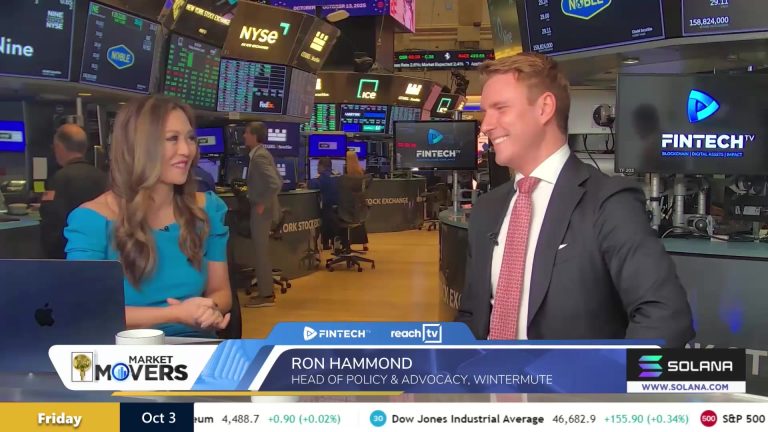
Ron Hammond, Head of Policy & Advocacy at Wintermute, joins Remy Blaire at the New York Stock Exchange to discuss the latest developments in the cryptocurrency market and regulatory landscape. The episode opens with a notable highlight: Bitcoin has surged above $120,000 for the first time since its record highs earlier in the year, currently holding steady above $120,500. Remy notes that Bitcoin has increased by around 10% in just five days, setting the stage for a deeper conversation about the implications of this market movement.

Remy and Ron delve into the recent collaboration between the SEC and CFTC, which marks their first roundtable in nearly 15 years. Ron emphasizes the importance of this coordination, especially given the conflicting positions these two regulatory bodies have taken in the past regarding cryptocurrencies like Ethereum. He explains that this collaboration is essential for advancing market structure legislation in Congress and providing clear regulatory guidelines for the industry.

As the discussion progresses, they address the significant issue of taxation in the crypto space. Ron highlights that the IRS plays a crucial role in the regulatory framework, particularly since cryptocurrencies have been classified as property since 2014. He discusses the challenges this classification presents and the potential for changes, including the de minimis tax exemption that the Treasury Department has proposed. Ron mentions that Congress is preparing a substantial tax bill, with Senator Cynthia Lummis leading the Senate version, which could be introduced in late 2026.

Market Resilience Amid Government Shutdown: Analyzing Job Data and Stock Trends

“Right now, we’re in an environment where basically any piece of news can be taken as good news.” – 01:22

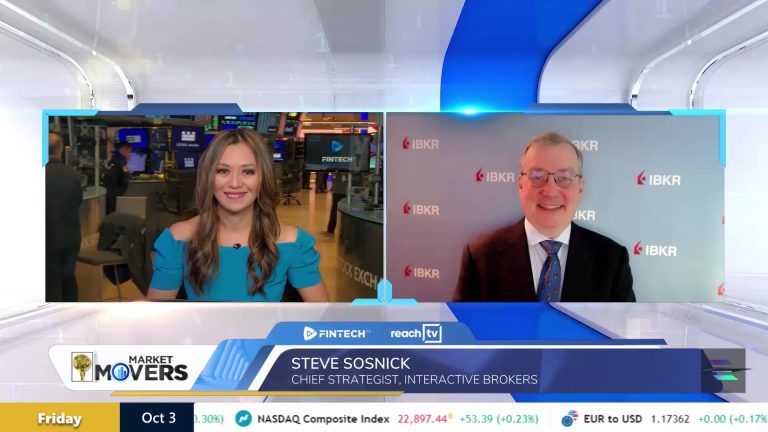
Steve Sosnick, Chief Strategist at Interactive Brokers, joins Remy Blaire to discuss the current economic landscape in the United States, particularly in light of the ongoing government shutdown. With Wall Street reaching new all-time highs, Remy highlights the absence of the September jobs report due to the shutdown, which has led to a reliance on alternative data sources. The episode begins with a review of the ADP report, which reveals a significant drop in private payrolls by 32,000, marking the largest decline in two and a half years. Additionally, August’s job figures are revised downwards, indicating a loss of 3,000 jobs.

They discuss the disconnect between the slowing hiring momentum and the rising stock market, with Steve noting that the current market psychology interprets news—whether positive or negative—as beneficial for stocks. He explains that the lack of jobs numbers removes one potential impediment for the market, allowing it to continue its upward trajectory.

The conversation shifts to the implications of the labor market for the Federal Reserve, as Remy and Steve explore how the absence of official economic reports complicates the Fed’s assessment of employment and price stability. Steve emphasizes the importance of jobs data in the Fed’s dual mandate and discusses the challenges of piecing together the economic picture with limited information.

As the segment progresses, Remy and Steve examine recent trends in various market sectors, including pharmaceuticals and chip stocks, which have seen gains. Steve points out that government involvement in these sectors, such as investments in companies like Intel and Pfizer, has contributed to their positive performance. He also notes the importance of diversifying investment interests beyond the crowded tech sector, encouraging a focus on fundamentals.

Market Resilience: How AI Buzz and Chip Stocks Defy Government Shutdown Fears

“The market responds to this government shutdown threat in a negative way… Obviously, for some reason, the market’s not engaging this in a negative way at all.” – 01:18

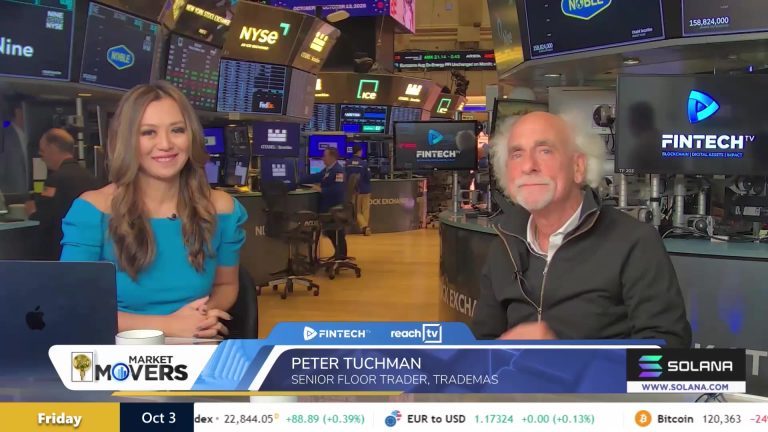
Peter Tuchman, Senior Floor Trader at TradeMas, joins Remy Blaire at the New York Stock Exchange to discuss the current dynamics of the U.S. stock market, which is experiencing notable gains, particularly in the technology sector. The S&P 500 has achieved a historic milestone by closing above 6700 for the first time, driven by a surge in chip stocks, with NVIDIA reaching yet another record high. Additionally, the episode highlights OpenAI’s impressive valuation, which has skyrocketed to $500 billion, surpassing SpaceX to become the world’s most valuable startup.

Historically, government shutdowns have negatively impacted the market, often resulting in significant declines. However, Peter notes that this time, the market appears to be unfazed, continuing its upward trajectory. He attributes this resilience to several factors, including a strong close to the third quarter and a substantial influx of capital into the market, highlighted by a $4.5 billion buy program on the last day of the quarter.

The conversation shifts to the potential long-term effects of the shutdown, with Peter emphasizing that while the market is currently thriving, prolonged shutdowns could significantly impact the economy, potentially affecting GDP growth and the livelihoods of hundreds of thousands of government workers.

As they explore the topic of interest rates, Remy and Peter discuss the rising expectations for rate cuts in October and December. Peter reflects on the Federal Reserve’s cautious approach to cutting rates, noting that historically, when the economy enters an interest rate cutting cycle, the market tends to perform well over the following year. However, he cautions that external factors, such as tariffs and the government shutdown, can also significantly influence market dynamics.

Stablecoin bots, SEC crypto, SEC DePin, Bitcoin ETFs

0

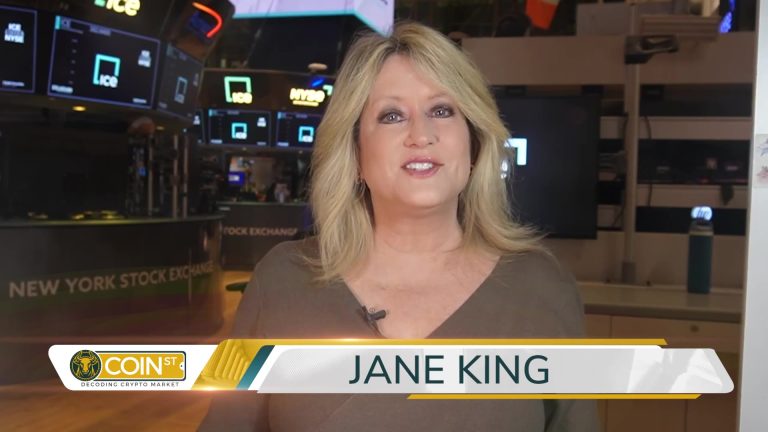
In this episode of the Coin Street headlines, we dive into the latest headlines shaping the cryptocurrency landscape. Discover how stablecoin transfers reached a record $15.6 trillion in Q3, driven largely by automated trading bots, which accounted for 71% of the total volume. We discuss the U.S. Securities and Exchange Commission’s recent moves, including a no-action letter allowing investment advisors to use state-trust companies for cryptocurrency custody and their stance on tokens linked to decentralized physical infrastructure networks (DIPs). Learn about the significant inflows into bitcoin exchange-traded funds, totaling over $240 million in September, and how firms like BlackRock are benefiting from this trend. We also touch on Michael Saylor’s recent acquisition of over 7,000 Bitcoin last month. Jane King with the latest from the NYSE

Navigating the Government Shutdown: Impacts on Wall Street and Beyond

“I think traders are anticipating a two-week shutdown.” – 01:14

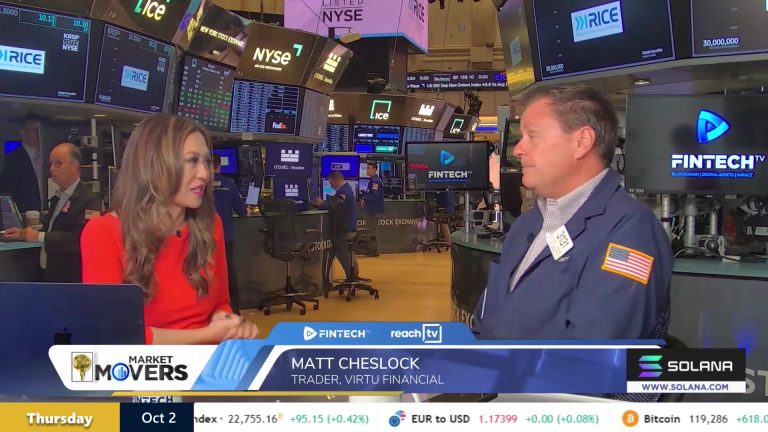
Matt Cheslock, Trader at Virtu Financial, joins Remy Blaire at the New York Stock Exchange to discuss the implications of the ongoing U.S. government shutdown, which is now in its second day. The shutdown follows lawmakers’ failure to reach a funding agreement, with Democrats advocating for the extension of key health care tax credits. Remy highlights the historical context of government shutdowns, noting that while they have had limited impact on Wall Street—where the S&P 500 has risen during every shutdown since 1990—the average drop during a shutdown over the past 50 years is approximately 1.6%, with the most significant decline occurring in 1979.

The pair discuss the current state of the S&P 500, which is up 14% year-to-date and recently closed above 6,700 for the first time. Matt shares his insights on the political deadlock in Washington, expressing that traders are becoming somewhat desensitized to the shutdown. However, he warns that a prolonged closure could raise serious concerns for both the economy and Wall Street.

The conversation shifts to the upcoming jobs report and the potential impact of the shutdown on economic data. Matt suggests that a legitimate jobs number in November could provide a clearer picture of the labor market, as the lack of data during the shutdown complicates analysis. He notes that October is historically a strong month for markets, and despite mixed economic data, the markets are trending higher.

Remy and Matt also explore the pharmaceutical sector, which is currently experiencing a surge. Matt points out that pharmaceutical companies are cutting costs to benefit consumers, leading to positive reactions in their stock prices. They touch on the topic of tariffs, with Matt indicating that the news surrounding tariffs is becoming stale, as companies like Nike have already adjusted to the situation.

Navigating Uncertainty: The Impact of the Government Shutdown on Markets

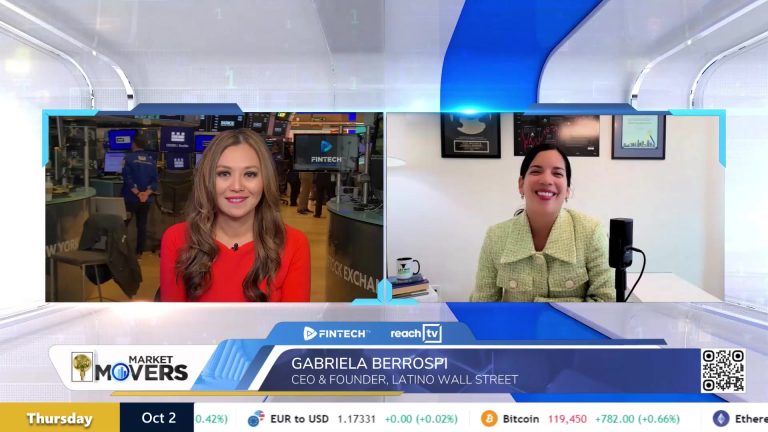
Gabriela Berrospi, CEO & Founder of Latino Wall Street, joins Remy Blaire to discuss the current economic climate amid the ongoing U.S. government shutdown, which has left many feeling as though they are experiencing an economic data depression. With the U.S. Labor Department unable to release initial jobless claims data and the September jobs report also delayed, Remy explores the implications of this shutdown on the job market and the broader economy.

Despite initial fears surrounding the shutdown, the market ended the previous trading session higher. Gabby highlights the historical context of government shutdowns, noting that while they may cause short-term dips, they often lead to buying opportunities as investors recognize these situations as temporary.

The conversation shifts to the recent ADP report, which indicates the worst job losses in two and a half years. Remy and Gabby discuss the potential impact of the lack of economic data on Federal Reserve expectations. Gabby expresses concern over the current state of economic data, suggesting that the recent turmoil may necessitate a reset for more accurate reporting. She believes that the Fed may respond to the shutdown by becoming more flexible with monetary policy, potentially leading to rate cuts that could positively influence the markets.

As the segment concludes, Remy and Gabby examine the performance of gold and cryptocurrency during this period of uncertainty. Gabby notes that both asset classes are becoming increasingly attractive to investors seeking safety amidst economic instability. With gold hitting new record highs and Bitcoin recovering significant levels, she anticipates continued strong performance in these areas as the economic landscape evolves.

Bitcoin ‘Uptober’ Arrives Early

“It’s been a massive shift in the sentiment in America for crypto and blockchain technology.” – 03:20

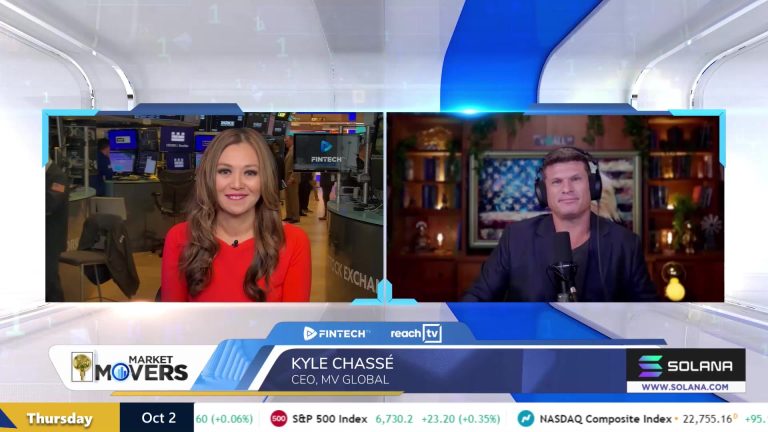
Kyle Chassé, CEO of MV Global, joins Remy Blaire to discuss the current dynamics of Bitcoin and the cryptocurrency market as they enter the final quarter of 2025. The segment begins with a discussion about Bitcoin’s recent surge above the $119,000 mark, which occurs against a backdrop of uncertainty stemming from a potential U.S. government shutdown and rising expectations for Federal Reserve rate cuts. Remy highlights that October has historically been a strong month for Bitcoin, with the cryptocurrency rising in 10 of the last 12 years, and notes that this seasonal strength often extends into Q4.

Kyle affirms Remy’s observations about the current price action, emphasizing the significance of seasonality in the cryptocurrency market. He explains that the recent price increase follows a typical pattern where Bitcoin often experiences a sell-off in September, only to rebound strongly in October. Kyle notes that the evidence supporting this seasonal trend is compelling, particularly in the context of Bitcoin’s historical performance after halving events.

The conversation shifts to the regulatory landscape in the U.S., especially following a landmark roundtable held by the SEC and CFTC—the first in nearly 15 years. Remy and Kyle discuss how this meeting represents a significant shift in sentiment towards crypto and blockchain technology. Kyle shares his personal journey, recounting how he left the U.S. due to regulatory uncertainty but returned to be part of the movement aimed at making America a leader in the crypto space.

As they look ahead to 2026, Kyle emphasizes the role of institutional investors and Treasury liquidity in shaping Bitcoin’s price action. He discusses the ongoing consolidation among digital asset treasuries (DATs), noting that larger entities are acquiring smaller ones at discounted rates, which could lead to a more stable market structure. Kyle predicts that this consolidation will continue, while also highlighting the global expansion of leading digital asset firms.

October Legends: MLB Postseason and the Ryder Cup Recap

“Major League Baseball rumored to do a Netflix oriented opening weekend starting next year.” – 02:43

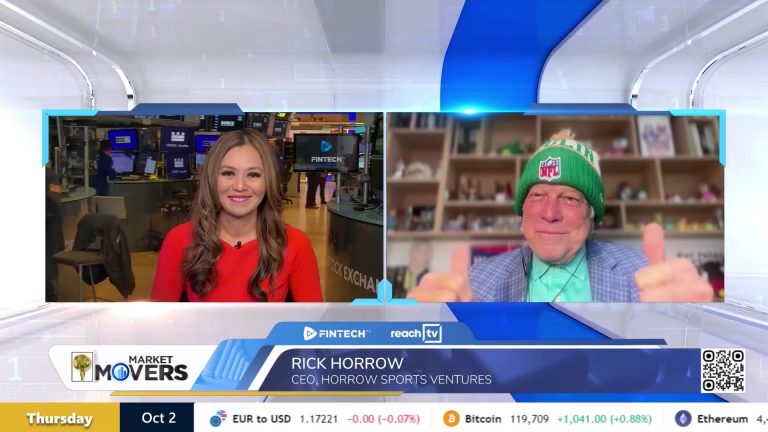
Rick Horrow, CEO of Horrow Sports Ventures, joins Remy Blaire to discuss the vibrant sports landscape as October unfolds. The episode begins with Remy setting the scene, highlighting the arrival of fall with its crisp air, colorful foliage, and the excitement of postseason baseball, which takes center stage alongside the anticipation of the NHL season.

Remy and Rick kick off their conversation by delving into the recent Ryder Cup, which took place in Dublin, Ireland. Rick shares his firsthand experience of the event, noting the significance of it coinciding with the first NFL game ever held in Dublin, featuring the Pittsburgh Steelers and the Minnesota Vikings. He describes the lively atmosphere, filled with enthusiastic Irish fans celebrating both the NFL and the Ryder Cup, particularly the moment when Shane Lowry made the final putt to clinch the victory for the Europeans.

Transitioning to Major League Baseball, Remy asks Rick about the current state of the postseason. Rick reports that the Dodgers have clinched their spot, while three wild card series are heading to their final games, generating impressive ratings. He mentions MLB’s plans for a Netflix-oriented opening weekend next year, which is expected to bring in significant revenue.

A major topic of discussion is the upcoming implementation of the automated ball-strike (ABS) system in baseball. Rick explains how this system will allow umpires to be challenged, aiming to reduce disputes over calls and enhance the viewing experience for fans. He likens the potential for second-guessing umpires to the famous disputes in tennis, suggesting that it will lead to a more engaging experience for viewers at home.

The Future of Driving: Inside Tensor’s Groundbreaking Luxury Robocar

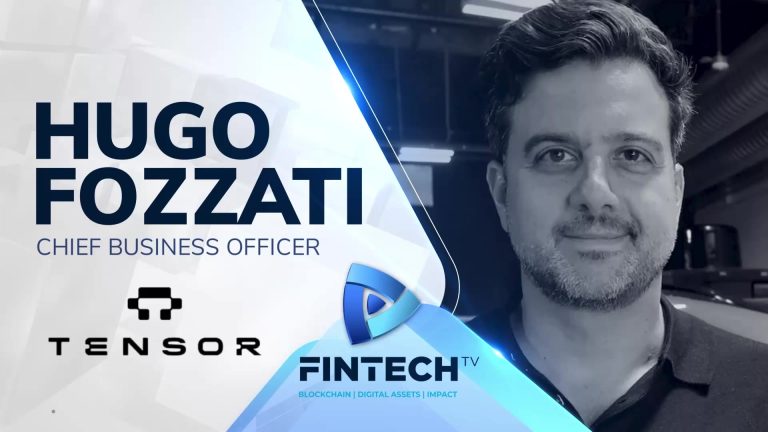
Hugo Fozzati, Chief Business Officer at Tensor, joins Remy Blaire at the New York Stock Exchange to discuss the company’s groundbreaking announcement regarding the first-ever Level 4 autonomous vehicle available for personal ownership. This innovative vehicle promises fully hands-off driving capabilities and is expected to be on the roads by late next year.

Remy and Hugo delve into the unique aspects of Tensor’s Level 4 vehicle, emphasizing its design and construction from the ground up, which is crucial for scalability and safety. Unlike existing robo-taxis and vehicles that offer only Level 2 assisted driving, Tensor’s offering takes full responsibility when operating in Level 4 mode. Hugo highlights the vehicle’s foldable steering wheel, allowing drivers to take control when they choose, while also providing the convenience of being driven during busy commutes.

The conversation shifts to the impressive technical specifications of the vehicle, which are essential for its performance. Hugo explains the importance of the sensors, noting that Tensor has developed its own LIDAR technology, featuring five LIDARs that ensure zero blind spots around the vehicle. Additionally, the vehicle is equipped with proprietary cameras and a cleaning system for the sensors, ensuring optimal performance at all times. Redundancy is a key focus, with multiple layers of backup for braking, steering, power, sensing, and computing, all powered by the world’s most powerful supercomputer ever installed in a vehicle, capable of 8,000 trillion operations per second.

As they discuss the implications of such advanced technology, Remy raises concerns about privacy and regulatory hurdles. Hugo reassures her that Tensor prioritizes privacy and ownership, having developed the first vehicle with end-to-end encryption for all communications. This means that data remains secure within the vehicle, and the company does not monetize user data, addressing significant concerns in today’s AI-driven world.