[stock-market-ticker symbols=" ^NYA;CRYPTO:BTC;CRYPTO:ETH;CRYPTO:USDT;CRYPTO:USDC;CRYPTO:BNB;CRYPTO:ADA;CRYPTO:XRP;CRYPTO:SOL;CRYPTO:DOGE " stockExchange="NYSENASDAQ" width="100%" transparentbackground=1 palette="financial-light"]

Home Blog Page 159

Branding the Future: How Alabama Football is Leveraging NIL and Podcasts

“We’re in the stage now where everything is about branding and positioning our student athletes for success and telling their stories.” – 01:07

Walt Brock, Director of Creative and Production for Alabama Football, joins Remy Blaire to discuss the significant evolution of college football, particularly in the realms of branding, athlete monetization, and the influence of technology.

Remy opens the episode by highlighting the immense financial landscape of college football, which is valued in the tens of billions of dollars. With the recent expansion of the playoff system, schools are increasingly focused on enhancing their brands through innovative apparel deals and appealing designs. This branding effort is not solely aimed at merchandise sales; it is also crucial for attracting top talent to their programs.

Walt shares insights into the changing regulations surrounding NCAA athletes and their ability to monetize platforms like YouTube. He discusses Alabama football’s initiative to launch a player-led podcast featuring athletes such as Ryan Williams, Jalen Mbokwe, and Drake or Patrick. This podcast has quickly risen to prominence, becoming one of the top podcasts in the country. It provides fans with an inside look at the Alabama football program while also helping players develop their personal brands and media skills.

The conversation then shifts to the topic of Name, Image, and Likeness (NIL) and how Alabama is actively involved in helping its players maximize their earning potential. Walt emphasizes the importance of educating athletes on effective social media usage and connecting them with brands that align with their personal and professional aspirations.

A significant portion of the segment is dedicated to discussing the role of artificial intelligence in the creative landscape of college sports. Walt describes AI as a game changer, enhancing efficiency in content creation while still allowing for the unique touch of a creative team. He believes that AI will play a pivotal role in shaping the future of content in college football.
Market Momentum: M&A Activity and AI Partnerships Drive S&P 500 to New Heights

“The administration has shown this desire to really bring some of these rare earths and strategic materials back into production here in the U.S.” – 03:27

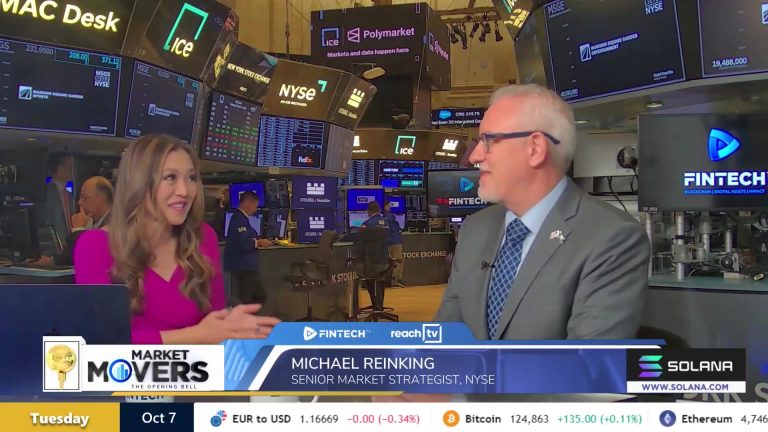
Michael Reinking, Senior Market Strategist at the NYSE, joins Remy Blaire to discuss the latest trends in the financial markets, focusing on the record highs achieved by the S&P 500 and Russell indices. Michael provides insights into the factors driving these gains, including a surge in mergers and acquisitions (M&A) activity and expectations surrounding Federal Reserve rate cuts.

Remy and Michael begin by examining the recent M&A landscape, highlighting OpenAI’s partnership with AMD to acquire GPUs for AI infrastructure and Fifth Third’s significant $10 billion all-stock acquisition of Comerica. Michael notes that this uptick in M&A activity, particularly in the regional banking sector, has been anticipated for some time and has positively impacted regional banks, especially those in the Russell and S&P 600 indices.

The conversation shifts to the topic of whether the market is experiencing an AI bubble. Michael suggests that while the market may be in the middle to later stages of this trend, the recent M&A activity indicates a maturation process within the AI sector.

Remy then brings attention to the rising prices of gold and the administration’s efforts to boost domestic production of rare earth materials. Michael emphasizes the importance of not only mining these materials but also producing essential components, such as magnets, to support the technology industry.

As the segment progresses, Remy and Michael discuss the upcoming Federal Reserve meetings and the anticipated economic data. Michael points out that recent comments from Fed speakers have taken on a more hawkish tone, which contrasts with the market’s expectation of a rate cut. He stresses the importance of monitoring company conference calls for insights into corporate perspectives and labor market conditions, especially in the absence of new economic data.

Bitcoin Surges: Analyzing the Impact of New Crypto Regulations and Market Dynamics

“The crypto cash market is expensive to trade in and relatively inefficient, which has always been the problem of the modern day crypto marketplace.” – 02:03

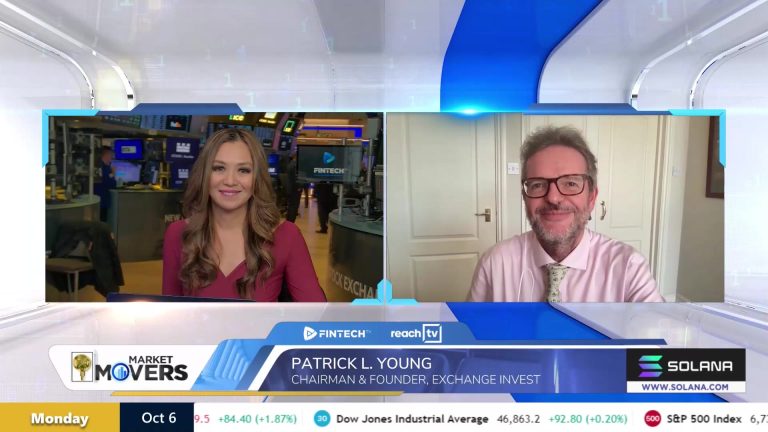
Patrick L. Young, Chairman and Founder of Exchange Invest, joins Remy Blaire to discuss the dynamic world of cryptocurrency as Bitcoin reaches all-time highs above $125,000. The segment begins with a discussion on the implications of the ongoing U.S. government shutdown, which is causing delays in the approval of new spot crypto ETFs by the SEC. Despite these setbacks, lawmakers are still advancing a market structure bill, although timelines are slipping. Remy highlights a significant development from the Senate Finance Committee hearing on crypto tax policy, where the U.S. Treasury announces it will not tax unrealized capital gains on crypto, marking a notable win for digital asset treasuries.

The pair explore the CME Group’s plans to launch 24-7 trading for crypto futures and options early next year. This move is seen as a strategic effort to compete with exchanges like Binance and Derbit, and it could potentially reduce weekend price gaps in the market. Patrick shares his insights on whether this shift could eliminate the so-called CME gap and discusses the reputation of regulated exchanges compared to cash markets in the crypto space.

As the conversation shifts to the regulatory environment for crypto in the U.S., Patrick expresses concern over the disproportionate focus on crypto regulation relative to its actual market size. He notes the frustration among those in traditional financial markets regarding the extensive efforts being made to regulate an asset class that remains relatively small.

Remy and Patrick then turn their attention to the political landscape in the U.S., discussing the implications of the government shutdown. Patrick provides a unique perspective, suggesting that the shutdown may actually save the U.S. money and improve the overall economic picture, despite the political stalemate in Washington.

Navigating the Economic Data Blackout: What’s Next for the Fed?

“People are buying things that are giving them a quick return, like the market, like crypto, like gold.” – 02:36

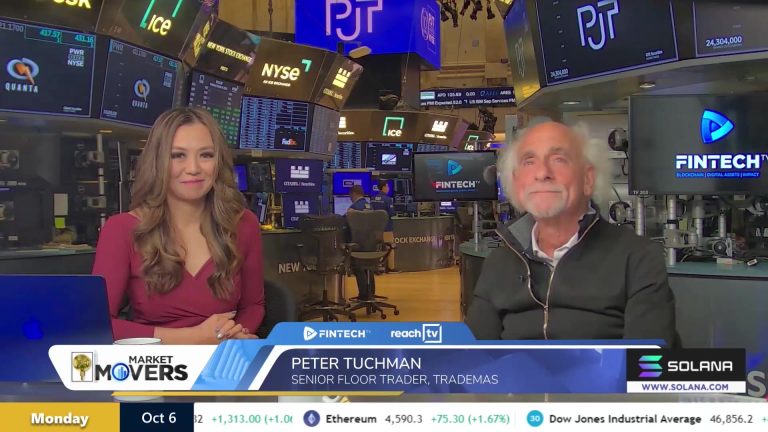
Peter Tuchman, Senior Floor Trader at TradeMas, joins Remy Blaire at the New York Stock Exchange who provides his expert insights on the market’s trajectory. The discussion begins with a focus on AMD’s recent AI chip supply deal with OpenAI. Peter elaborates on the broader implications of this partnership, referencing comments from the CEO of SoftBank regarding NVIDIA’s valuation and the escalating demand for chips and data centers driven by the AI revolution. He highlights the substantial capital expenditures being made by major firms like Google, Microsoft, and Oracle in AI, suggesting that collaborations like AMD’s are a strategic move to leverage existing infrastructure rather than building from scratch.

As the conversation shifts to the effects of the government shutdown, Remy and Peter discuss the economic data blackout it has caused, particularly the delay of the jobs report, which limits the Federal Reserve’s ability to gauge the economy ahead of its October rate decision. Peter expresses confidence that the Fed will still find ways to gather necessary information, indicating that an interest rate cut in October is a possibility, despite the prevailing uncertainty.

The segment also delves into the current market sentiment, characterized by a wave of irrational enthusiasm among investors. Peter notes that this enthusiasm is driving investments across various assets, including stocks, cryptocurrencies, and gold. He emphasizes that the market is forward-looking, with investors focusing on potential growth through 2026, and he anticipates a robust market performance as the economy enters a cycle of interest rate cuts.

Before concluding the segment, Remy and Peter discuss key market levels to monitor, including the Dow, S&P, and NASDAQ, all of which are nearing significant milestones. Peter underscores the importance of these numbers as indicators of market confidence and investment activity, sharing anecdotes from his extensive career on the trading floor to illustrate the rapid acceleration of the market and the substantial capital being deployed.

Nature-Based Solutions: A Path to Resilience in the Face of Climate Change

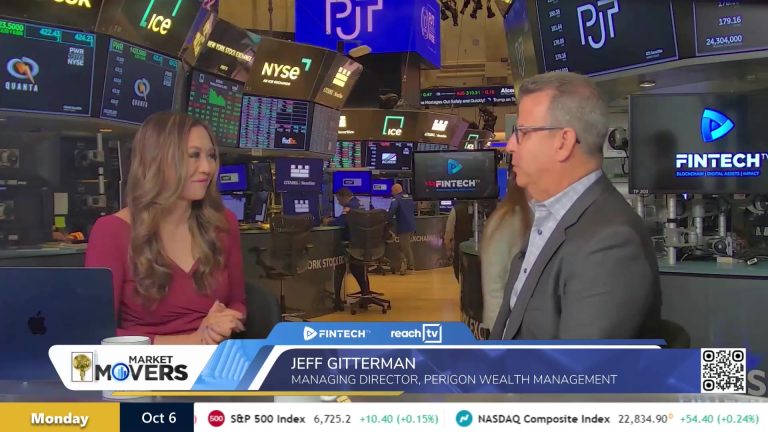
Jeff Gitterman, Managing Director at Perigon Wealth Management, joins Remy Blaire at the New York Stock Exchange to discuss the significance of nature-based climate solutions in the context of the 2025 Atlantic hurricane season. The segment opens with a brief overview of the current hurricane season, noting that it has produced nine named storms and four hurricanes by early October. Remarkably, this year marks the first time in a decade that no hurricane has made landfall in the continental U.S. during September, providing much-needed relief to homeowners and the property insurance market.

Remy introduces the concept of nature-based solutions, which leverage natural processes to capture carbon and enhance resilience against climate-related disasters. Jeff explains that traditional economic models often focus solely on inputs and outputs, neglecting the broader implications of these actions. He emphasizes the importance of adopting a circular view of economics, where the negative outputs of depleting natural resources, such as mangroves and coral reefs, are considered alongside the benefits.

The conversation delves into the timeline for implementing these nature-based solutions. Jeff highlights that while mangroves and coral reefs are rapidly depleting due to climate change, they can be regrown relatively quickly. He points out that the loss of these ecosystems not only threatens biodiversity but also has significant economic repercussions, particularly for tourism in regions that rely on healthy marine environments.

Remy and Jeff discuss various locations where nature-based solutions are currently being implemented, including mangrove development in Florida, coastal initiatives in Virginia, and barrier reef projects near New York City. Jeff underscores the importance of integrating nature into building practices to protect both the environment and the communities that depend on these ecosystems.

As the segment nears its conclusion, Remy asks Jeff for his perspective on the unusual lack of hurricanes making landfall this September. Jeff attributes this phenomenon to global wind currents rather than solely to warming ocean temperatures, illustrating the interconnectedness of climate systems.

Institutional Adoption and Market Momentum: What’s Next for Crypto?

“JP Morgan believes that Bitcoin’s worth $165,000 by the end of the year.” – 01:26

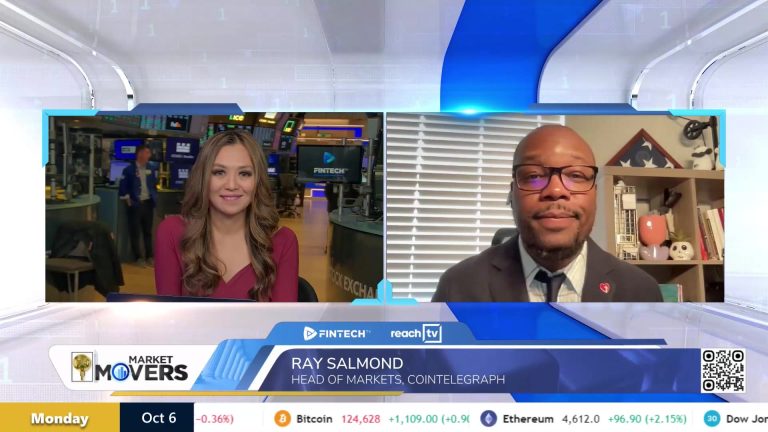
Ray Salmond, Head of Markets at Cointelegraph, joins Remy Blaire who provides insights into Bitcoin’s impressive momentum as October begins. Ray notes that the recent price action has exceeded analysts’ expectations, with many anticipating significant gains for Bitcoin this month. He highlights various price predictions from major financial institutions, including JP Morgan’s estimate of $165,000 by year-end and Citibank’s valuation of $133,000. With some estimates even reaching the $200,000 mark, the discussion turns to the factors driving this bullish sentiment, such as capital inflows and corporate adoption.

The conversation shifts to the theme of institutional adoption in the cryptocurrency space, particularly looking ahead to 2025. Ray emphasizes the growing interest in Solana as a leading platform for stablecoin product development and mass adoption, alongside the ongoing treasury building in Ethereum and Bitcoin ETFs. He expresses confidence that the trend of mass adoption will continue to gain momentum.

As the segment progresses, Remy and Ray turn their attention to Ethereum, which is currently trading just above the $4,600 level. Ray explains how the recent billion-dollar inflows into Bitcoin have had a positive knock-on effect on Ethereum, resulting in significant capital inflows into the altcoin as well. He discusses the market dynamics, noting that while Bitcoin’s surges can temporarily divert attention from altcoins, they also create opportunities for a catch-up trade once Bitcoin consolidates.

The AI Revolution and Its Impact on U.S. Energy Demand

0

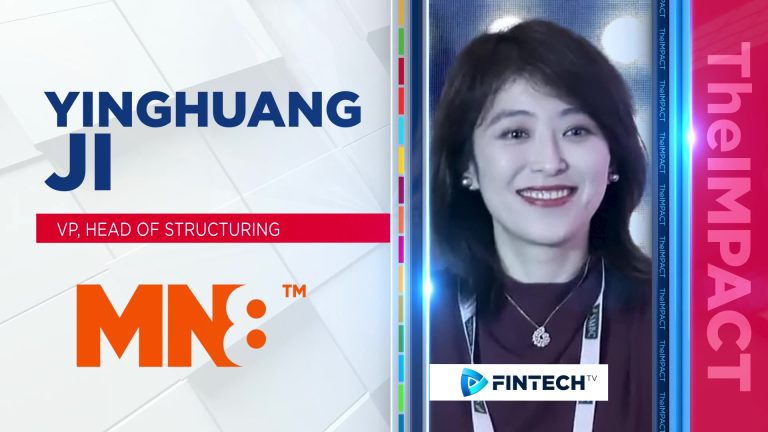
Yinghuang Ji, Vice President, Head of Structuring at MN8, joins Jeff Gitterman at the New York Stock Exchange to discuss the evolving landscape of the U.S. energy market, particularly in the context of renewable energy, storage solutions, and the impact of artificial intelligence (AI) on energy demand.

Yinghuang began by providing an overview of MN8 Energy, which focuses on solar, storage, and electric vehicle (EV) charging. With over 4 gigawatts of solar capacity and 1.1 gigawatt-hour of storage, MN8 has a significant footprint across various states. The company, which spun out from Goldman Sachs in 2022, is actively developing a pipeline of over 9 gigawatts.

The pair discussed the distinction between private and public energy producers, emphasizing MN8’s role in the wholesale electricity markets. Yinghuang explained how their energy production feeds into the grid, ultimately reaching end customers through utility companies. This led us to explore the current state of the U.S. energy market, which has seen stagnant demand growth for decades but is now experiencing a surge due to AI-driven data center loads and increased electrification.

Yinghuang highlighted that while a 2-3% annual growth in energy demand may seem modest, it translates to a significant increase in the grid’s requirements. However, the infrastructure has not kept pace with this demand, creating challenges and opportunities for energy producers like MN8. Yinghuang examined the regional differences in energy markets, particularly the PJM and ERCOT markets, and how they are adapting to the growing demand from data centers.

A key point of the discussion was the critical role of energy storage in meeting the constant energy needs of data centers. Yinghuang shared that MN8 already operates 1.1 gigawatt-hours of storage and is committed to advancing battery storage solutions. They explored how storage can help balance the intermittent nature of renewable energy sources and support the grid’s reliability.

Towards the end of the conversation, Yinghuang touched on the importance of collaboration across industries to tackle the challenges posed by increasing energy demands. Yinghuang shared her involvement with the Insight CoLab roundtable, which fosters discussions among private equity, startups, and other stakeholders to find solutions for the energy infrastructure challenges ahead.

BTC rally, Tokenization ‘inevitable’, NY tax

0

In this episode of Coin Street headlines, we dive into the latest headlines shaping the cryptocurrency landscape. October has kicked off with bitcoin climbing back above $120,000, marking its highest price since mid-August. Historically, October has been a bullish month for bitcoin, with gains in 10 of the past 12 years. We discuss insights from Robinhood CEO Vlad Tenev on the unstoppable trend of tokenizing real-world assets, from stocks to real estate, and how this will impact financial markets globally. New York State Senator Liz Krueger has introduced a new legislative proposal for a tiered tax system on energy used by crypto miners, with exemptions for those utilizing 100% renewable energy. Jane King with the latest from the NYSE.

The Future of Travel Media: Insights from ReachTV’s CEO Lynnwood Bibbens

Vince Molinari, had the pleasure of welcoming Lynnwood Bibbens, Chairman & CEO at ReachTV, the largest airport television network and ad-free, ad-supported streaming TV network targeting travelers. With an impressive reach of over 50 million viewers monthly across more than 2,400 gates in over 90 commercial airports, 2,500 venues, and 500,000 hotel rooms in North America, ReachTV is making significant strides in the travel media landscape.

The conversation begins by reflecting on ReachTV and FINTECH.TV’s partnership and the impact of the collaborative efforts in enhancing the travel experience for millions. Lynnwood shared insights into ReachTV’s strategic focus over the past 18 to 24 months, emphasizing the importance of investment and innovation to prepare for the next five years. A key highlight was the announcement of their “Unblocked” initiative, which aims to transition ReachTV from being classified in the out-of-home advertising bucket to a more lucrative digital video space. This shift has opened up a staggering $180 billion market for ReachTV, compared to the previous $3 billion pool.

Lynnwood elaborated on the collaboration with Nielsen and Trade Desk, which has allowed ReachTV to enhance visibility and accessibility for advertisers. By integrating their inventory with Trade Desk, ReachTV is now able to transact programmatically with major brands that previously could not see their offerings. This strategic move is set to revolutionize how advertisers engage with ReachTV’s audience.

The pair also delved into the significance of first-party data in understanding and serving their audience better. Lynnwood explained how ReachTV has collected data from over 500 million opted-in devices and matched it with TransUnion identifiers to gain deeper insights into their viewers. This data-driven approach enables ReachTV to tailor content and advertising strategies to specific demographics, enhancing the overall viewer experience.

As we looked to the future, Lynnwood shared his predictions for the travel and advertising landscape. He highlighted the resurgence of corporate travel, anticipating a significant increase in airport traffic as businesses return to in-person meetings. He also noted the continued dominance of live sports in driving viewership, with ReachTV’s exclusive rights to broadcast NFL games for the next five years.

The Future of E-Commerce: Why India and China Are Leading the Charge

“While China is an emerging market in a traditional sense, when it comes to the smartphone and e-commerce, China’s the most developed country in the world.” – 04:08

Kevin Carter, Founder & CIO of EMQQ Global, joins Remy Blaire to discuss the dynamic landscape of emerging markets, particularly focusing on the impressive performance of international internet and e-commerce companies. The discussion begins by highlighting the recent surge in Alibaba’s shares, which have soared over 120% this year, reflecting the growing potential of global markets. As U.S. tech stocks continue to drive market records, we explore how firms are increasingly looking beyond American borders for investment opportunities.

Kevin shares his perspective on the current state of emerging markets, emphasizing the influx of 6.5 billion new consumers gaining access to technology and the internet for the first time. He draws parallels between the growth trajectories of tech giants in China, India, and Brazil, suggesting that these regions will be the epicenters of tech growth over the next two decades.

The pair discuss the ongoing narrative of U.S. exceptionalism versus the outperformance of international markets. Kevin points out the structural issues within traditional emerging market indexes, particularly the inclusion of state-owned enterprises and inefficient government-owned banks, which often hinder true growth potential. He highlights the fastest-growing companies, such as MercadoLibre and C-Limited, which are frequently overlooked in these indexes due to their listings on U.S. exchanges.