
In this episode of Coin Street headlines, we dive into the latest developments in the cryptocurrency market and beyond. Headlines Covered: Bitcoin’s potential volatility this month and the need for a new catalyst to push prices above $117,000. Predictions from Bitmine chair Tom Lee and BitMEX co-founder Arthur Hayes about ether reaching $10,000 this year, despite recent market fluctuations. The Bank of England’s plans to limit stablecoins and the industry’s response to these proposed measures. U.S. President Donald Trump’s comments on the ongoing trade war with China and the implications of potential tariffs on rare earth minerals. Jane King with the latest from the NYSE.
Empowering Retail Investors: The Role of the Crowdfunding Professional Association
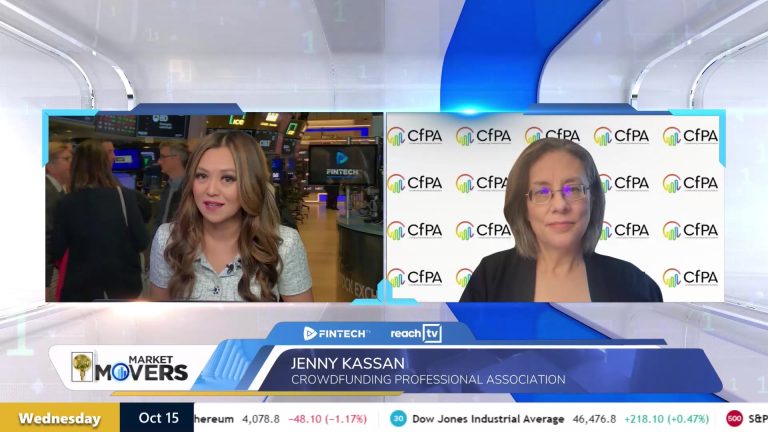
“They want to see retail investors have more access to more different kinds of deals.” – 02:44
Jenny Kassan, President of the Crowdfunding Professional Association, joins Remy Blaire to provide valuable insights into the organization’s role and its upcoming summit on regulated investment crowdfunding.
Jenny begins by exploring the CFPA’s policy advocacy agenda, particularly in light of the 2016 regulation crowdfunding law. Jenny explains that prior to this legislation, it was nearly impossible for everyday investors to participate in funding private companies. The law has since enabled individuals to raise money from a broader audience, including retail investors, and to advertise their offerings nationwide. Jenny emphasizes the importance of this shift and the potential for further improvements, especially with Regulation A+, which allows companies to raise up to $75 million.
As the conversation progresses, Remy inquires about the CFPA’s relationship with the SEC and legislators in Washington, D.C. Jenny shares that the CFPA has cultivated strong relationships with SEC commissioners and various lawmakers who are eager to enhance the crowdfunding space. They are advocating for increased access for retail investors, who currently have most of their investments tied to public markets, which consist of only about 4,000 companies. Jenny stresses the need for investors to have the right to diversify their portfolios.
The discussion also touches on the CFPA’s efforts to create a balanced and protective crowdfunding ecosystem. Jenny highlights the existing investor protections embedded in the law, affirming the CFPA’s commitment to safeguarding investors from fraud. However, she also advocates for the freedom of individuals to make informed investment decisions, provided they have access to accurate disclosures. Jenny notes that there is growing support for this balanced approach from various sectors of the federal government.
Navigating Earnings Season: Insights on U.S. Banks and AI’s Impact on Markets
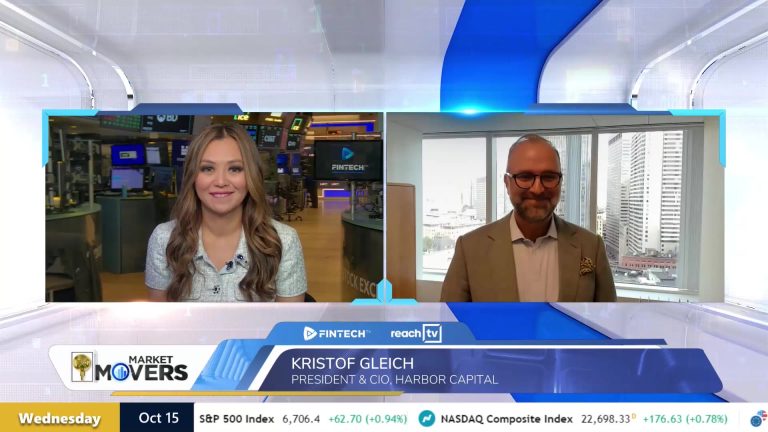
“Small caps have been overlooked for a number of years now, and you’re going to begin to see a trickle down.” – 04:00
Kristof Gleich, President and CIO of Harbor Capital, joins Remy Blaire to discuss the current financial landscape, particularly in light of ongoing trade tensions between the U.S. and China, and the implications for investors navigating these complexities.
As the earnings season kicks off, Remy and Kristof explore the performance of America’s largest banks, which have reported robust earnings driven by a strong deal-making environment and fixed income trading. Kristof highlights the bifurcation in the market, distinguishing between AI-driven technology sectors and more traditional industries. He expresses optimism about the economy’s resilience, suggesting that growth could accelerate into 2026, while also emphasizing the importance of monitoring top-line growth in AI companies as earnings reports unfold.
The discussion shifts to the various factors influencing U.S. equities, with Kristof noting the volatility experienced earlier in the year due to tariffs and trade policies. He believes that these concerns have largely settled into the background, paving the way for more positive economic policies, such as the One Big Beautiful Bill Act. This transition, he argues, is likely to foster a reacceleration of growth, creating a somewhat paradoxical market environment where strong fundamentals coexist with ongoing trade issues.
A significant portion of the episode is dedicated to small-cap stocks. Kristof reveals that while 50% of expected earnings growth this season is concentrated in just six major tech companies, he anticipates a catch-up trade for small caps, which have been overlooked for years. He discusses the burgeoning demand for data centers and the subsequent need for industrial equipment, suggesting that specialized small-cap companies could benefit from this CapEx boom. Kristof stresses the importance of a selective, active investment approach in this space, as many small caps remain unprofitable.
Case dismissed?, Crypto crash, BlackRock ETFs, NYC blockchain
On this episode of CoinStreet Headlines, A California federal court is moving closer to dismissing the criminal indictment against Bitcoin advocate Roger Ver, also known as Bitcoin Jesus. The U.S. government has proposed a dismissal after reaching an agreement with Ver to settle his tax liabilities with the IRS, totaling around $50 million.
We also discuss the recent $19 billion crypto market liquidation event that has left traders divided. Some are accusing market makers of a coordinated sell-off, while analysts suggest it may be part of a natural deleveraging cycle. The flash crash saw a significant drop in open interest for perpetual futures on decentralized exchanges, highlighting the volatility in the market.
Additionally, we cover BlackRock’s impressive quarter, driven by strong inflows into its iShares exchange-traded funds, which are increasingly popular among institutional investors. Lastly, New York City Mayor Eric Adams has established a new Office of Digital Assets and Blockchain, aimed at positioning the city as a leading cryptocurrency hub. Jane King has the latest from the NYSE.
U.S.-China Trade Tensions: Market Impacts and Future Predictions
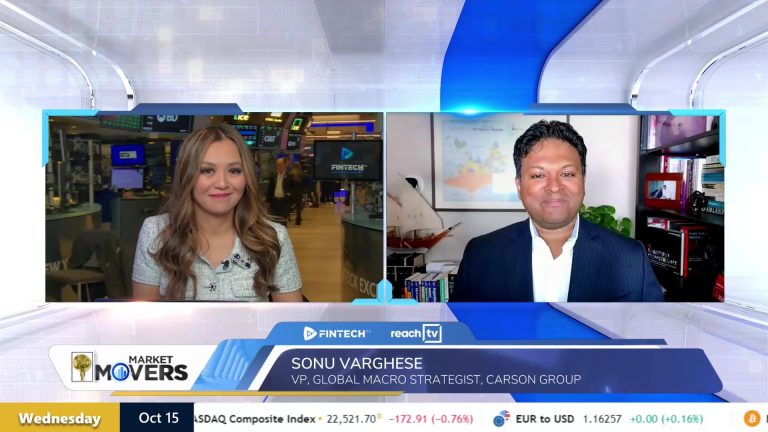
“The U.S. is like, you escalated, so we are going to escalate. China’s like, no, you did it first, so we are going to escalate.” – 02:24
Sonu Varghese, VP, Global Macro Strategist at Carson Group, joins Remy Blaire to discuss the current state of the equity market, which has been exhibiting notable volatility. The market’s erratic behavior is likened to Christmas tree lights, fluctuating between red and green as it responds to various economic signals. Remy highlights Federal Reserve Chair Jerome Powell’s recent remarks, indicating that the central bank is likely to cut interest rates again later this month, despite persistent inflation and a weakening job market.
Sonu elaborates on the macroeconomic factors contributing to the market’s volatility, particularly the ongoing trade tensions between the U.S. and China. He notes that the S&P 500 has experienced a remarkable 35% increase over the past six months, suggesting that the current bull market, which began on October 12, 2022, is showing strong momentum. Sonu expresses optimism that this bull market may continue into its fourth year, historically associated with positive returns.
The conversation shifts to the Federal Reserve’s dual mandate of maintaining stable inflation and maximum employment. Sonu articulates his belief that the Fed will proceed with rate cuts in October and potentially again in December, prioritizing the protection of the labor market amid rising inflation concerns.
Remy and Sonu then explore the burgeoning field of AI-related investments, which are beginning to mirror the growth patterns seen during the dot-com boom. Sonu points out that AI spending now constitutes over 4% of GDP, significantly contributing to economic growth. He discusses the intricate relationships forming between companies like OpenAI and major tech firms, illustrating how these partnerships are driving investment and innovation in the AI sector.
Crypto’s Next Chapter: Tokenized Treasuries, Flash Crash Lessons & Adoption
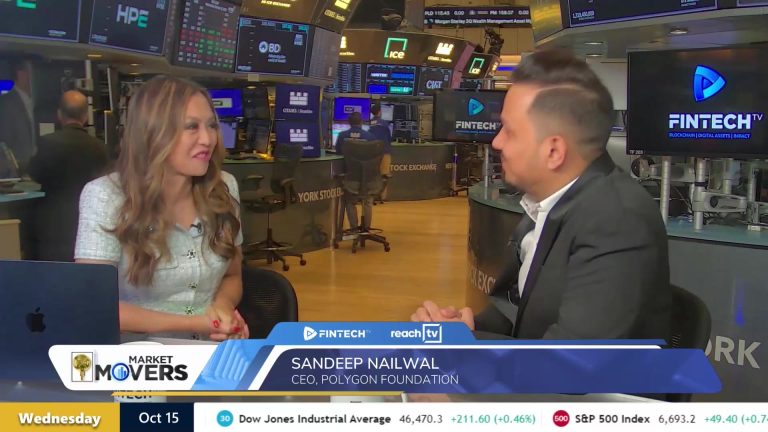
“Stablecoins were able to create this whole catalyst effect and now finally TradFi is understanding that this is not only one particular asset class, it’s basically financial infrastructure.” – 02:01
Sandeep Nailwal, CEO of the Polygon Foundation, joins Remy Blaire at the New York Stock Exchange to discuss the rapid growth in the market for tokenized real-world assets (RWAs), which has surged to nearly $34 billion, reflecting a remarkable 224% increase in 2024 alone. With projections estimating a valuation of $30 trillion by 2034, the implications for traditional finance (TradFi) are significant.
Sandeep shares insights into the increasing institutional adoption of tokenized treasuries and private credit, emphasizing the evolution of crypto from a speculative asset class to a vital financial infrastructure. He highlights the role of stablecoins as tokenized versions of fiat currencies and discusses the trend of tokenizing various financial instruments, including bank deposits and mutual funds, which enhances liquidity and creates new investment opportunities.
The conversation shifts to recent developments in the crypto space, including notable deals such as Circle’s public listing and the New York Stock Exchange’s investment in Polymarket. Sandeep reflects on the recent crypto flash crash, describing it as a chaotic event triggered by a stablecoin’s de-pegging, which led to a cascading effect across the market. He underscores the interconnectedness of the crypto ecosystem and the necessity for robust infrastructure to prevent similar incidents in the future.
Remy and Sandeep also delve into Polygon’s latest upgrade, Rio, which significantly enhances the blockchain’s transaction capacity from 200 to 5,000 transactions per second (TPS). This upgrade positions Polygon as one of the highest throughput chains in the industry, enabling applications like PolyMarket to scale effectively and serve a larger user base. Sandeep discusses the strategic focus on stablecoins and tokenization, which are crucial for driving volume and facilitating payments.
Additionally, they touch on Stripe’s recent launch of subscription services on Polygon, showcasing the platform’s growing utility in the fintech space. Sandeep highlights how major players are increasingly choosing Polygon for their blockchain needs, reinforcing the ecosystem’s commitment to utility over speculation.
Gold vs. Bitcoin: Diverging Paths in Today’s Financial Landscape
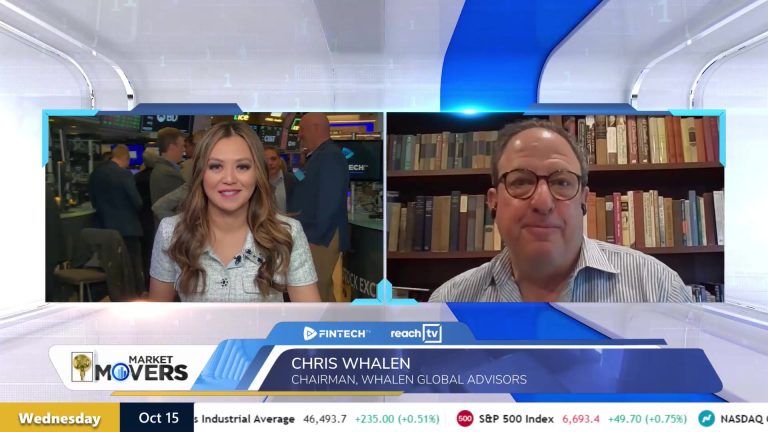
“We’re going to see more surprises in the fourth quarter, especially when it comes to writing off special idiosyncratic exposures.” – 02:35
Chris Whalen, Chairman of Whalen Global Advisors, the current state of Wall Street, highlighting the strong profits being driven by deal-making, trading, and lending at major banks. She notes that Goldman Sachs, J.P. Morgan, Citi, and Wells Fargo have all exceeded expectations, with Goldman on track for a record year and J.P. Morgan aiming to surpass $50 billion in profit once again.
Chris explains that while the deal-making side of the banking sector is thriving, the credit side remains quiet, especially for consumers. He points out that commercial and private equity sectors are facing significant challenges, and many banks are struggling with cost efficiency, achieving only about a 1% return on assets.
The conversation shifts to the dynamics of the markets, where Chris notes that liquidity is flowing back into public markets as private equity cools down. He highlights that while banks are attempting to focus on positive aspects, there are hidden risks, particularly with institutions like Goldman Sachs dealing with losses from private equity positions.
Remy then transitions to a discussion about the contrasting performances of gold and Bitcoin. She notes that gold has been climbing, recently breaking the $4,200 mark, while Bitcoin has experienced a decline following a sell-off. Chris clarifies that gold and Bitcoin are not correlated, with Bitcoin being more closely tied to stock market movements. He advises investors to consider tangible assets like gold and real estate, especially for those who have made profits in the crypto market.
Dubai’s Digital Finance Revolution: Tokenization and Crypto Growth
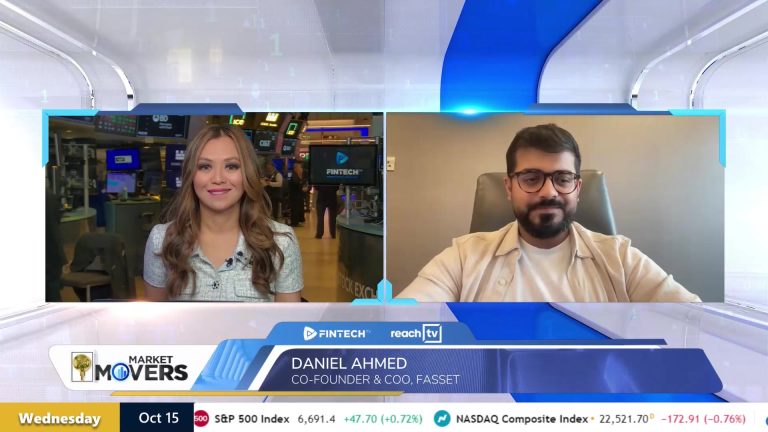
“We believe that Islamic finance should be treated not as a particular niche, but actually as a blueprint for how finance should work in the digital age.” – 00:01:57
Daniel Ahmed, Co-Founder and COO of Fasset, joins Remy Blaire to discuss the dynamic landscape of the global Islamic finance industry, which has recently surpassed $5 trillion in assets and is projected to double by 2030. Despite this significant growth, Remy highlights the ongoing challenges many individuals face in accessing authentic Sharia-compliant financial products, particularly in various regions around the world.
Daniel shares his insights on how inflation and currency devaluation are pushing emerging markets toward stablecoins, which serve as a vital tool for individuals looking to safeguard their savings and facilitate rapid cross-border transactions.
The discussion shifts to the principles of Islamic finance, with Daniel arguing that it should not be viewed merely as a niche but rather as a blueprint for modern finance. He emphasizes the importance of asset-backed financial products, contrasting this with the current state of the cryptocurrency market, which often lacks tangible value. Daniel articulates how Fasset aims to bridge the gap between traditional finance, Islamic finance, and the burgeoning world of digital assets, ultimately fostering sustainable wealth creation for people worldwide.
As the conversation progresses, Remy and Daniel delve into the Middle East, particularly Dubai, which has emerged as a significant player in the digital finance arena. Daniel notes that the region has received approximately $338.7 billion in crypto investments, making it the seventh largest crypto economy globally. He discusses how Dubai is striving to become a leading hub for digital assets through a careful balance of innovation and regulation. Daniel shares insights from his recent engagements with the UAE’s Virtual Asset Regulation Authority, emphasizing the importance of regulatory support in fostering an environment conducive to experimentation and growth.
Bitmine ethereum, Crypto ETFs, Strategy bitcoin, Bitcoin rally?
In this episode of Coin Street headlines, we dive into the latest developments in the cryptocurrency market. Bitmine has made headlines as the world’s largest corporate ether holder, aggressively buying the dip and pushing its total ethereum holdings past 3 million, which accounts for about 2.5% of the total supply. We discuss the implications of the ongoing U.S. federal government shutdown, which has now entered its third week, leaving 16 exchange-traded funds (ETFs) in limbo as the SEC’s decisions are delayed. Strategy has also made a bold move by increasing its bitcoin holdings to over $73 billion, purchasing 220 Bitcoin at an average price of $123,500 each, marking the highest price paid per bitcoin by the firm. Lastly, we analyze how recent market events, including Friday’s flash crash, may impact short-term risk appetite and the potential for a Bitcoin rally, alongside the effects of U.S.-China trade talks and regulatory concerns. Jane King with the latest from the NYSE.
Market Volatility: Analyzing U.S. Stock Futures and Big Bank Earnings
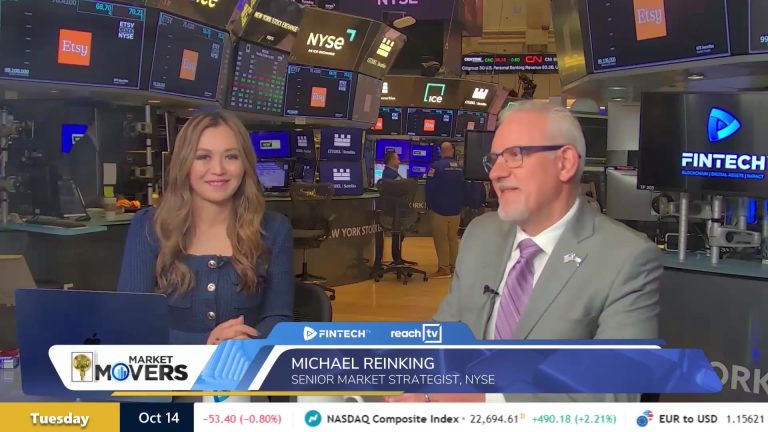
“When you have a sustained period of time where you have that low volatility, you bring those systematic flows back into the market.” – 01:57
Michael Reinking, Senior Market Strategist at the NYSE, joins Remy Blaire, to discuss the current state of the U.S. stock market, focusing on the recent volatility and the implications for major banks as earnings season kicks off.
Michael explains the recent resurgence in market volatility, attributing it to escalating tensions with China regarding rare earth export controls. He notes that after a prolonged period of low volatility, the market is experiencing aftershocks from this volatility shock. Remy and Michael analyze the S&P 500’s performance, particularly its near proximity to key moving averages, which indicates the market’s susceptibility to further fluctuations.
As the conversation shifts to earnings season, Remy emphasizes the strong year-to-date performance of major banks, which have outperformed the S&P 500. Michael shares insights on the mixed responses to the banks’ earnings reports, highlighting the robust capital markets and investment banking activity. He also discusses the importance of provisioning practices in light of recent bankruptcies in the private sector, noting that JP Morgan has taken reserves related to these events.
With the ongoing government shutdown affecting the release of key economic data, Remy and Michael discuss the significance of the upcoming Consumer Price Index (CPI) figure expected before the end of the month. They also look ahead to Fed Chair Powell’s remarks, which could provide clarity on rate cut expectations in the current economic environment.