[stock-market-ticker symbols=" ^NYA;CRYPTO:BTC;CRYPTO:ETH;CRYPTO:USDT;CRYPTO:USDC;CRYPTO:BNB;CRYPTO:ADA;CRYPTO:XRP;CRYPTO:SOL;CRYPTO:DOGE " stockExchange="NYSENASDAQ" width="100%" transparentbackground=1 palette="financial-light"]

Home Blog Page 152

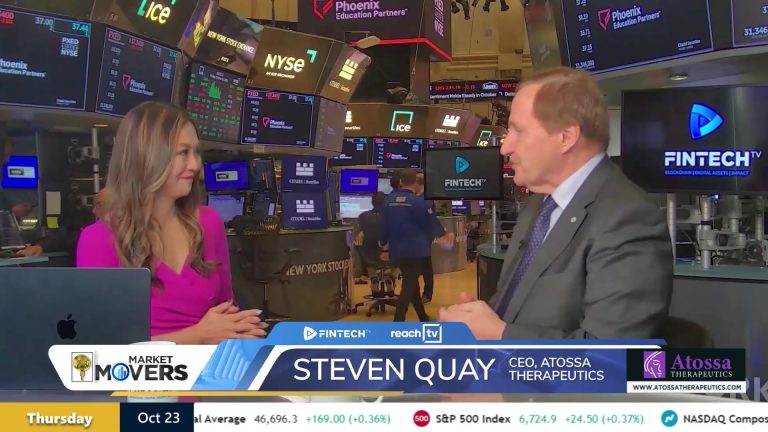
Fighting Breast Cancer: Insights from Atossa Therapeutics CEO Dr. Steven Quay

Remy Blaire engages in a compelling conversation with Dr. Steven Quay, the CEO of Atossa Therapeutics, a clinical-stage biopharmaceutical company focused on developing advanced therapies for breast cancer and related conditions. As October marks Breast Cancer Awareness Month, the discussion highlights the ongoing challenges and advancements in the fight against this pervasive disease.

Dr. Quay begins by addressing the significance of breast cancer, emphasizing the urgency of Atossa’s mission. He introduces the company’s lead drug, V-endoxifen, which is currently seeking FDA approval. Dr. Quay outlines the critical milestones ahead, including anticipated guidance from the FDA and updates on their manufacturing processes, which he believes will position Atossa for effective progress in the coming months.

The conversation delves into the innovative approach Atossa is taking with V-endoxifen. Dr. Quay explains that the company has extracted the most effective component of tamoxifen, a long-standing treatment for breast cancer, to create zeindoxifen. This targeted strategy aims to reduce the side effects commonly associated with tamoxifen, offering a potentially safer alternative for patients.

Remy inquires about Atossa’s regulatory strategy, and Dr. Quay elaborates on the 505B2 process, a pathway that allows the FDA to utilize existing data on tamoxifen to evaluate the safety and efficacy of zeindoxifen. He reassures listeners about the promising safety profile observed in clinical trials, where over 700 women have participated, showing significantly fewer side effects compared to traditional treatments.

The discussion also covers Atossa’s competitive advantages, including a strong patent portfolio and trade secrets related to their manufacturing processes. Dr. Quay highlights the company’s financial health, reporting $58 million in cash with no debt, and emphasizes the importance of their experienced team in driving the company’s success.

In a succinct elevator pitch, Dr. Quay articulates the opportunity Atossa has to replace existing treatments for the 1.7 million women currently taking tamoxifen or aromatase inhibitors. He encourages listeners to stay informed by visiting Atossa’s website and reviewing their regulatory filings.

This content is brought to you by Atossa Therapeutics.
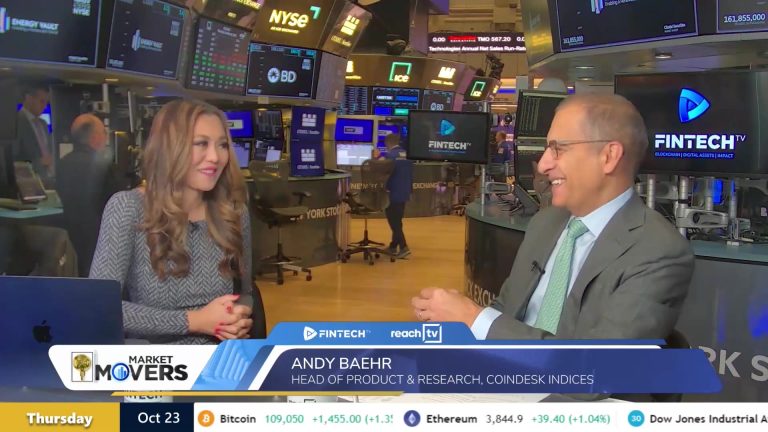
The State of Crypto: Slow Money vs. Fast Money in Today’s Market

“We need the government to reopen. We need some more regulatory progress.” – 03:45

Andrew Baehr, Head of Product & Research at Coindesk Indices, joins Remy Blaire to discuss the contrasting narratives within the crypto market, distinguishing between the “slow money” story, which reflects institutional growth and consolidation, and the “fast money” story, characterized by volatility and uncertainty.

Andy discusses recent mergers and acquisitions in the crypto space, such as Coinbase’s acquisition of Echo and FalconX’s purchase of 21Shares, indicating a strong institutional interest in the sector. He also notes the significant number of ETF filings, with over 150 submissions, including ProShares’ recent filing for a CoinGest 20 ETF, which signals ongoing growth and development in the market.

However, the conversation takes a turn as Andy addresses the challenges currently facing the market. He describes the market as feeling “tender,” particularly in the aftermath of the October 11th event, which he refers to as a “super liquidation event.” This incident exposed vulnerabilities in how centralized exchanges manage extreme market conditions, contributing to a cautious sentiment among investors. Additionally, the ongoing government shutdown and diminishing hopes for regulatory clarity, particularly regarding the Clarity Act, further weigh on market sentiment.

Remy emphasizes the importance of maintaining perspective, noting that while Bitcoin and Ether have experienced recent pullbacks, they remain significantly up year-to-date. Even gold is mentioned as a resilient asset, maintaining a level above 4,000 and showing over a 50% increase for the year. As they look ahead, Andy highlights the need for regulatory progress and the reopening of the government as potential catalysts for market recovery.

Tether growth, Fetch bounty, Coinbase purchase, Cuomo crypto

0

In this episode of Coin Street headlines, we dive into the latest headlines shaping the world of cryptocurrency and blockchain technology. U.S. dollar-pegged stablecoin Tether has hit an impressive 500 million users, representing about 6.25% of the global population. We discuss the implications for those excluded from traditional banking systems. The ongoing conflict between Fetch.ai CEO Humayun Sheikh and the Ocean Protocol Foundation intensifies as Sheikh offers a $250,000 bounty for information regarding alleged token misappropriation. Coinbase moves closer to becoming a one-stop shop for crypto investors with its recent $375 million acquisition of blockchain fundraising platform Echo, enabling private and public token sales. Former New York Governor Andrew Cuomo unveils his proposal to transform New York City into a crypto hub, but he faces tough competition from Democrat frontrunner Zohran Mamdani. Jane King with the latest from the NYSE

Rate cuts and job losses: Unpacking the Federal Reserve’s impact on the economy

David Stryzewski is joined by Danielle DiMartino Booth, the CEO of QI Research to discuss the recent Federal Reserve rate cut of 25 basis points and its implications for the economy. Danielle provides her sharp insights into the current economic landscape, emphasizing the importance of focusing on what is happening now rather than just historical data. They discuss the significant job losses and the alarming rise in bankruptcies, highlighting the disconnect between Wall Street’s optimism and the struggles faced by everyday Americans.

Danielle also sheds light on the flaws in the Bureau of Labor Statistics’ data collection methods, particularly the birth-death adjustment, which may not accurately reflect the current business environment. Discover the implications of these revisions and the challenges posed by rising interest rates, especially for families and businesses that have relied on cheap money for years.

The conversation touches on the housing market, the impact of baby boomer retirements, and the potential for a shift in investment strategies as interest rates fluctuate. Ultimately, they emphasize the need for a re-engagement of the private sector to create high-paying, full-time jobs and address the widening inequality gap exacerbated by current monetary policies.

Unlocking Value: Insights from Hub71’s Head of Value Creation

Vince Molinari welcomes Basma Albadi Aldhaheri, the Head of Value Creation at Hub71, at the Hub71 Impact Event 2025 in Abu Dhabi. Their conversation explores the pivotal role of Hub71 in fostering innovation and supporting startups in the region.

Vince begins by highlighting the momentum at the event and the insightful discussions taking place. He expresses his excitement about interviewing Basma, who oversees the unlocking of value within Abu Dhabi’s ecosystem. Basma outlines her responsibilities, which focus on four main pillars: access to market, access to capital, access to government, and access to talent. Each pillar is essential for enabling startups to thrive and innovate.

Basma emphasizes Abu Dhabi’s reputation as the “capital of capital,” explaining how Hub71 connects global investors with local startups. She discusses the ongoing fundraising roadshow at the event, which aims to attract vital capital for emerging businesses. This initiative showcases the strategic advantages of Abu Dhabi, particularly in the realm of innovation and investment.

The conversation shifts to the Hub71 plus AI program, which Basma describes as a significant expansion of their efforts to support startups in artificial intelligence. She reveals that the program has onboarded 24 partners, including key players like the Advanced Technology Research Council and Beko Capital. These partnerships provide startups with essential resources, such as compute power and financial backing.

As they delve deeper, Basma shares insights into the rapidly growing life sciences sector in Abu Dhabi, which is projected to reach over 400 billion dirhams. She highlights the collaborative efforts between regulators and innovators that position Abu Dhabi as a health innovation hub, creating a supportive environment for health tech startups.

Vince concludes the segment by expressing his enthusiasm for the energy and innovation emerging from Hub71 and the broader Abu Dhabi ecosystem. He also looks forward to the upcoming Abu Dhabi Finance Week 2025, scheduled for December 8th through 11th, promising more insights and developments from the UAE.

Navigating Market Volatility: Strategies for Long-Term Investment

“The focus on upside opportunity with risk management is really the why for the active-based ETFs.” – 03:07

Remy Blaire engages in a thought-provoking discussion with Alexander Flecker, the Chief Revenue Officer at Measured Risk Portfolios. The conversation centers around the current state of market volatility and its implications for investment strategies, particularly focusing on actively managed ETFs and options-based ETFs.

Remy begins by highlighting the resilience of U.S. equities, noting that despite significant market fluctuations, the S&P 500 has seen a year-to-date increase of approximately 15%. Alexander elaborates on the importance of maintaining long-term compounding returns while also emphasizing risk mitigation strategies. He points out that the CAPE ratio is at its highest level since 1999, which has led to hesitancy among individual investors regarding their market participation.

The discussion shifts to the growing trend of active professional management within the ETF space. Alexander explains that while active ETFs currently represent only 8.5% of the total market share, they have captured about 30% of net fund flows year over year. He highlights options-based ETFs as a particularly popular strategy, offering tailored risk-reward profiles and leverage opportunities that cater to individual investors’ specific risk tolerances.

Remy and Alexander also explore the appeal of short-duration U.S. Treasuries as a risk-free asset class. Alexander emphasizes that in the MRP Synthequity ETF, a significant portion of assets is allocated to these Treasuries, providing principal stability and allowing investors to feel secure while still pursuing growth through a 15% allocation of call options that replicate S&P 500 performance.

Throughout the episode, they discuss the diverse range of investors interested in the Synthequity ETF, from retirees seeking to maintain growth to younger investors with immediate liquidity needs. Alexander shares key takeaways from the rapid growth of this strategy, underscoring the demand for dynamic, active management that can adapt to changing market conditions.

As the conversation draws to a close, Remy and Alexander address the importance of managing downside risk, especially with an upcoming critical earnings season and potential economic shifts. Alexander stresses the need for vigilance regarding corporate earnings, geopolitical risks, and Federal Reserve policy changes.

Exploring the Future of Blockchain: Insights from the Cardano Foundation CEO

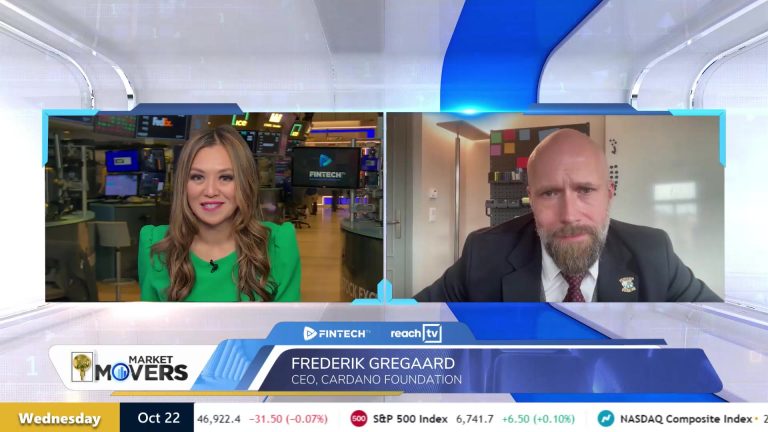
Remy Blaire engages in a compelling discussion with Frederik Gregaard, the CEO of the Cardano Foundation. The segment begins with an overview of the U.S. Strategic Crypto Reserve, which includes major cryptocurrencies such as Bitcoin, Ethereum, Solana, Ripple, and Cardano. Remy highlights Cardano as a third-generation proof-of-stake blockchain platform, known for its focus on scalability, interoperability, and sustainability, with a market cap nearing $23 billion.

Frederik explains the role of the Cardano Foundation as a nonprofit organization dedicated to advancing the Cardano ecosystem. He describes Cardano as the world’s largest decentralized autonomous organization (DAO), managing a treasury of $1.2 billion with full voting capabilities. The foundation’s mission revolves around three key areas: measuring and enabling adoption for the betterment of the world, ensuring the sustainability of public blockchain infrastructure, and collaborating with policymakers and regulators to facilitate the ongoing use of blockchain technology.

As the conversation shifts to the upcoming Cardano Summit in Berlin, scheduled for next month, Frederik shares insights about the event. He notes that the summit will bring together a diverse group of experts from various sectors, including representatives from major companies like Volvo, Orange, Novo Nordisk, and Johnson & Johnson, as well as organizations such as the United Nations and Boston Consulting Group. This unique gathering aims to explore the future of blockchain technology beyond cryptocurrencies, particularly at the intersection of artificial intelligence and other advanced technologies.

Remy and Frederik also discuss the current state of the crypto market, noting a pause in the bull cycle. Frederik provides his perspective on the entry of institutional capital into the market, indicating a positive sentiment towards Cardano among institutional investors. He mentions the importance of digital asset treasuries and other vehicles that allow these investors to gain exposure to the asset class.

The conversation then shifts to regulatory developments, particularly the recent passage of the Genius Act in the U.S., which has significant implications for stablecoin supporters. Frederik praises the clarity this legislation brings, suggesting it will foster innovation and job creation in the U.S. compared to Europe, where regulatory efforts like the MECA Act have faced challenges.

Robotic Fish and Environmental Impact: Insights from SNAPP Ocean Data Solution

Ornella Hernandez hosts a compelling discussion at Hub71’s Impact Event 2025 in Abu Dhabi, an event dedicated to fostering innovation, sustainability, and growth. The focus is on showcasing breakthrough ideas that can significantly influence the future of business and society.

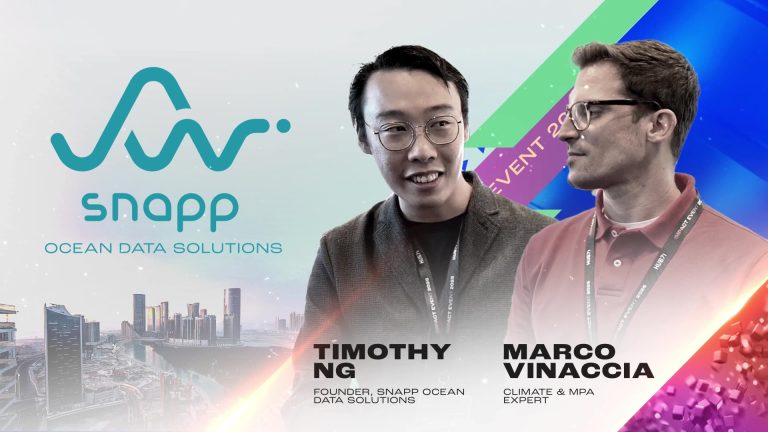
Ornella interviews Timothy Ng, Founder & CEO of SNAPP Ocean Data Solutions, and Marco Vinaccia, a Climate & Marine Protected Areas Expert. The conversation centers around their mission to preserve the world’s oceans through innovative technology. Timothy and Marco introduce their groundbreaking creation: a robotic fish designed to collect data from coastal ecosystems, particularly in regions that are difficult to access. This data is crucial for protecting nature from pollution and ensuring the health of marine environments.

As the discussion unfolds, Timothy and Marco express their excitement about the event, highlighting their goals of networking with other founders and potential partners to expand their impact globally. They emphasize their commitment to helping coastal communities and enhancing biodiversity around the world.

Ornella probes deeper into the workings of their technology, learning that their robotic fish has set Guinness World Records for being the fastest of its kind. Timothy explains how they leverage high-tech solutions to monitor vital ecosystems, including seagrass beds, mangroves, and oyster beds, ultimately aiming to improve the livelihoods of local communities.

The conversation shifts to the importance of data in understanding the current state of the oceans. Timothy stresses that many ecosystems can reach a critical threshold beyond which recovery is impossible. By gathering and analyzing data, SNAPP aims to create models that inform conservation efforts and engage with governments and conservationists to drive actionable change.

On a personal level, both Timothy and Marco share their perspectives on what impact means to them. Timothy reflects on his journey in engineering, driven by a desire to solve environmental challenges for future generations. Marco echoes this sentiment, viewing the climate crisis as the defining challenge of their time and aspiring to make a meaningful contribution to global change.

Market Rally: Big Tech and Earnings Drive Stocks to New Highs

“Without any government-supporting data, which is actually pretty nice and refreshing, that we’re actually trading companies on what they’re worth.” – 01:39

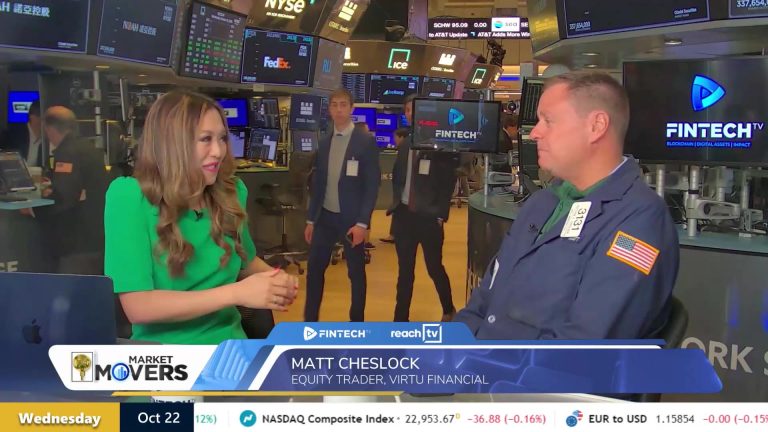
Remy Blaire welcomes Matt Cheslock, an equity trader at Virtu Financial, to discuss the current state of the U.S. stock market as it enters a busy week for earnings reports. The episode begins with an overview of the market’s performance, highlighting that major stock averages are climbing back to record highs, with the Dow surpassing the 47,100 mark. Despite some volatility, indicated by the VIX hovering around 18, there is a sense of optimism among investors.

Remy and Matt delve into the ongoing earnings season, noting that nearly 80 companies in the S&P 500 have reported higher-than-expected results. Matt points out a shift in focus from tariff discussions to a broader analysis of the economy, citing significant moves from companies like GM and 3M that have positively impacted market indices. He emphasizes that investors are now looking beyond AI trends and are starting to engage with traditional stocks, including a resurgence of interest in meme stocks.

The conversation also touches on the recent pullback in precious metals, particularly gold, which, despite its decline, remains up 55% year-to-date. This resilience is contrasted with the performance of major stock averages and cryptocurrencies, indicating a complex market landscape.

As they look ahead to the upcoming Consumer Price Index (CPI) report, Matt expresses that the data will be heavily analyzed, but the overall sentiment from companies like Netflix and 3M suggests a stable economic footing. He notes that even with concerns about consumer demand, the forecasts from these companies remain positive.

Remy and Matt also preview earnings reports from notable companies such as IBM and Tesla, discussing the potential for a rotation of investment into established names as year-end portfolio adjustments approach. They consider the implications of the upcoming Fed meeting and the APEC summit on market dynamics.

Crypto meeting, Cleanspark expansion, Bolivia blockchain, Brain onchain

0

In this episode of CoinStreet, we dive into cryptocurrency and blockchain landscape. As the U.S. government approaches its fourth week of shutdown, lawmakers are set to meet with crypto executives to discuss the long-awaited crypto-to-market structure bill. This roundtable, hosted by Senate Democrats, will feature industry leaders from major companies like Coinbase, Kraken, Circle, and Ripple, aiming to create a comprehensive federal framework for digital assets.

We also highlight CleanSpark, the fifth largest Bitcoin mining company, which saw its shares soar by 13% following the announcement of its strategic expansion into artificial intelligence. With the appointment of Jeffrey Thomas as Senior Vice President of AI Data Centers, CleanSpark is looking to diversify its revenue streams and enhance its long-term cash flow potential.

In international news, Bolivian President-elect Rodrigo Paz is planning to combat government corruption through the use of blockchain technology. With a focus on public procurement, Paz aims to implement blockchain and smart contracts to improve transparency in governance. Additionally, we explore the concept of decentralized science and how it could revolutionize the way we handle neural data, ensuring that individuals maintain control over their information. Jane King has the latest from the NYSE.