

Who should make money out of opinions? (Ok, I am right now…but still, let’s look into it.)
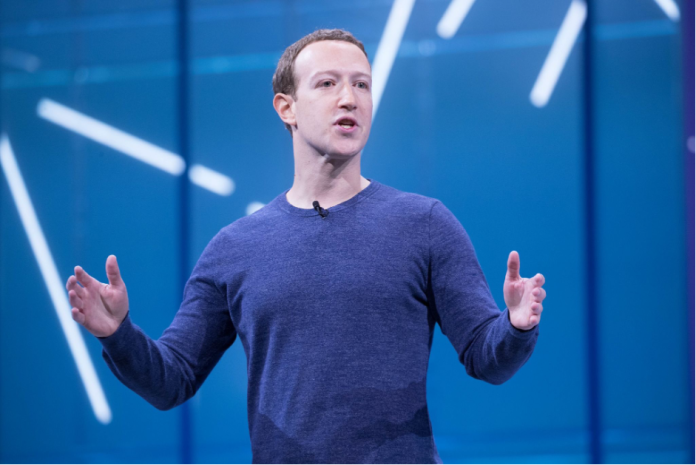
Kalshi CEO Tarek Mansour has described his company’s long-term vision as wanting “to financialize everything and create a tradable asset out of any difference in opinion.” Now Mark Zuckerberg wants in. Meta has directed a small team to build a prediction markets app called Arena, initially using a points-based system, with real-money wagering not ruled out.
There is a certain symmetry here. Zuckerberg kicked off his first successful venture as a platform for rating the physical attractiveness of Harvard women. So here he is, going back to his roots by looking to monetize opinions further.
The company that controls Instagram and Facebook controlling prediction markets on political and world events is not a small thing. It is a company with the ability to shape the information environment it is simultaneously betting on. That is not a conspiracy theory. It is a business model.
In a world where social media is the primary way most people receive information, where opinions are increasingly polarized, often with the influence of highly siloed social media realities, should the company who runs the platform of this information also make money off our differences of opinion?
The information environment is not neutral. Apart from strong siloes creating differing realities, bots have been documented amplifying specific narratives across platforms to measurable public effect (if you have not yet listened to Tortoise Media’s Who Trolled Amber?, I implore you to). When a contract settles based on an event that can be swayed by public opinion, and that perception is shaped by the same platforms running the contract, the conflict of interest is surely worth addressing.
Fintech Business News
Meta is building a standalone prediction market app called Arena
Mark Zuckerberg has reportedly directed a small team to build Arena, a standalone prediction market app using a points-based system rather than real-money wagering (though real-money betting has not been ruled out) with Meta’s 3.56 billion daily active users as the distribution engine.
The announcement sent Robinhood and DraftKings shares lower. Unlike Polymarket and Kalshi, Arena’s points design sidesteps US gambling regulation, for now. Meta’s scale means any pivot to real-money wagering would immediately become a regulatory event of the first order.
Chainlink launches cross-border FX settlement initiative with 47 banks
Chainlink joined Project Pangea, a cross-border FX settlement initiative combining Qivalis (37 European banks) and UniKA (10+ South Korean banks) representing over $10 trillion in assets, targeting near-instant atomic payment-versus-payment settlement of regulated euro and KRW stablecoins across a $150B annual trade corridor, acting as middleware over existing Swift and ISO 20022 systems rather than replacing them.
Live transactions are targeted within 12 months. The corridor handles $9.6T in daily global FX volume. Project Pangea is the most bank-heavy stablecoin settlement initiative to date.
UBS demonstrates live compliance checks on Ethereum transactions
UBS demonstrated an implementation of programmable compliance checks applied directly to transactions crossing the Ethereum blockchain, showing that anti-money laundering, sanctions screening, and counterparty eligibility rules can be enforced at the transaction layer without requiring off-chain intermediaries.
The demonstration is part of UBS’s broader digital asset infrastructure development and is significant because it addresses the core compliance objection that has kept G-SIBs from deploying on public chains at scale.
Franklin Templeton closes 250 Digital deal and launches Franklin Crypto
Franklin Templeton closed its acquisition of 250 Digital and created Franklin Crypto, a new division combining 250 Digital’s investment team and liquid cryptocurrency strategies with Franklin Templeton’s $1.7T in global distribution, co-led by Christopher Perkins and Seth Ginns.
Franklin Templeton will invest its own capital in the strategies. The launch follows a wave of asset manager moves into crypto active management: BlackRock, Fidelity, and Grayscale have all expanded crypto investment teams in 2026 as institutional demand accelerates.
Circle publishes a USDC machine payments spec, a technical standard for AI agent commerce
Circle published the USDC Machine Payments Protocol specification, a technical standard defining how AI agents should initiate, authenticate, route, and settle USDC payments across chains, covering agent identity, spending authorization, crosschain bridging, and compliance hooks.
The spec is designed for adoption by wallet providers, AI frameworks, and DeFi protocols building agentic commerce products, and positions Circle as the standards body for machine-to-machine dollar payments rather than just a stablecoin issuer.
Policy Watch
Democrats demand Senate hearing on $500M UAE stake in Trump’s crypto venture
Five Senate Democrats led by Elizabeth Warren sent a letter to Republican leadership Tuesday demanding immediate hearings and sworn testimony from Trump administration officials on a reported $500 million deal in which an Abu Dhabi investment vehicle tied to Sheikh Tahnoon bin Zayed Al Nahyan secretly acquired a 49% stake in World Liberty Financial four days before Trump’s inauguration, with $218 million paid upfront to entities tied to the families of Trump and Middle East envoy Steve Witkoff.
The senators linked the investment to subsequent policy decisions, including $1.4 billion in UAE arms sales and the reversal of AI chip export controls granting the UAE access to advanced NVIDIA chips, and called it “something unprecedented in American politics: a foreign government official taking a major ownership stake in an incoming president’s company.” Republicans control which hearings proceed.
CLARITY Act: White House signals ethics deal is within reach, but three other fights remain open
Ethics negotiations between the White House and Senate Democrats are continuing, with Democratic holdouts repeatedly returning to the table even as they reject specific proposals, with White House adviser Patrick Witt indicating that any restrictions must apply broadly across government, not target the president or his family directly.
Three other sticking points also remain unresolved ahead of a Senate floor vote: settling Agriculture Committee Democrats’ outstanding concerns; resolving CFTC commissioner vacancy language; and agreeing on DeFi developer safe-harbor protections under Section 1960.
The Digital Chamber of Commerce’s Perianne Boring told a Senate Commerce hearing the bill is essential to American competitiveness, while a coalition of Catholic leaders separately urged senators to add anti-trafficking safeguards before passage.
EU Parliament committee approves digital euro, opens trilogue, on the same day the US banned its own
The European Parliament’s ECON Committee voted 43-14 Tuesday to approve the legal framework for a digital euro, ordering immediate trilogue negotiations with EU member states and the European Commission to finalize the enabling regulation. The project was framed explicitly as a response to Visa and Mastercard’s 61% share of eurozone card payments and the dominance of dollar-backed stablecoins.
The vote came hours after the U.S. Senate voted to ban a Fed-issued digital dollar through 2030, making the transatlantic divergence in public digital money policy official: Washington is delegating digital payments to the private sector, while Brussels is building a state-backed infrastructure layer targeting a 2029 launch date.
Fairshake wins Maryland with $5.5M, but loses pro-crypto New York incumbent
Fairshake-affiliated super PAC Protect Progress spent $5.5 million to back Democratic state delegate Adrian Boafo in Maryland’s 5th Congressional District, moving him from fifth place to primary winner in a crowded 24-candidate field for the seat vacated by former House Majority Leader Steny Hoyer.
The win extends the crypto industry’s bipartisan midterm strategy after last week’s Texas and Alabama results; however, in New York’s 15th District, pro-crypto incumbent Rep. Dan Goldman, who voted for both the GENIUS Act and the CLARITY Act, lost his primary to Brad Lander despite $1.4 million in Fairshake support.