

Canton is the chain behind JPMorgan’s deposit token, DTCC, Broadridge’s $400 billion repo book, HSBC, Visa, and a growing roster of the biggest names in global finance. It describes itself as a public permissionless blockchain. But is it? Yuval Rooz, co-founder and CEO of Digital Asset, faces off against Alex Gluchowski, co-founder and CEO of Matter Labs, and Dragonfly managing partner Haseeb Qureshi in a live debate. The charges range from foundational: Canton cannot enforce financial rules without a trusted third party, its validators are permissioned in everything but name, and there is no universally shared ledger. Rooz fires back on all of it and, at one point, concedes something that may surprise you. If the label matters as much as the technology, this episode will force you to decide what blockchain actually means, and whether that answer has consequences for the institutions staking their infrastructure on it.
FINTECH.TV and Comercio TV Launch Pulso del Mercado, The First Daily Live Spanish-Language Financial Show on the Floor of the New York Stock Exchange
New daily show debuts in late May, bringing Spanish-language financial news and market analysis to a global audience of millions from Wall Street’s most iconic stage
NEW YORK, NY / ACCESS Newswire / April 9, 2026 / FINTECH.TV, the global broadcasting platform for entrepreneurs and investors headquartered at the New York Stock Exchange, today announced a partnership with Comercio TV to launch Pulso del Mercado, the only live daily Spanish-language financial show produced and broadcast live from the floor of the New York Stock Exchange. The show is set to debut in late May 2026.

Pulso del Mercado will bring daily live market coverage, blockchain and digital asset news, and expert analysis to Spanish-speaking investors and entrepreneurs across the United States, Latin America, and the world.
A New Voice for a Global Audience
Spanish is the second-most-spoken language in the United States and one of the most widely spoken languages in the world, yet Spanish-speaking investors have long been underserved by mainstream financial media. Pulso del Mercado changes that. Produced from the same marquee NYSE studio that anchors FINTECH.TV’s global broadcast operation, the show will deliver daily live coverage with the credibility, access, and production quality that audiences expect from Wall Street’s most recognized address.
The show will cover markets, blockchain, digital assets, AI, and global finance, with a perspective and voice built for the Spanish-speaking community. Pulso del Mercado will air on Comercio TV and its platforms, not only in the US, but globally. (Spectrum, Xfinity, Hisense Channels, Plex, Xiaomi TV+, Whale TV+, Canela TV, Claro TV in PR and Dominican Republic, Altice in Dominican Republic, among others.)
“The launch of Pulso del Mercado is one of the most significant things we have done at FINTECH.TV,” said Vince Molinari, Founder and CEO of FINTECH.TV. “There are tens of millions of Spanish-speaking investors and entrepreneurs who deserve the same quality of financial coverage that English-language audiences have always had access to. Partnering with Comercio TV to make that happen, live from the NYSE floor, is exactly the kind of mission-driven work this platform was built for.”
“Pulso del Mercado is something the Spanish-speaking community has needed for a long time,” said Leiyan Cotayo, Co-Founder of Comercio TV. “We have always believed that language should never be a barrier to understanding the markets or building wealth. To be able to produce this show live from the New York Stock Exchange, in partnership with FINTECH.TV is a statement about who belongs in these conversations. We are proud to open that door.”
Pulso del Mercado premieres in late May 2026. Sponsorship and partnership opportunities for the launch are available now at [email protected]
About FINTECH Media Group
FINTECH Media Group is a global media company that owns and operates FINTECH.TV and Breakout. FINTECH.TV is the global broadcasting platform for entrepreneurs and investors, and the first truly global, cross-exchange financial media network. Broadcasting from studios at the New York Stock Exchange, Dubai, and Abu Dhabi, with several more in development, FINTECH.TV covers the latest news and perspectives on finance, blockchain, AI, and sustainability investing through live broadcasts, exclusive interviews, and thought-leadership content. Breakout is a real-time social audio and messaging platform with users in over 24 countries, empowering people to access information, share insights, and engage in live conversations. Together, FINTECH Media Group connects global audiences with the people shaping the future of finance and innovation.
About Comercio TV
COMERCIO TV is a global business and financial news network accessible to Spanish-language audiences globally, designed to make the world of money, markets, and entrepreneurship accessible to everyone. Broadcasting 24/7 across traditional TV and streaming platforms, it delivers real-time insights, expert analysis, and practical advice in a clear, engaging format.
Follow FINTECH.TV: @FINTECHTVGLOBAL
Follow COMERCIO.TV: @COMERCIOTV
###
Media Contact: Troy McGuire | [email protected] |
Inside Wall Street’s Q2 Market Rebound
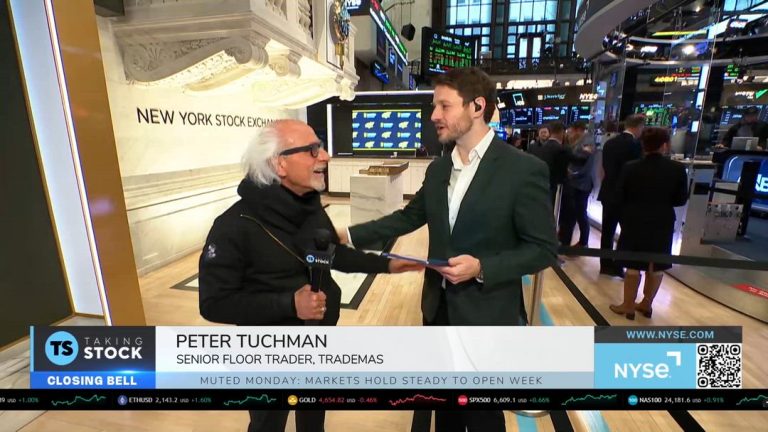
Veteran NYSE trader Peter Tuchman joins the conversation to break down the market’s strong start to Q2, the return of investor confidence, and why fresh money may already be rotating back into stocks. With the S&P 500, Nasdaq Composite, and Dow Jones Industrial Average showing resilience, he explains why traders may be looking past the headlines and positioning for a fast rebound if sentiment turns.
The interview also dives into oil prices, geopolitical uncertainty, corporate earnings, and why markets can reverse quickly when fear peaks. Peter shares his take on investor psychology, short covering, and the lessons traders may be applying from last year’s market moves as they look for the next major upside turn.
Celebrating 100 Years of Business Excellence: Wichita State University’s Journey
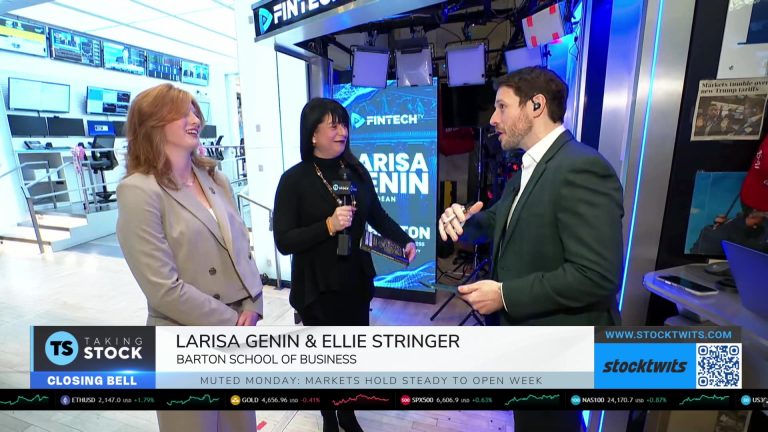
Wichita State University is celebrating 100 years of business excellence, and this special conversation from the New York Stock Exchange highlights what sets the Wichita State University’s Barton School of Business apart on a national stage. Larisa Genin and Ellie Stringer discuss the school’s legacy, its student-centered mission, and how applied learning has become a defining part of the Barton experience.
The conversation also dives into how the school prepares students for real-world careers through hands-on investing, broad business curriculum, and practical learning opportunities that go beyond the classroom. From the Student Managed Investment Fund to career-building experiences, this interview showcases how Wichita State is shaping the next generation of business leaders.
How the Middle East Is Reshaping Global Sports
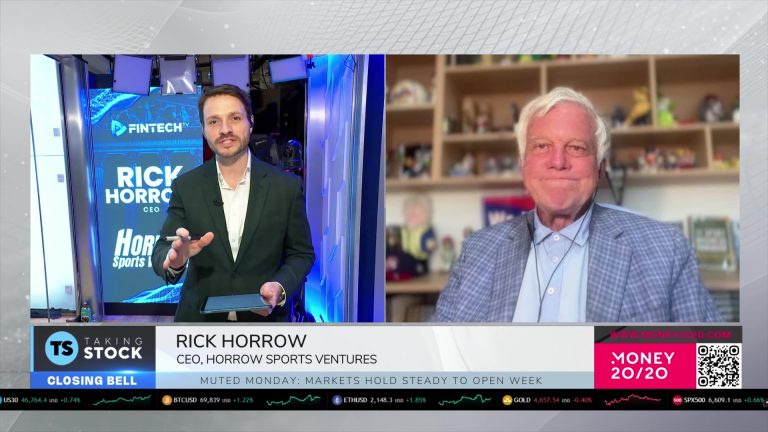
Sports and business are becoming more intertwined than ever, and in this conversation, Rick Horrow of Horrow Sports Ventures breaks down the biggest trends shaping the global sports investment landscape. From venture capital and media rights to large-scale infrastructure spending, he explains why sports continues to attract major capital even during periods of geopolitical uncertainty.
The discussion also looks at the Middle East’s growing role in the global sports economy, including Saudi Arabia’s 2034 World Cup plans, Qatar’s long-term sports strategy, and the UAE’s ongoing investment in major events and tourism-driven infrastructure. Rick shares why investors still see sports as a resilient long-term business, despite current instability in the region.
The Ripple Effect: How Rising Oil Prices Are Shaping the Economy
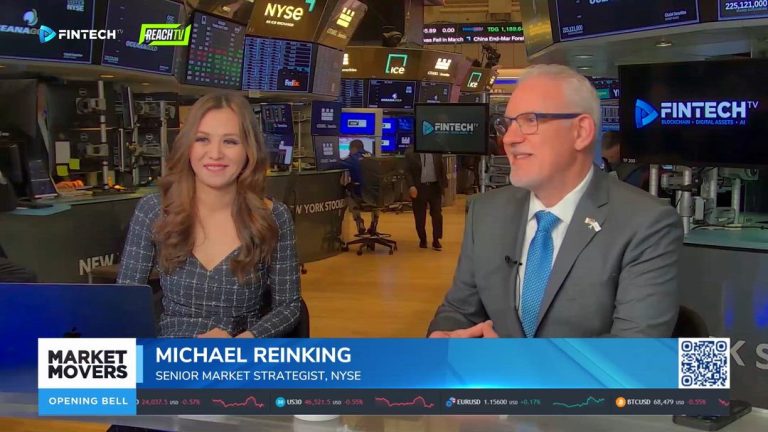
Michael Reinking, Senior Market Strategist at the New York Stock Exchange, joins Remy Blaire to dive into the current state of the markets, particularly focusing on oil prices and stock futures amid ongoing tensions in the Middle East. With a looming deadline this evening, we discuss how these geopolitical factors are influencing market sentiment.
We reflect on the recent jobs report, which showed 178,000 jobs added in March, but also highlight the volatility in labor market data over the past few months. Michael emphasizes the importance of upcoming inflation reports, particularly the PCE and CPI, as we assess the impact of a significant spike in oil prices on the broader economy.
We also touch on wage growth in the context of rising gasoline prices, with Michael noting that the inflationary pressures from oil are likely to persist. He shares insights on consumer spending trends and the potential effects of the ongoing conflict in the Middle East on the economy.
As we look ahead to earnings season, we discuss the expectations for earnings growth across various sectors and how recent market corrections may have affected valuations.
The U.S. Dollar’s Future: Balancing Geopolitical Risks and Financial Stability
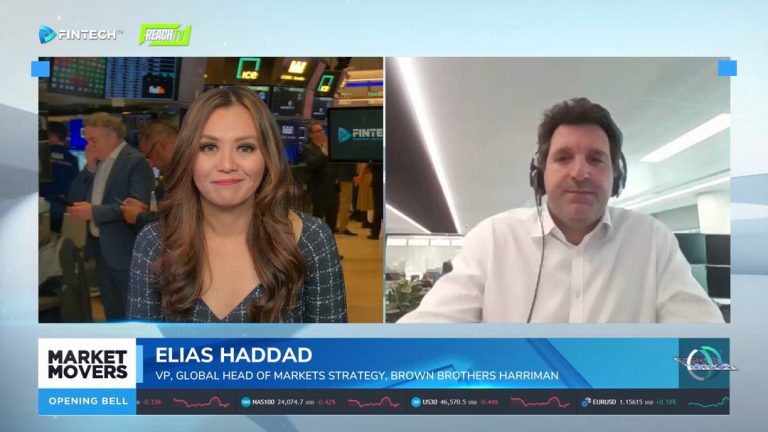
Elias Haddad, VP & Global Head of Markets Strategy at Brown Brothers Harriamn, joins Remy Blaire to discuss the current state of the U.S. dollar and its interactions with global currency markets amidst ongoing geopolitical tensions, particularly the war in Iran.
Elias highlights that the U.S. dollar index is trading flat to mixed, hovering just below the $100 level, while the ripple effects of the conflict in Iran are causing significant volatility. With President Trump’s deadline for a ceasefire approaching, the market is in a wait-and-see mode, particularly regarding the Strait of Hormuz. Elias emphasizes that as long as Iran controls this strait, energy prices will remain at risk, which could lead to prolonged financial stability risks and keep central banks trapped in high-interest rate policies.
We also discuss the narrowing cross-currency basis, indicating increasing costs for borrowing U.S. dollars in the forward market, which could pressure foreign investors to seek dollar liquidity. Elias notes that while Central Banks are adjusting their rate expectations higher, the dollar is currently trading above levels implied by these rate differentials, suggesting a neutral outlook for the currency.
Analyzing the Current State of Employment in America with Laura Ullrich
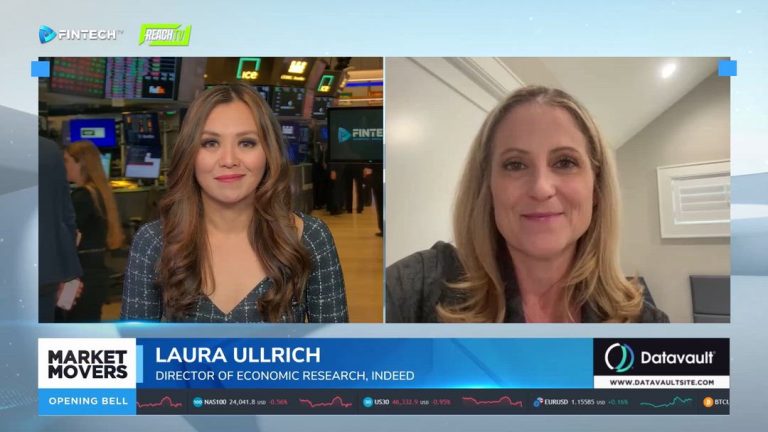
Laura Ullrich, Director of Economic Research at Indeed, joins Remy Blaire to have a conversation on the latest U.S. labor market data, which shows a rebound in nonfarm payrolls with the addition of 178,000 jobs and a surprising drop in the unemployment rate to 4.3%. Laura cautions that the underlying foundation of this growth appears shaky due to month-to-month volatility.
We discuss the implications of recent shifts in how we evaluate job growth, particularly in light of changing demographics and immigration patterns. Laura highlights that the new break-even employment rate could be as low as zero or as high as 30,000 jobs per month, a significant change from the previous benchmark of 150,000 jobs.
Additionally, we explore a significant structural shift in the workforce: for the first time, more jobs are held by women than men in the U.S. economy. This change is attributed to declining male labor force participation and growth in sectors like healthcare, which predominantly employ women. Laura emphasizes the need for employers to rethink their long-term planning in light of this trend, as it could impact family dynamics and wage structures.
Gas Prices on the Rise: Understanding the Impact of Global Conflicts
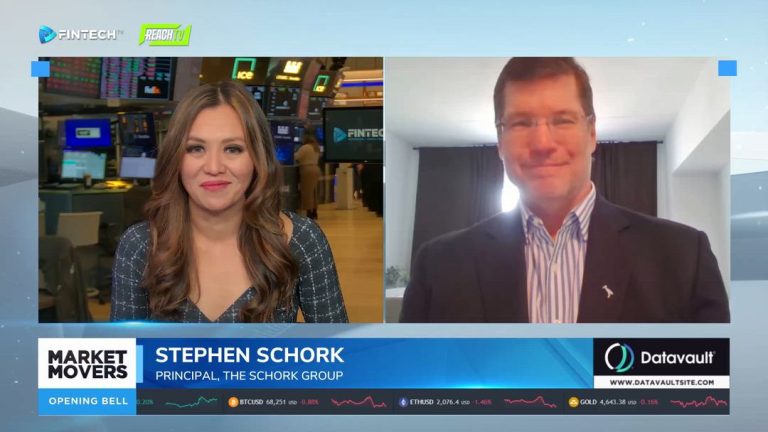
Stephen Schork, principal of the Schork Report, joins Remy Blaire to delve into the current state of oil prices, focusing on the significant pricing spread between WTI and Brent crude. With WTI prices hovering just below $116 a barrel and a 3% increase, we discuss the impact of geopolitical tensions, particularly the U.S. military actions in Iran and the ongoing conflict affecting oil supply.
He explains how WTI, traditionally trading at a discount to Brent due to its landlocked nature, is now experiencing an extreme demand from Asian and European refineries, leading to a notable increase in its price.
Stephen highlights the importance of the May WTI contract, which is set to expire soon, creating a short-term disconnect in pricing compared to Brent. He also addresses concerns about rising gasoline prices, projecting a national average of around $4.25 a gallon, with potential challenges to the $5 mark in the near future.
We discuss the implications of OPEC’s warnings about supply disruptions and the lasting damage from recent attacks on oil infrastructure. Despite high U.S. oil supplies, Stephen emphasizes the risk premium being priced into the market and the potential for long-term oil prices to rise to around $80 a barrel if the conflict persists.
As we wrap up, Stephen cautions that without an increase in supply or a decrease in demand, we could see significant price volatility, reminiscent of the 2008 oil crisis.
Biotech Resurgence: Navigating Market Challenges and Opportunities in 2026
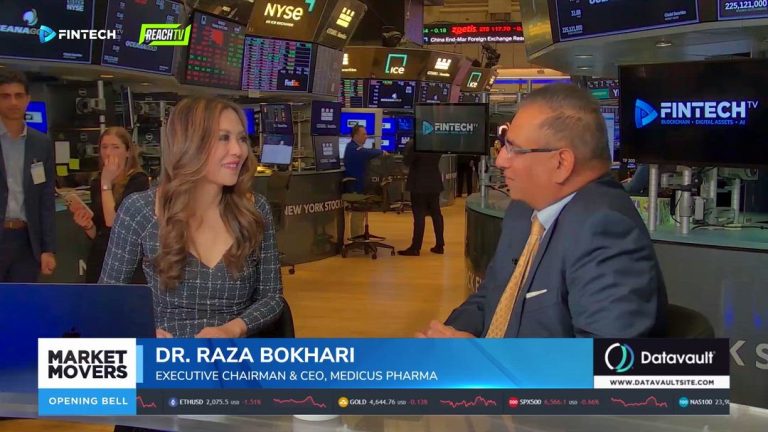
In this episode of Market Movers, we dive into the current state of the biotech sector, which is showing resilience and outperforming the broader market despite recent volatility. Dr. Raza Bokhari, Executive Chairman and CEO of Medicus Pharma, joins Remy Blaire to provide insights into the factors driving this resurgence.
Dr. Bokhari highlights that after a challenging period for biotech, often referred to as a “nuclear winter,” we are now witnessing a positive shift. Key drivers of this recovery include increased M&A activity, the success of weight loss drugs, and a more stable interest rate environment. He emphasizes the importance of access to capital, noting that while it can be expensive, companies with good trading volume are still able to secure funding.
We also discuss the impact of geopolitics and tariffs on the biotech industry, particularly the crucial role of global integration in R&D and clinical trials.
Additionally, we explore differences across market-cap sectors, with a focus on pre-revenue companies like Medicus Pharma. Dr. Bokhari explains that while valuations may remain depressed, there is a renewed interest in biotech, especially as big pharma companies look to optimize their late-stage development and commercialization efforts.
Finally, we touch on the looming patent cliff facing the pharmaceutical industry. Dr. Bokhari points out that while the expiration of patents presents challenges, it also opens doors for emerging companies to introduce novel therapies, particularly in areas like skin cancer and women’s health.